Does a Disk Cache Help Outlook and Email Clients?
Email clients are an unusual caching case. Every other workload discussed on this site reads many separate files; Outlook stores your entire mailbox inside a single data file, and every folder you click, every message you open, and every search you run is a random read somewhere inside it.
This guide explains why that structure limits what a cache can do, where it still helps, and which fixes usually matter more.
PAGE CONTENT
- Why Email Clients Are Awkward for Caching
- What a Cache Actually Helps With
- What Usually Fixes Slow Outlook
- If You Still Want a Cache
- What Not to Do
- FAQs About Caching and Email
- Back Up Windows Before You Change Settings
Why Email Clients Are Awkward for Caching
- One enormous file. An Exchange or IMAP account keeps a local copy in an OST file, and PST files work the same way. Mailboxes of tens of gigabytes are ordinary.
- Random access inside that file. Opening one message seeks to a small region of a very large file, which is the pattern mechanical drives handle worst.
- The file is never still. New mail arriving means the file is written continuously during the workday, so a cache also has to deal with changing content.
- There is a second database. The search index and Outlook's own indexes live outside the mailbox file and are queried constantly.
- Attachments are read on demand. A large attachment is loaded when you open it and usually not again.
- Several processes touch it. Outlook, Windows Search, and any backup or sync tool all read the same file.
That combination - a huge randomly accessed file that is also being written - narrows the benefit you can expect.
What a Cache Actually Helps With
Where it helps:
- Outlook startup. The client reads the mailbox store and its indexes at every launch, and those pages repeat from one session to the next.
- Frequently used folders. The same folder views, calendars, and contact lists are read again and again.
- Repeated searches. The index database is small enough to cache well and is queried heavily.
- Opening the same messages repeatedly. Pinned, flagged, or reference emails that you revisit.
Where it does not:
- Receiving and sending mail. That is network work, and no local cache changes it.
- The first visit to an old folder. Those blocks were never hot, so a cache has nothing to serve them from.
- Large attachments on first open. Read once, from the platter.
- A mailbox that is simply too large. If the working set is far bigger than your cache, the hit rate stays low.
What Usually Fixes Slow Outlook
A cache is a small lever here. These adjustments usually move the needle further:
- Shrink the mailbox. Archive older mail out of the primary store. A smaller data file means fewer random reads and faster searches.
- Repair the data file. The built-in repair tool can fix inconsistencies that make the store unusually slow to navigate.
- Reduce add-ins. Third-party add-ins run inside Outlook and read the store on every action.
- Keep folders modest in size. A folder holding tens of thousands of items is slow to display no matter how fast the disk is.
- Rebuild the search index if results are stale or consistently slow.
- Keep the mailbox file local. A PST or OST on a network share or removable drive is slow and unsupported.
Before repairing anything, take a copy of the store - see how to back up an OST file, because the local mailbox is your only copy of cached mail.
If You Still Want a Cache
With maintenance done, Qiling Fast Cache can shave time off startup and daily navigation by keeping the mailbox store and index in fast storage.
Step 1. Download, install, and open Qiling Fast Cache. On first run the task list is empty.
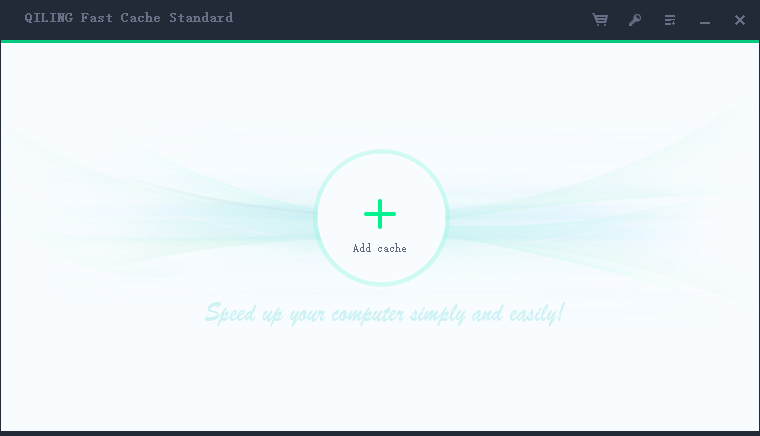
Step 2. Click the "+" button to create a cache task and select the drive that holds your mailbox data file.
Step 3. Choose the medium and size. Keep the RAM tier small, because Outlook needs memory of its own and the store is larger than any practical RAM cache.
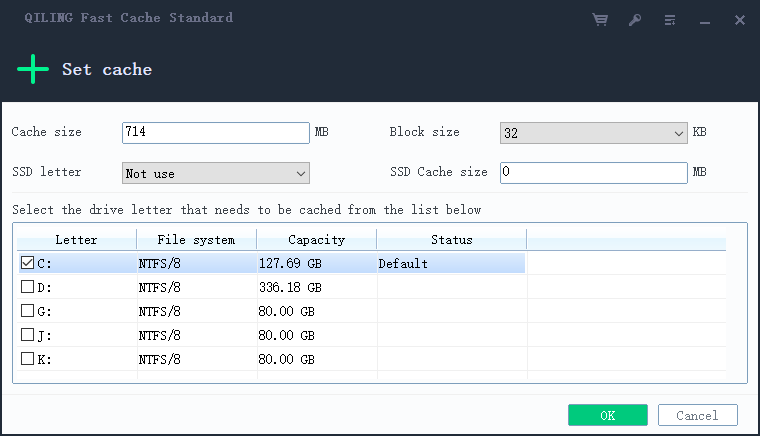
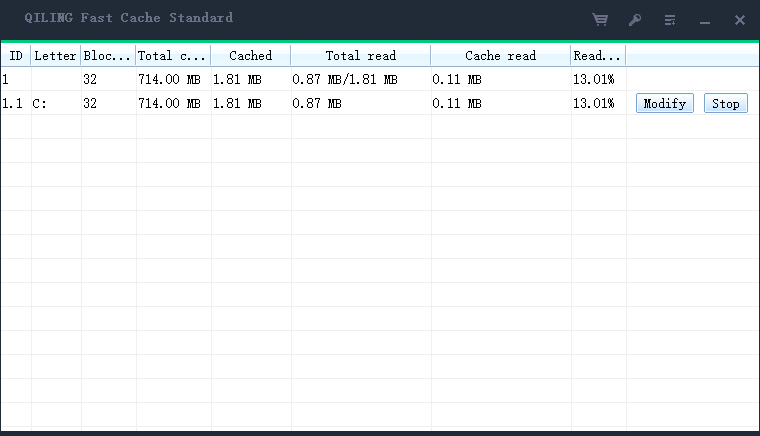
Step 4. Create the task and check the hit rate after a week of normal use. If it stays low, the mailbox is being read in a pattern the cache cannot help with.
What Not to Do
- Do not put the mailbox on a RAM disk. A POP3 account's PST is the only copy of that mail, so a reboot would erase it. Even for cached accounts, the constant writes and the risk of the file disappearing make this a poor trade.
- Do not move the mailbox to a network share or a USB drive. It is slow and unsupported, and disconnection mid-write risks corruption.
- Do not delete cache or index files by hand to force a rebuild. Use the client's own repair and rebuild options instead.
- Do not expect a cache to rescue an oversized mailbox. If the hot set does not fit, the hit rate stays low and the gain is negligible.
FAQs About Caching and Email
Will moving my OST file to an SSD help?
Yes, and more than a cache will. If the mailbox currently sits on a mechanical drive, relocating it to an SSD removes the random-read penalty entirely.
Does a disk cache speed up Outlook search?
Partly. Search reads the index database repeatedly, so it is good cache material, but a very large mailbox still takes time to query.
Should I put Outlook's mailbox file on a RAM disk?
No. The file is written continuously, and for some account types it is the only local copy of your mail. Keep it on real storage.
Why is my disk still busy when Outlook is idle?
Background indexing, antivirus scanning the store, and the client syncing changes all read and write the mailbox file even when you are not clicking anything.
Is caching worth it for Outlook at all?
It is a reasonable small improvement for startup and daily navigation. Handle the maintenance tasks first, because they usually produce a bigger result.
Back Up Windows Before You Change Settings
Repairing a mailbox file or moving it to another drive deserves a current image of the machine. Qiling Disk Master creates a full Windows backup you can restore from if anything goes wrong.
Part 1: Create a Full System Backup
Step 1. Install and open Qiling Disk Master. On the home screen, open "Backup and Recovery" and choose "System Backup". This option automatically includes Windows and the hidden boot partitions, so you do not have to select them one by one.
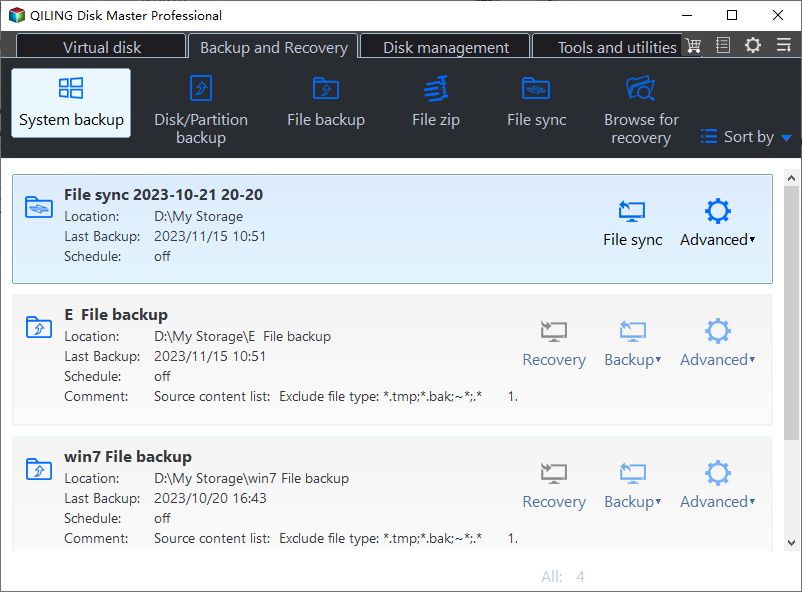
Step 2. Check the source. The disk where Windows is installed and its system partitions are already ticked for you. If you only need your personal documents, run a separate "File Backup" task instead.

Step 3. Click the destination box and choose where the image should be saved. Use an external HDD or SSD, a NAS, or any drive other than the one Windows is installed on, and make sure it has enough free space.
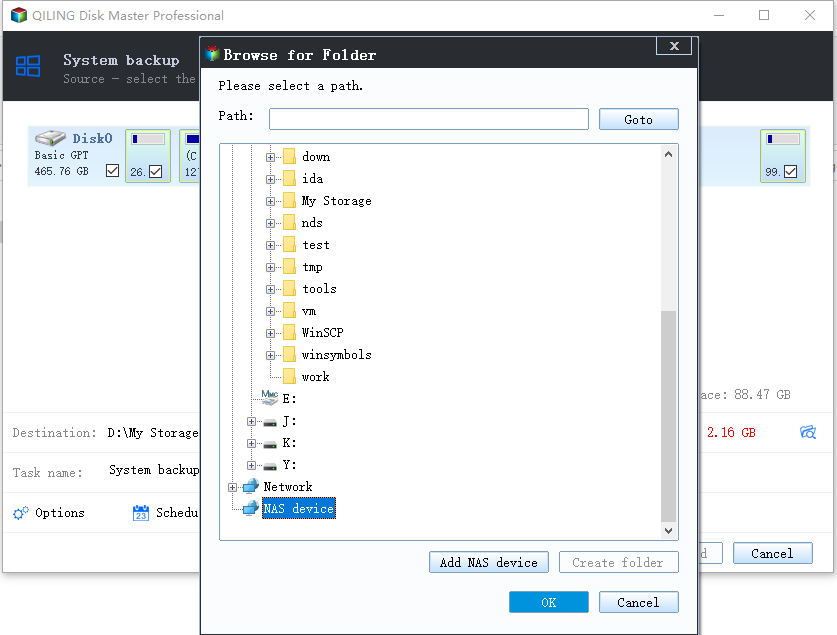
Step 4. Review the task summary and click "Proceed". Wait until the progress bar reaches 100%. Do not unplug the drive or turn off the PC while the backup is running.
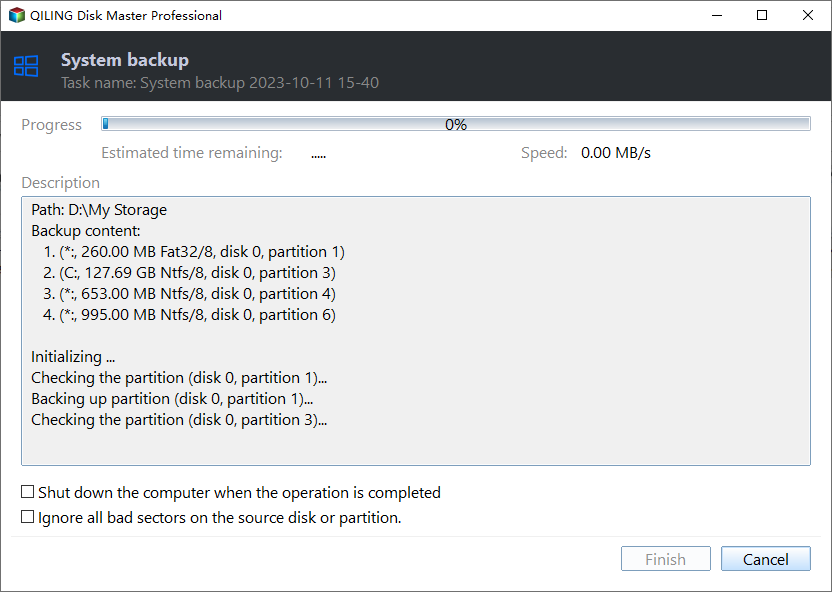
Part 2: Restore Windows from the Backup
Step 1. Open Qiling Disk Master again, go to "Backup and Recovery", and select the recovery option. Your backup images are listed, so pick the one you created before the changes began.
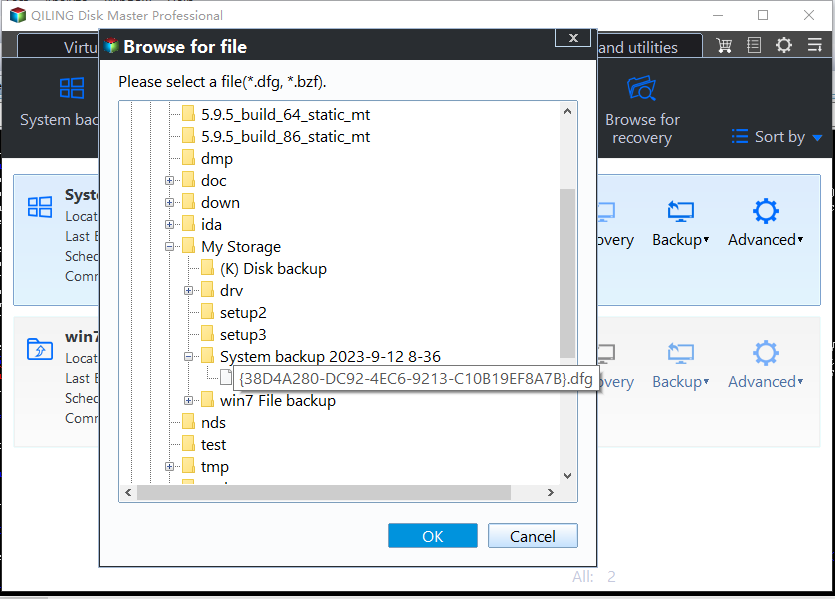
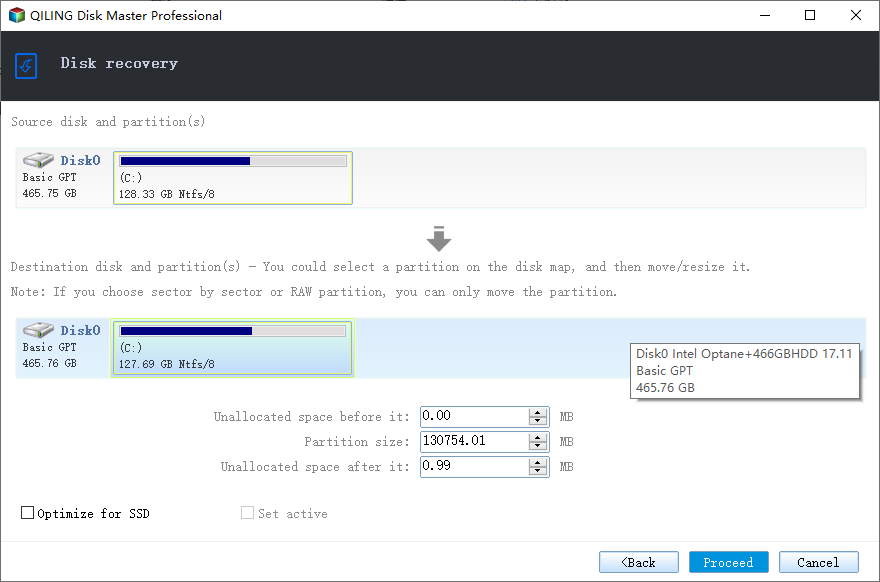
Step 2. Choose the target disk or partition. Normally you restore to the original system disk. If the drive was replaced, select the new disk instead, and the restore rebuilds Windows together with its boot partitions.
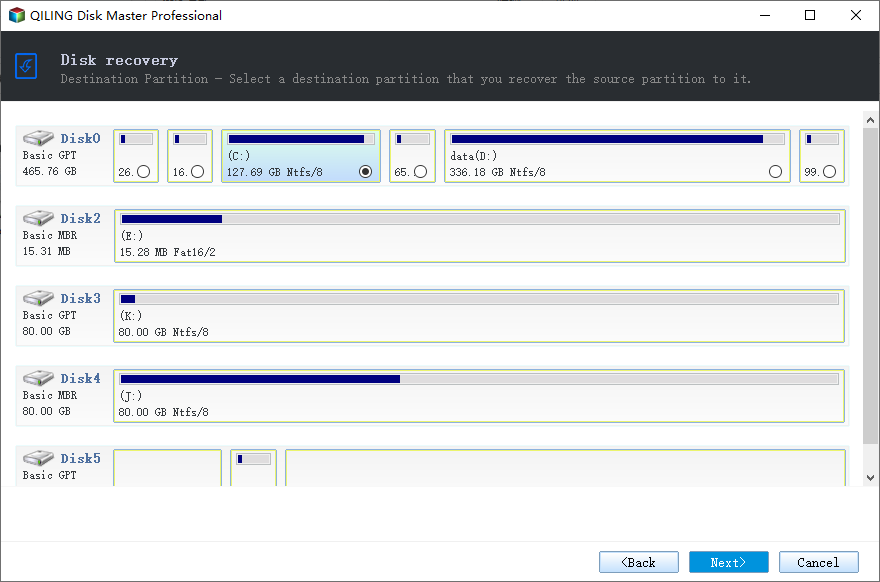
Step 3. Preview the restore plan, click "Proceed", and confirm the warning. The PC restarts to finish the job, and Windows comes back exactly as it was on the day the image was created, with your files and programs intact.
- Note
- Keep the backup image on a separate drive, and refresh it before changing storage cache settings.
Conclusion
A disk cache gives Outlook a modest, real benefit rather than a dramatic one. It speeds up startup, repeated folder views, and index queries, because those pages come back session after session. It cannot help with receiving mail, opening an old folder for the first time, or a mailbox so large that the hot set never fits. When Outlook feels slow, the larger wins usually come from maintenance instead: shrink the mailbox, repair the data file, reduce add-ins, and rebuild the search index. Keep the mailbox file on a local drive, never a network share, and never on volatile storage.
Protect your PC with Qiling Backup—create a system image before your next round of settings changes.
For more Windows 11 performance guides, see Windows 11 Fast Cache, How Big Should Your Disk Cache Be?, Cloud Sync Clients and Disk Cache, How to Check Cache Hit Rate, and When a Disk Cache Does Not Help.
Related Articles
- Speed Up Databases with a RAM Disk and Disk Cache
The closest parallel: another workload built around large files read at random rather than many small ones. - Should You Put the Page File on a RAM Disk? (Short Answer: No)
- Is a RAM Disk Worth It? An Honest Look at Speed and Risk
- Does Caching Leave Your Data Behind? A Privacy Guide
- Should Your Disk Cache Live on the Windows Drive?
Products
Articles & Tutorials
- Data Recovery
- Data Backup
- File Recovery
- File Backup
- System Backup and Restore
- Disk and Partition Clone
- Technical articles
- Mobile articles
- Disk Master Help
- Windows Data Recovery Tutorials
- Windows Secure Delete Tutorials
- Windows Partition Management Tutorials
- Windows File Backup and Restore Tutorials
- Windows System Backup and Restore Tutorials
- Windows Disk Backup and Restore Tutorials
- Windows Clone Tutorials