Web Browser Cache and Disk Caching Explained
Every modern browser keeps a disk cache of images, scripts, and stylesheets so that revisits load without re-downloading. The cache is one of the clearest examples of an application cache that a software disk cache can also help with, because the same files are read over and over.
This guide explains what the browser cache stores, how it behaves, and how the two layers stack.
PAGE CONTENT
- What the Browser Cache Stores
- How the Browser Cache Behaves
- How It Interacts with a Disk Cache
- Where the Two Conflict
- Configure a Cache for Browsers
- FAQs About Browser Cache and Caching
- Back Up Windows Before You Change Settings
What the Browser Cache Stores
The browser cache is a large folder of small files, and the layout is more predictable than it looks:
- Resource files. Images, CSS, JavaScript, and fonts downloaded from websites, stored under a hashed name in the cache folder.
- The index file. A database that maps hashed names back to URLs, read on every page load, similar in spirit to the Windows Search index.
- Per-profile caches. Each browser profile has its own cache, so a multi-profile setup produces several independent caches.
- Service worker caches. Progressive web apps store their offline data in a separate cache under the same profile folder.
- The folder grows over weeks. Browsers do not evict eagerly, which is why the cache can reach gigabytes - the same long-lived pattern seen in cloud sync clients.
How the Browser Cache Behaves
The access pattern is a mix of small scattered reads and streaming writes, and it is highly repetitive:
- Reads are small and scattered. A single page load reads dozens of small files by hash, which is exactly the pattern a cache is good at.
- Writes are streaming. New resources land as fast as the network delivers them, in small append-style writes.
- Eviction is lazy. Old entries are only removed when the cache exceeds its size limit, which keeps revisits cheap.
- The index is read on every launch. The cache database is opened at browser startup and queried on every navigation.
- Cold visits are unaffected. A site never visited before has to be downloaded from the network, as explained in when a disk cache does not help.
How It Interacts with a Disk Cache
The two layers stack cleanly because the browser's reads are exactly what a disk cache is built for:
- Revisits hit the cache. A page you open twice in a day reads the same resources, which the disk cache serves from its faster tier.
- The index stays in the RAM tier. The cache database is small and hot, so it sits in the RAM tier permanently during a session.
- Streaming writes pass through. A disk cache cannot make the network faster, but it can absorb the small writes so they do not interrupt reads - the distinction is in cache vs buffer.
- The hottest sites stay in the RAM tier. A handful of sites make up most of the browsing time, and they fit easily.
- Large media caches benefit from the SSD tier. Video-heavy sites produce cache files too large for RAM, which the SSD tier holds instead.
Where the Two Conflict
A few setups work against each other, and they are easy to avoid:
- Putting the browser cache on a RAM disk. It is already an application cache; layering it on a RAM disk just wastes memory - see moving the browser cache to a RAM disk for why it rarely pays off.
- Setting the browser cache too large. A huge cache holds stale entries that are never read, which crowds out real data and the cache tier itself.
- Clearing the cache to save space. The browser rebuilds it from the network on the next visit, which is slower than the space saved.
- Multiple browsers on the same drive. Chrome, Edge, and Firefox each keep their own cache, which triples the small-file workload on the same SSD.
- Running a download while browsing. A large download writes to the same volume the browser reads from, which evicts the very pages you wanted to keep.
Quick summary
The browser cache is one of the easiest workloads to accelerate. Leave it where it is and let the disk cache do the rest.
Configure a Cache for Browsers
The cleanest setup is to leave the browser cache where it is, point a disk cache at the volume that holds the user profile, and let the RAM tier hold the index and the hottest resources. Qiling Fast Cache uses a RAM tier for the hottest blocks and an SSD tier for the rest, and shows the hit rate in the task list.
Step 1. Install Qiling Fast Cache and open the task list. Open your most-used browser and visit a few sites before configuring anything.
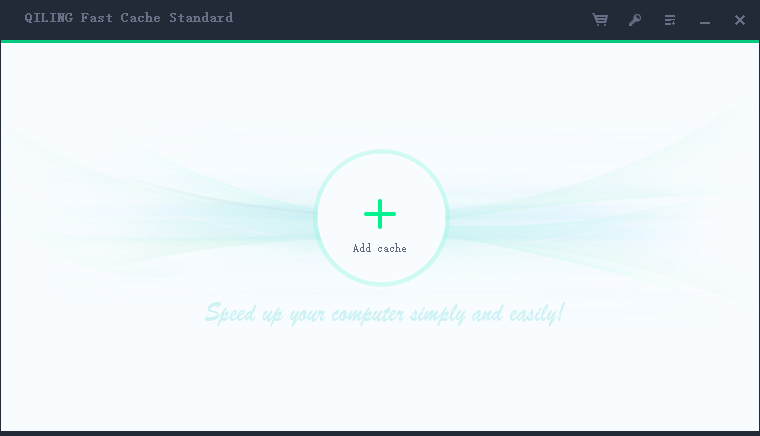
Step 2. Click the "+" button and select the volume that holds the browser profile, which is usually the system drive.
Step 3. Size the SSD tier for your daily browsing set, not for the entire browser cache. A few gigabytes is plenty.
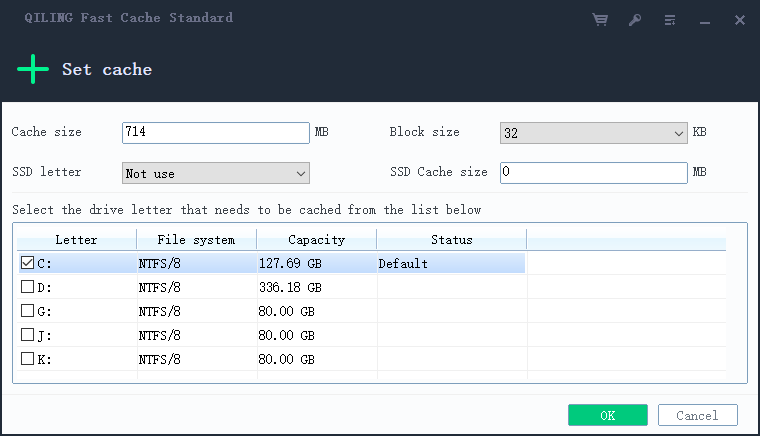
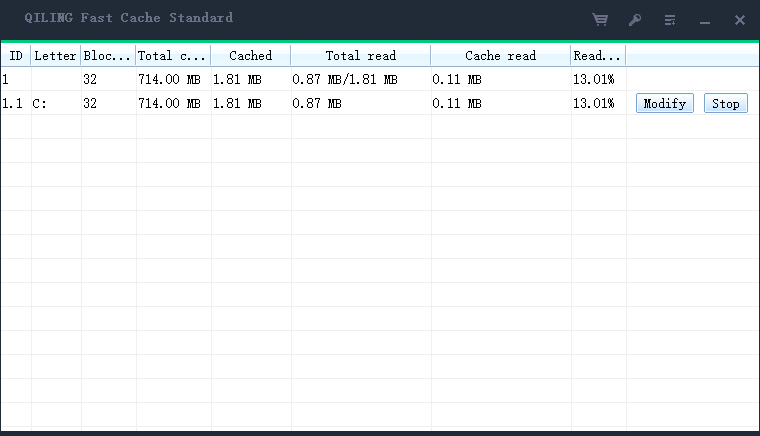
Step 4. Browse for a week, then read the hit rate - see how to check cache hit rate - and confirm that revisits are being served from the faster tier.
FAQs About Browser Cache and Caching
Does a browser need a disk cache?
No, but it benefits more than most apps because revisits are common and the resources are small.
Should I move the browser cache to a RAM disk?
Not really. A disk cache tier gives the same benefit without dedicating gigabytes of memory to one app.
Why is the browser cache so big?
Browsers do not evict eagerly. Old resources stay until the size limit is reached, which keeps revisits cheap.
Will a disk cache speed up the first visit to a site?
No. The first visit is bounded by the network, not the disk.
Should I clear the browser cache regularly?
No. Clearing forces the browser to re-download everything, which is slower than the space saved.
Back Up Windows Before You Change Settings
Reconfiguring storage and cache settings is easier to undo when you have a recent image. Qiling Disk Master creates a full Windows backup you can restore from.
Part 1: Create a Full System Backup
Step 1. Install and open Qiling Disk Master. On the home screen, open "Backup and Recovery" and choose "System Backup". This option automatically includes Windows and the hidden boot partitions, so you do not have to select them one by one.
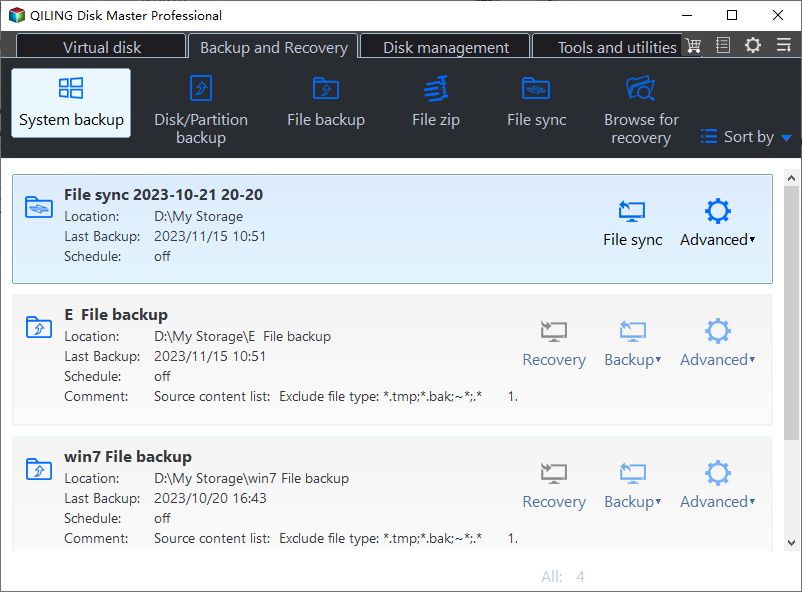
Step 2. Check the source. The disk where Windows is installed and its system partitions are already ticked for you. If you only need your personal documents, run a separate "File Backup" task instead.

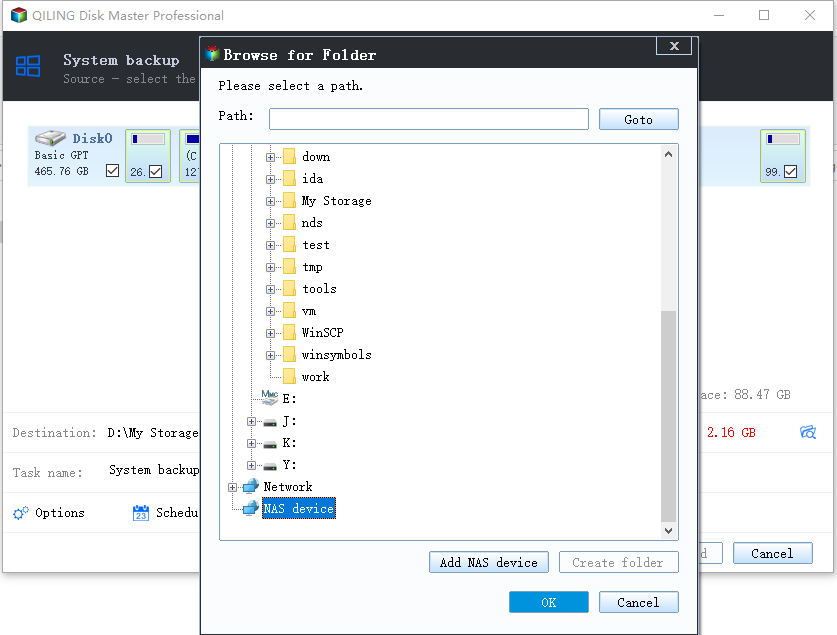
Step 3. Click the destination box and choose where the image should be saved. Use an external HDD or SSD, a NAS, or any drive other than the one Windows is installed on, and make sure it has enough free space.
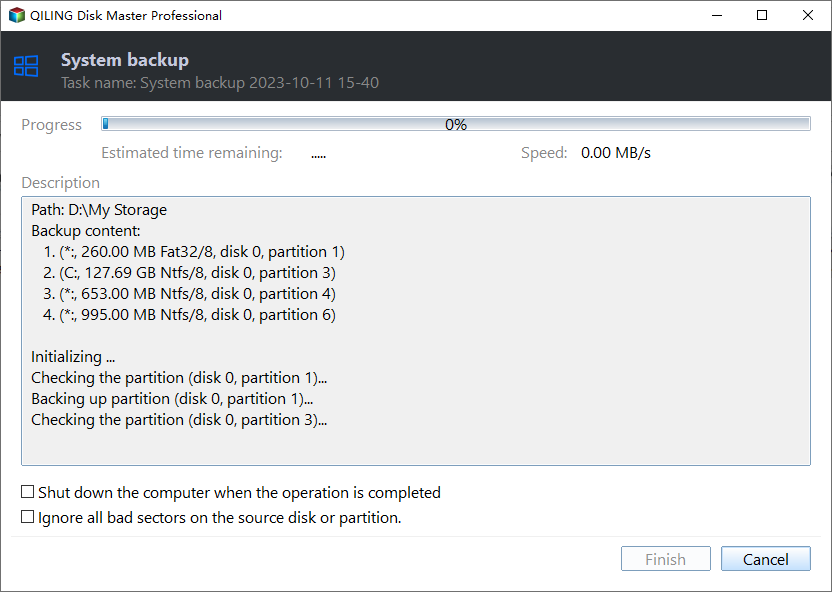
Step 4. Review the task summary and click "Proceed". Wait until the progress bar reaches 100%. Do not unplug the drive or turn off the PC while the backup is running.
Part 2: Restore Windows from the Backup
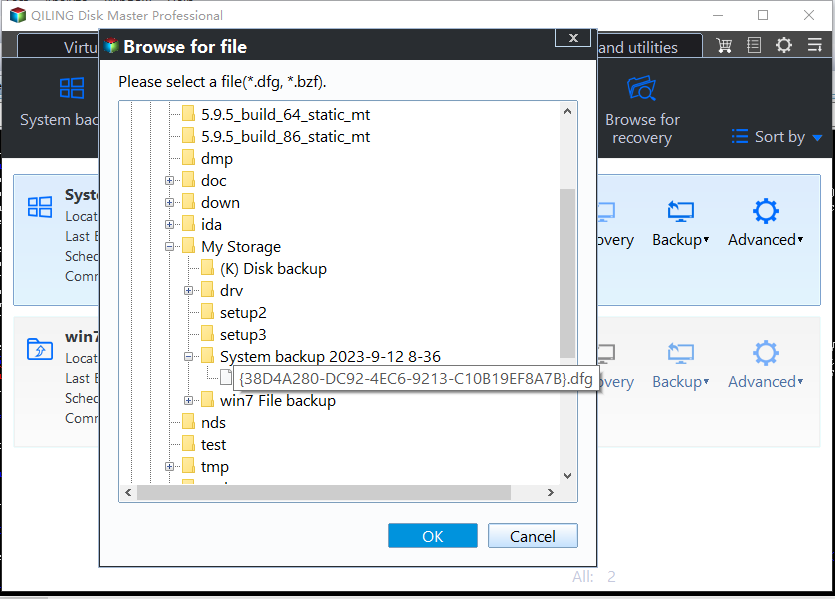
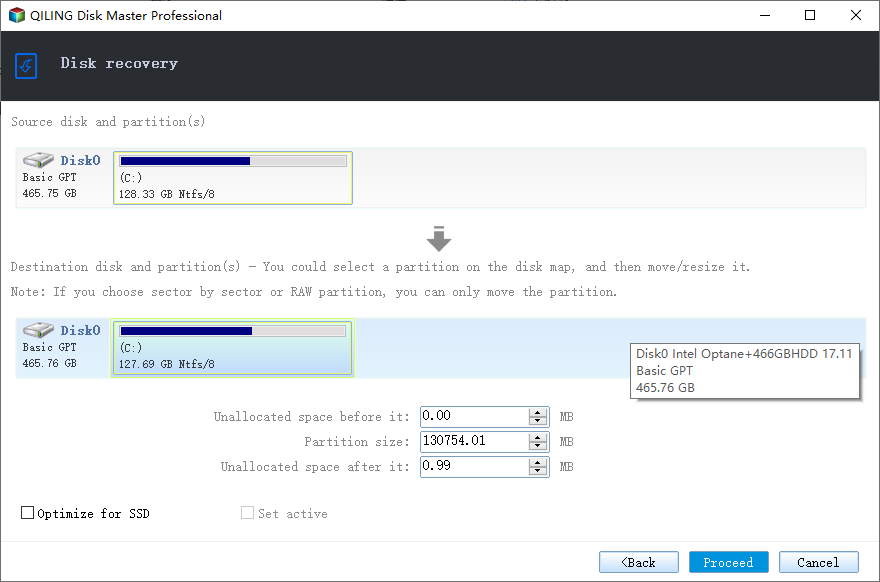
Step 1. Open Qiling Disk Master again, go to "Backup and Recovery", and select the recovery option. Your backup images are listed, so pick the one you created before the changes began.
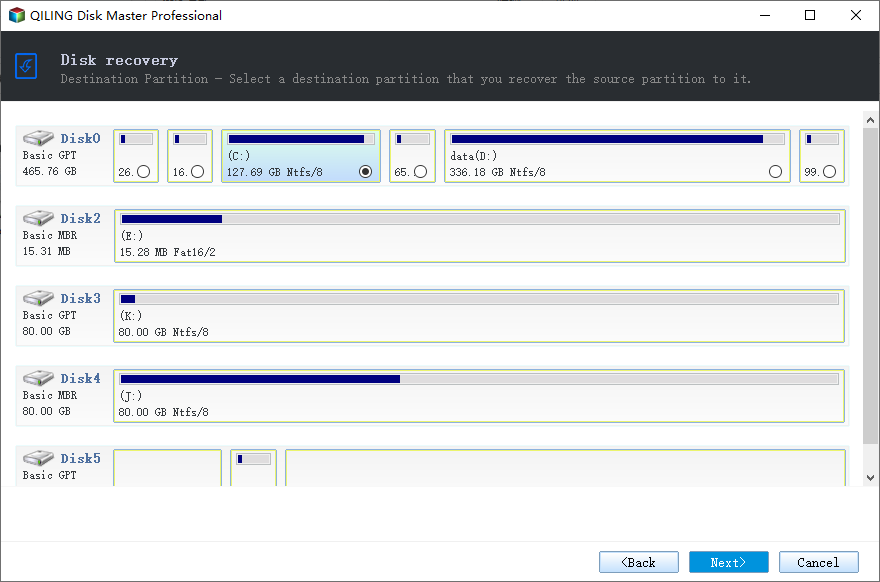
Step 2. Choose the target disk or partition. Normally you restore to the original system disk. If the drive was replaced, select the new disk instead, and the restore rebuilds Windows together with its boot partitions.
Step 3. Preview the restore plan, click "Proceed", and confirm the warning. The PC restarts to finish the job, and Windows comes back exactly as it was on the day the image was created.
- Note
- Keep the backup image on a separate drive, and refresh it before changing browser or cache settings.
Conclusion
The browser cache is one of the easiest workloads to accelerate with a disk cache. Its reads are small, scattered, and highly repetitive, which is exactly the pattern a disk cache is built for. The only mistake worth avoiding is layering two caches on the same memory: the browser's own cache plus a RAM disk just wastes memory that a disk cache tier would use more flexibly. Leave the application cache where it is, point a disk cache at the volume that holds the profile, size the SSD tier for a few gigabytes rather than the whole cache, and read the hit rate after a week of normal browsing instead of assuming the browser needs special treatment.
Protect your PC with Qiling Backup—create a system image before your next round of settings changes.
For more application and caching guides, see how Spotify uses a local cache, how cloud sync clients use your disk, Windows Search and caching, cache vs buffer, and how to check cache hit rate.
Related Articles
- Disk Caching for GIS and Mapping Software
Another workload that reads many small files by a hashed index. - Disk Caching for Data Analysis
- Disk Caching for IDE Indexing
- Disk Caching for Game Development
- Disk Caching for Console Emulators
Products
Articles & Tutorials
- Data Recovery
- Data Backup
- File Recovery
- File Backup
- System Backup and Restore
- Disk and Partition Clone
- Technical articles
- Mobile articles
- Disk Master Help
- Windows Data Recovery Tutorials
- Windows Secure Delete Tutorials
- Windows Partition Management Tutorials
- Windows File Backup and Restore Tutorials
- Windows System Backup and Restore Tutorials
- Windows Disk Backup and Restore Tutorials
- Windows Clone Tutorials