Does a Disk Cache Speed Up Windows Search?
Windows Search feels either instant or broken, and the difference is usually the index rather than the disk. Still, the two are connected, because the index is a large database that is read from disk over and over.
This guide explains how the search index works, where it is stored, when a disk cache actually helps, and how to rebuild or relocate the index without breaking search.
PAGE CONTENT
- How Windows Search Indexing Works
- Where the Search Index Lives
- Does a Disk Cache Speed Up Search?
- Rebuild or Move the Search Index
- Cache the Drive That Holds the Index
- FAQs About the Search Index and Caching
- Back Up Windows Before You Change Settings
How Windows Search Indexing Works
Windows Search does not scan your whole drive each time you type. It keeps a catalog of what is where:
- An indexer walks your files in the background and records names, properties, and the contents of supported file types.
- The catalog is a database - not your files - and queries are answered from it. That is why results can appear before Windows has touched the actual drive.
- Common folders are indexed by default. Libraries such as Documents and Pictures, plus the Start menu and mail stores, are included; other locations are not until you add them.
- Searching a non-indexed folder falls back to a slow scan, which is why an external drive can take minutes while a library folder returns results at once.
So the first fix for slow search is almost always index coverage, not storage speed.
Where the Search Index Lives
- The file is Windows.edb, stored by default in C:\ProgramData\Microsoft\Search\Data\Applications\Windows.
- Its size grows with your content, and on a large drive with mail and media indexed it can reach several gigabytes.
- It is read constantly. Every search opens the database, so the index is a genuinely hot file on the system drive.
- You can move it to another drive from Indexing Options, which is useful when the system drive is short on space.
Does a Disk Cache Speed Up Search?
Yes, but only in a specific way, and the honest answer is that the benefit is smaller than for most workloads:
- Warm results come from the index, not the disk. A search that already feels instant will not become measurably faster, because the drive was never the bottleneck.
- A cache helps the first query after a boot. The first search has to read the database from the drive; a cached copy of Windows.edb is served from memory or SSD, so the opening query warms up sooner.
- It also helps indexing itself. While the indexer is rebuilding, it reads and writes heavily, and a cache absorbs the repeated reads of folders being rescanned.
- It cannot fix a corrupt or incomplete index. If the catalog is damaged, no amount of caching will produce missing results - rebuild instead.
Treat caching as a way to make an already healthy index feel snappier, not as a repair for search problems.
Rebuild or Move the Search Index
If search returns wrong or missing results, rebuild before you blame the hardware:
- Open Indexing Options from Control Panel, or search for "Indexing Options" in the Start menu.
- Click Advanced, then choose Rebuild. Windows deletes the catalog and builds a new one, which can take from minutes to a few hours depending on how much you have indexed.
- Trim the scope before rebuilding. Remove folders you never search, such as a large archive or a build output directory, so the index stays small and fast.
- To move the index, use the same Advanced dialog and pick a new location on another drive, then restart the Windows Search service.
- Expect reduced results while it rebuilds. Searching during a rebuild returns partial data; that is normal, not a failure.
Cache the Drive That Holds the Index
If the index is large or sits on a slower drive, caching the volume that holds it keeps the database in fast storage. Qiling Fast Cache lets you point a cache task at that drive specifically.
Step 1. Install and open Qiling Fast Cache. On first run the task list is empty, which gives you a clean starting point.
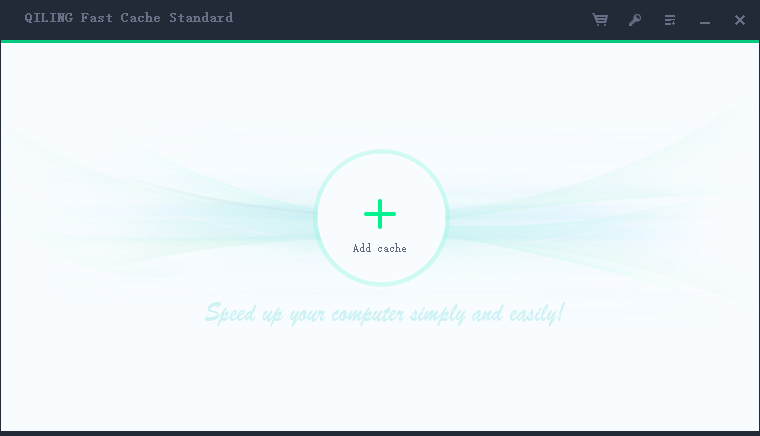
Step 2. Click the "+" button and select the drive that contains the search index. If the index is on C:, cache C:.
Step 3. Set the medium and size. An SSD tier keeps the index warm across reboots, while a RAM tier speeds up the first searches after boot.
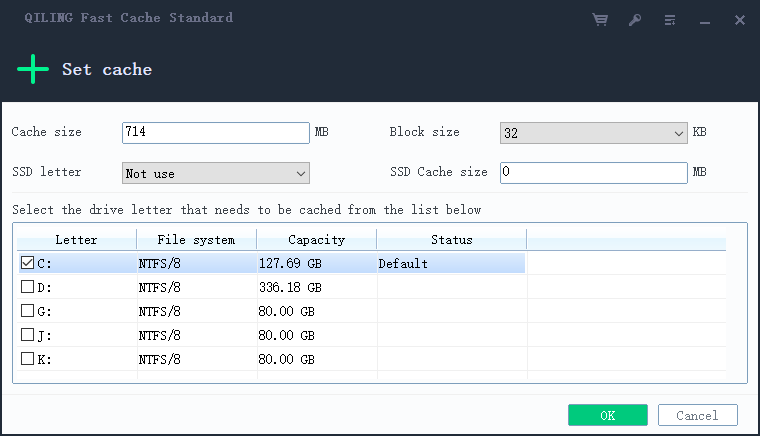
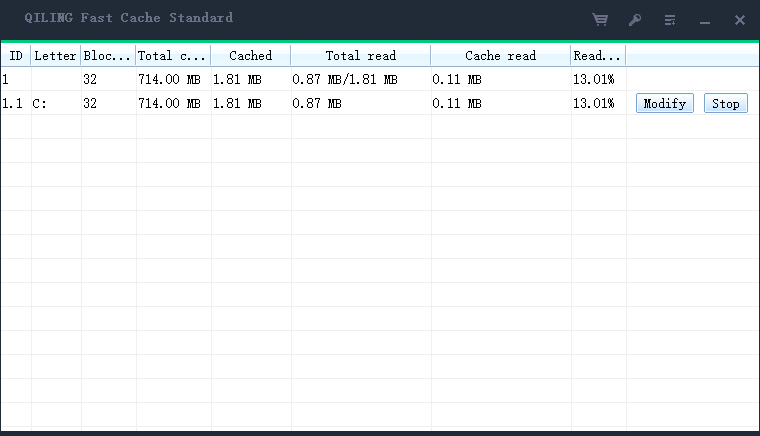
Step 4. Create the task, then run a few searches and watch the hit rate. A healthy index produces a high rate within a day of normal use.
FAQs About the Search Index and Caching
Why is Windows Search slow even with an SSD?
The folder is probably not indexed, so Windows falls back to scanning the drive. Add the location in Indexing Options rather than expecting the cache to compensate.
Can I delete Windows.edb?
You can, but Windows will simply rebuild it, and search results will be incomplete until it finishes. Rebuilding from Indexing Options is the safer path.
Does moving the index to another drive break search?
No, as long as you use the Advanced dialog and restart the Windows Search service afterwards. Search then reads the database from the new location.
Will a cache make search noticeably faster?
Mostly for the first query after a boot and during index rebuilds. If search is already instant, the cache has little left to improve.
Does indexing wear out an SSD?
Indexing writes are modest compared with normal use, and modern SSDs handle them comfortably. Reducing the indexed scope is still worth doing for speed.
Back Up Windows Before You Change Settings
Changing indexing scope, moving the index database, and reinstalling services are all easy to get wrong, and a current image makes the change reversible. Qiling Disk Master creates a full Windows backup you can restore from.
Part 1: Create a Full System Backup
Step 1. Install and open Qiling Disk Master. On the home screen, open "Backup and Recovery" and choose "System Backup". This option automatically includes Windows and the hidden boot partitions, so you do not have to select them one by one.
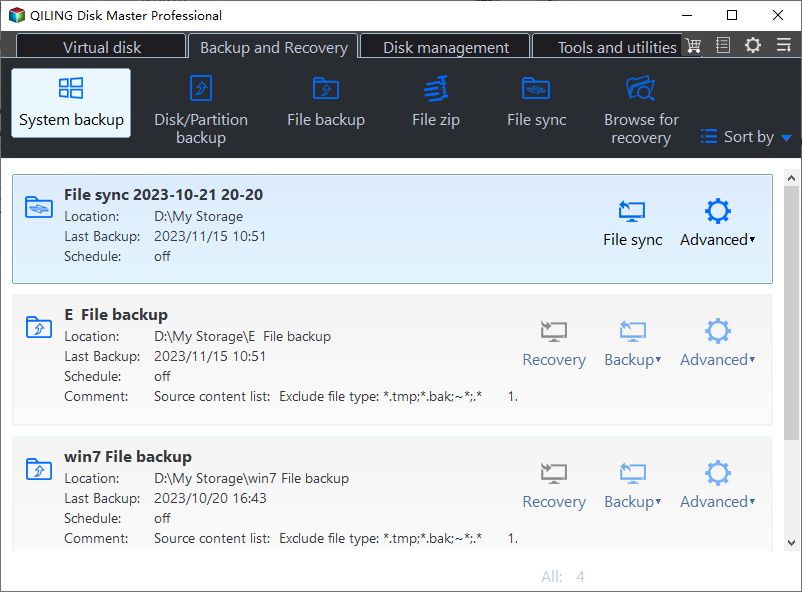
Step 2. Check the source. The disk where Windows is installed and its system partitions are already ticked for you. If you only need your personal documents, run a separate "File Backup" task instead.

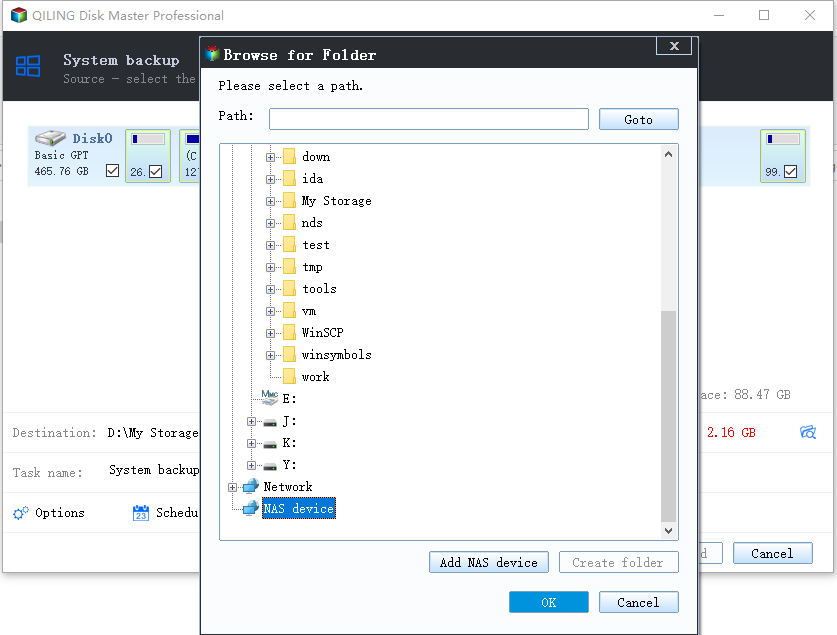
Step 3. Click the destination box and choose where the image should be saved. Use an external HDD or SSD, a NAS, or any drive other than the one Windows is installed on, and make sure it has enough free space.
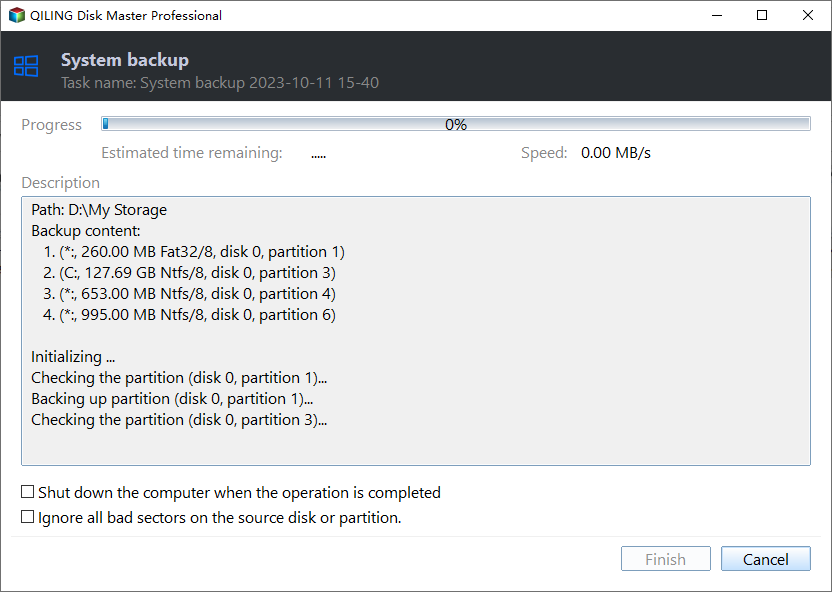
Step 4. Review the task summary and click "Proceed". Wait until the progress bar reaches 100%. Do not unplug the drive or turn off the PC while the backup is running.
Part 2: Restore Windows from the Backup
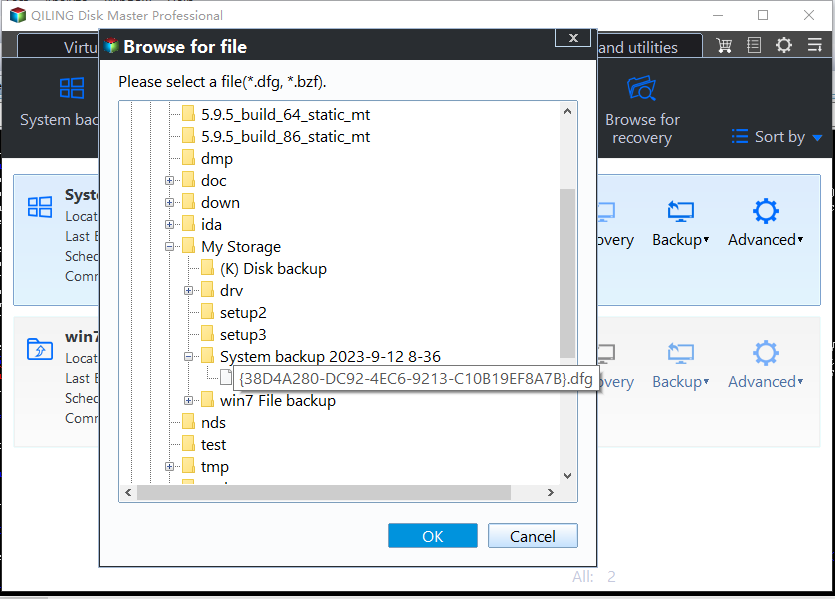
Step 1. Open Qiling Disk Master again, go to "Backup and Recovery", and select the recovery option. Your backup images are listed, so pick the one you created before the changes began.
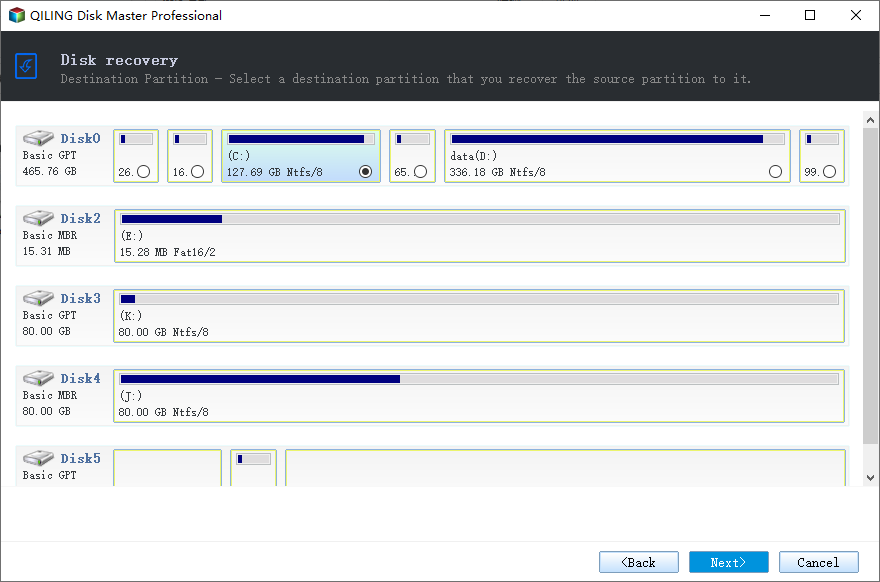
Step 2. Choose the target disk or partition. Normally you restore to the original system disk. If the drive was replaced, select the new disk instead, and the restore rebuilds Windows together with its boot partitions.
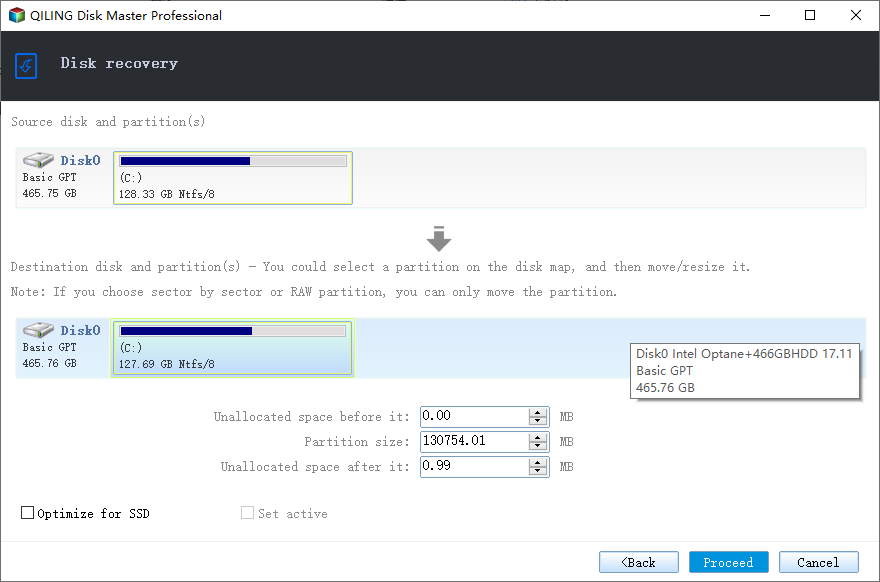
Step 3. Preview the restore plan, click "Proceed", and confirm the warning. The PC restarts to finish the job, and Windows comes back exactly as it was on the day the image was created, with your files and programs intact.
- Note
- Keep the backup image on a separate drive, and refresh it before changing storage cache settings.
Conclusion
Windows Search is answered from an index, not from your files, so the fastest fix for slow results is usually better index coverage rather than faster storage. The index itself - Windows.edb - is a large database that is read on every query, which is where a disk cache earns its place: it shortens the first search after a boot and speeds up the heavy reads of a rebuild. It cannot repair a damaged or incomplete catalog, and it will not make an already instant search faster. Rebuild or relocate the index when results are wrong, trim the indexed folders so the database stays small, and treat caching as the final polish rather than the cure.
Protect your PC with Qiling Backup—create a system image before your next round of settings changes.
For more Windows 11 performance guides, see Caching for IDE Indexing, Windows 11 Thumbnail Cache, Caching and Cloud Sync Clients, What Is Cache Warm-Up?, and SysMain and Prefetch in Windows 11.
Related Articles
- Does Windows Fast Startup Affect Your Disk Cache?
The first search after a boot is the one a RAM cache helps most, and Fast Startup changes what "after a boot" means. - Caching for Outlook and Email Clients
- Using a Disk Cache for Data Analysis Workloads
- How to Move a Disk Cache to Another Drive Safely
- Sharing a Cache Drive with Windows
Products
Articles & Tutorials
- Data Recovery
- Data Backup
- File Recovery
- File Backup
- System Backup and Restore
- Disk and Partition Clone
- Technical articles
- Mobile articles
- Disk Master Help
- Windows Data Recovery Tutorials
- Windows Secure Delete Tutorials
- Windows Partition Management Tutorials
- Windows File Backup and Restore Tutorials
- Windows System Backup and Restore Tutorials
- Windows Disk Backup and Restore Tutorials
- Windows Clone Tutorials