Effective Methods of How to Make Space on Mac with Handy Tools
What Happens if Your Space on Mac Is Run Out?
MacBooks with SSDs are fast, but their storage is limited, making it easy to run out of space and experience slow downs and crashes.
If you're running low on space on your Mac, you won't be able to update your operating system or software, download apps or movies, or perform many other regular tasks.

What Is Taking up Space on My Mac?
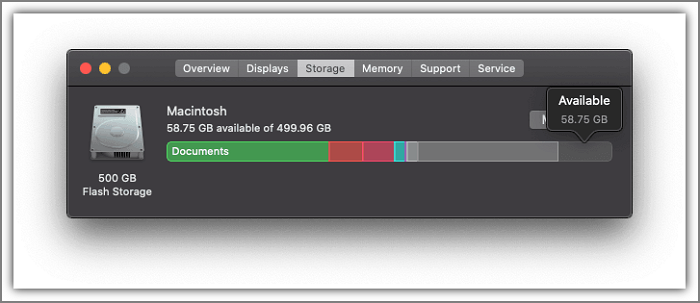
To make space on Mac, you can check the free space on your disk by going to About This Mac > Storage, where you'll see the total, used, and available storage space. If you're running low, you can delete unnecessary files, empty the Trash, and use the Storage tab to see which apps and files are taking up the most space. You can also use the Optimise Storage feature to free up space by removing unused localisations, compressing files, and removing other unnecessary data.
- Click the Apple menu at the upper left corner of the screen and select "About This Mac".
- Click "Storage" in the toolbar, and a colored storage bar appears, showing the available storage space on your device.
- To manage files on your Mac, click on the "Manage" option which displays categories containing various files. Hovering the mouse over each colored section reveals what that section represents.
The gray "Other" section typically holds temporary internet files, cache files, application installers, and other deletable files that can be cleared to free up space.
How Do I Make Space on My Mac?
Solutions and their practice steps of Making Space on Mac.
1. Using Mac OS Built-in Tools
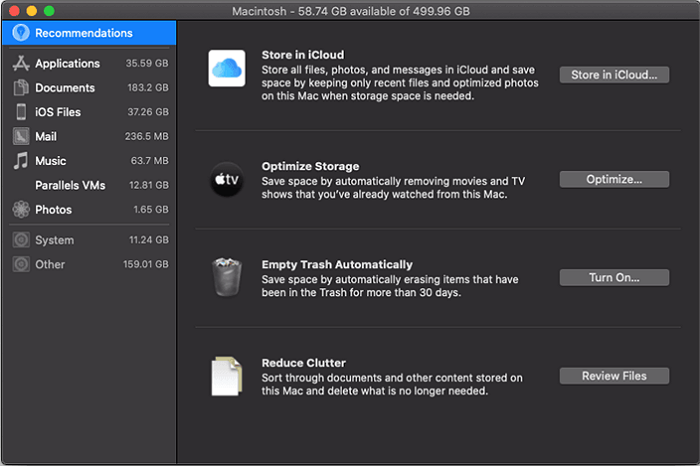
Mac OS has built-We can find optimization tools that are very easy to use by clicking the "Manage" button at the top of the storage bar, which offers four optimization options.
1) Store in iCloud: You may need to pay money for this service monthly
You can store large files like photos and movies in iCloud, freeing up space on your Mac, and keep frequently used and essential files on your computer.
If you want more storage space in iCloud, you can upgrade to a paid plan, which typically starts at $0.99 a month for 50GB of storage.
2) Optimize storage:
When space on your Mac is running low, the Mac will automatically move movies and TV shows you've already seen to the trash and keep only recent email attachments on this Mac.
3) Empty trash automatically:
Once this option is activated, items in the trash for more than 30 days will be automatically deleted.
4) Reduce clutter:
To free up space on your Mac, identify and delete large, old, or unnecessary files. This may involve manually deleting them, as some files may not be automatically removed.
2. Compressing Files
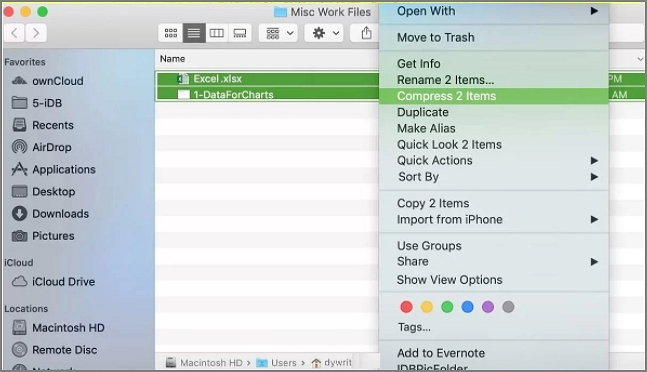
On the Finder screen, select the file or folder you want to compress by clicking on it while holding down the Command key to choose multiple files.
2) Right-Select the files you want to compress, click on them to bring up the list, and then click "Compress" to start the compression process on your Mac.
After the compression is complete, click on the new file path to view the compressed file.
3. Prepare an External Hard Drive
- To move files or folders to an external drive in the Mac's Finder interface, click the folder on the external drive where you want to store them.
- To transfer files or folders to a USB drive, you can either drag and drop them from your computer or copy and paste the desired files or folders into the USB drive's window. This allows you to select and move the files you want to transfer to the USB drive directly, making the process efficient and straightforward.
- Waiting for the transfer to finish.
Q&A: About How to Make Space on Mac
How do I store files in iCloud?
- From your Mac, click System Preferences in the Apple menu.
- To sign in to your Apple ID, click on it, and make sure your iCloud Drive is accessible.
- To sync the Desktop and Documents folders with iCloud Drive, click the iCloud Drive option, then click Options, and select the Desktop and Documents folder. Finally, click the Done option.
Is it possible to retrieve videos deleted by Optimize storage on Mac?
The answer is Yes. You can download them back again if needed.
- Open the Photos app and click Recently deleted in the left pane.
- Select the videos you need to recover.
- Click the Recover button in the upper right corner of the interface and wait for it to finish.
Related Articles
- Quick Fixes for Windows Stuck on Repairing Disk Error in Windows 10/8/7
- How To Enable/Disable Reserved Storage Windows 10? [Step By Step]- Qiling
- How to Wipe a Computer and How to Delete Everything on Windows 7/10
- How Long Does It Take to Factory Reset A PC
- How to Fix Dying Light 2 Multiplayer Not Working
If you're experiencing issues with Dying Light 2's multiplayer, the problem may be serious, but the solutions are endless! This guide has the perfect solution to fix the issue, so you can get back to gaming with friends. - How to Fix Game Stuttering on Windows 11 [Step-by-Step Guide]
Game stuttering can be frustrating for gamers, often caused by high resource applications running in the background or outdated/ faulty display adapters. Various fixes can help resolve the issue, as discussed in the article. - How to Fix a Media Driver Your Computer Needs Is Missing in Windows
Having trouble to 'fix a media driver your computer needs is missing in windows' error? Not anymore, as to solve it, you'll get multiple ways ahead. - How to Fix Windows 10 DVD Drives Not Working? [2024 Guide]
If your DVD drive has stopped working on your Windows 10 PC, it's an easy fix. To get your DVD drive up and running again, you can try updating your Windows 10 to the latest version, as sometimes a simple update can resolve the issue.
Products
Articles & Tutorials
- Data Recovery
- Data Backup
- File Recovery
- File Backup
- System Backup and Restore
- Disk and Partition Clone
- Technical articles
- Mobile articles
- Disk Master Help
- Windows Data Recovery Tutorials
- Windows Secure Delete Tutorials
- Windows Partition Management Tutorials
- Windows File Backup and Restore Tutorials
- Windows System Backup and Restore Tutorials
- Windows Disk Backup and Restore Tutorials
- Windows Clone Tutorials