How to Turn off The Firewall in Windows 10 [A Complete Guide]
The Microsoft Defender Firewall is a security feature in Windows 10 that monitors all network traffic and allows or blocks it based on a set of rules to keep the system safe. While it's recommended to keep it active, there are times when it needs to be turned off, such as for app connection testing or using a different firewall solution.
If you're looking to turn off Windows 10 firewalls, you've come to the right spot. In this article, you'll discover the best ways to disable Windows 10 firewalls, which will guide you through the process. Let's get started!

Method 1. Turn off The Firewall in Windows 10 using Control Panel
To turn off the firewall in Windows 10, go to the Control Panel, click on System and Security, then click on Windows Defender Firewall, and finally click on Turn Windows Defender Firewall on or off. From there, you can toggle the switch to turn the firewall off.
To disable the firewalls on your Windows 10 PC using the Control Panel, follow these steps:
Step 1. In the Search menu, search for Control Panel and launch it by clicking on it.
Step 2. Click on the "System and Security" option, and go to Windows Defender Firewall.
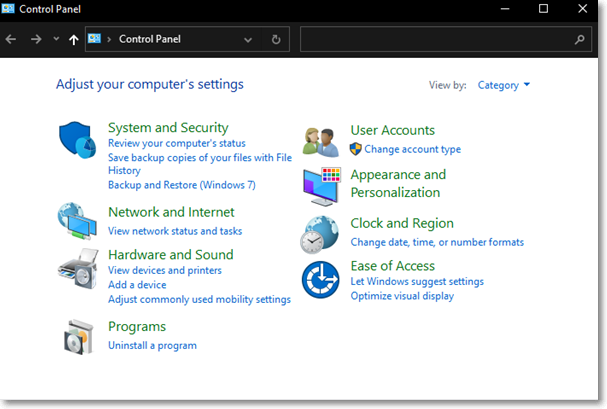
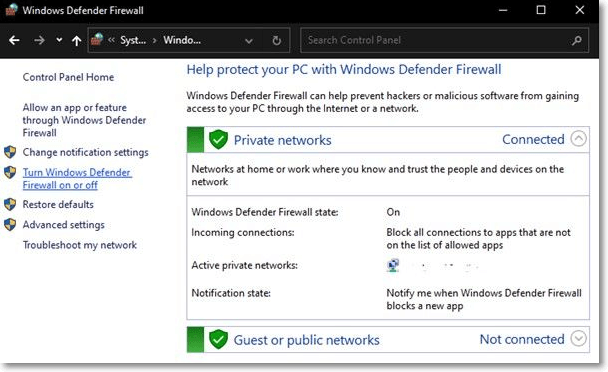
Step 3. To turn Windows Firewall on or off, click the "Turn Windows Firewall on or off" option.
Step 4. To turn off the firewall for both private and public networks, go to the "Private network settings" and "Public network settings" sections, and check the "Turn off Microsoft Defender Firewall" checkbox in each. This will deactivate the firewall for both types of networks.
Note: You can choose to disable either the Windows Defender Firewall or the third-party firewall, but not both, depending on your specific needs and preferences.
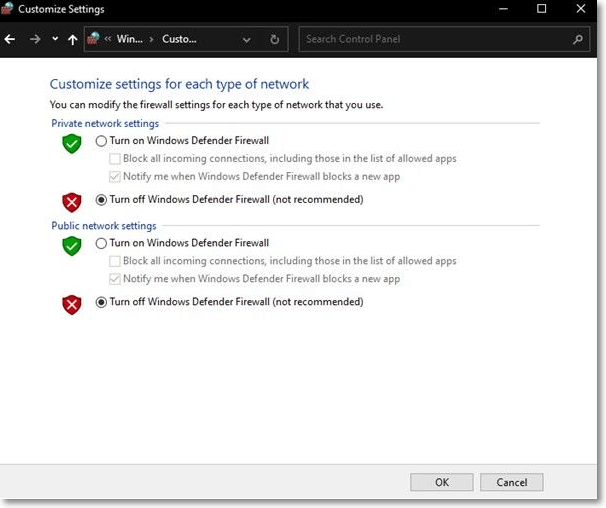
Step 5. Once you've selected the boxes, click "OK" to disable the firewall and apply the settings.
Method 2. Turn off The Firewall in Windows 10 with Windows Security
To turn off the firewall on your Windows 10 PC, you can use Windows Security, which is a built-in antivirus program that provides real-time protection against threats. It performs routine scans for malware, viruses, and other security risks, and automatically updates to maintain your device's security.
To turn off Windows Firewall via Windows Security, follow these steps: Open Windows Security, click on the Firewall & network protection option, then click on the toggle switch to turn off the Windows Defender Firewall, and finally click on the "Save changes" button to confirm the changes. This will disable the Windows Firewall on your computer.
Step 1. To open Windows Security on Windows 10, go to the Search menu and type "Windows Security", then click on it to open the tool.
Step 2. To enable Firewall & network protection, go to the sidebar and click on the Firewall & network protection option or navigate to the front menu and select it from there.
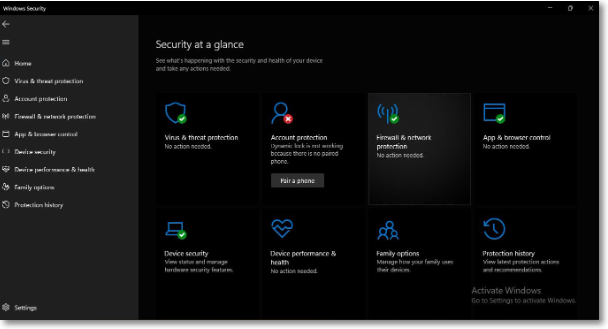
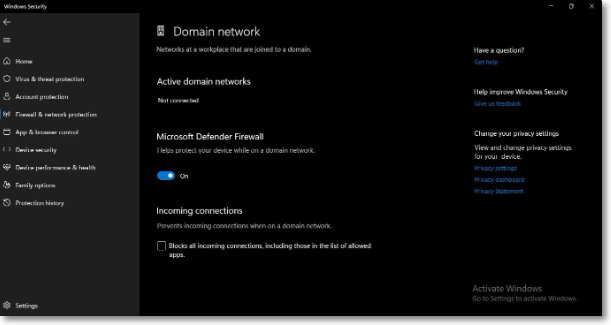
Step 3. Windows firewalls are categorized into three types: Domain network, Public network, and Private network, each with its own set of rules and settings.
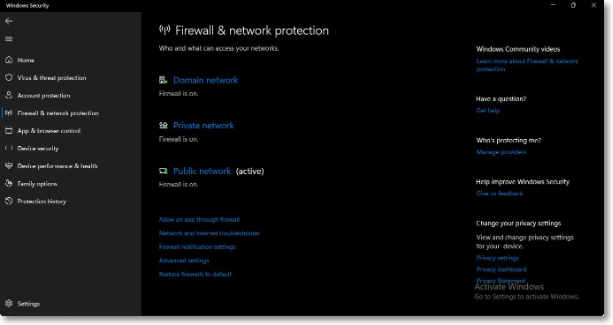
Step 4. To disable the firewall, click on the firewall you wish to disable, then toggle the switch to OFF under the "Microsoft Defender Firewall" option.
Note: To completely turn off the firewall from your Windows 10 PC, you need to disable each of the three firewalls, following the guideline provided, which involves navigating to the Windows Defender Firewall settings, disabling the firewall, and then repeating the process for the Windows Defender Firewall (Private Networks) and Windows Defender Firewall (Public Networks).
Method 3. Turn off The Firewall in Windows 10 with The Command
To turn off the Windows 10 firewall for those not tech-savvy, one can use the Command Prompt, a program included in Windows 10 that interprets commands. By using it, one can automate routine work, carry out complex administrative tasks, or investigate and resolve certain Windows problems, including turning off the firewall.
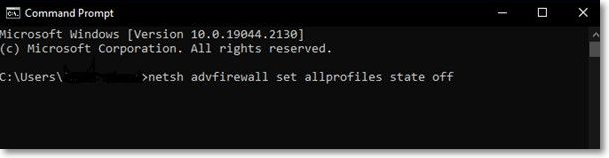
To turn off the Windows 10 firewall via Command Prompt, you can use the netsh command. Open Command Prompt as an administrator, then type "netsh advfirewall set currentprofile=off" and press Enter.
Step 1. Go to the Search menu, type either CMD or Command Prompt and launch this Windows terminal by clicking on it.
Step 2. Type "netsh advfirewall set domainprofile state off" on your Command Prompt, and press Enter to disable the Domain Network Firewall. You can run the same command by typing "publicprofile" or "privateprofile" instead of "domainprofile" to disable the Public or Private Network Firewall.
Step 3. To disable all firewalls on Windows 10 at once, type the command "netsh advfirewall set allprofiles state off" and press Enter.
Conclusion
Microsoft integrated a firewall in Windows 10 to protect against viruses, malware, and security risks. While it's not recommended to turn it off, there may be situations where you need to. We've outlined three built-in methods to disable the firewall on Windows 10, making it easy to do so. By disabling your firewall, you can test your network connections, but be aware that this may leave your system vulnerable to security risks.
Related Articles
- TF Card vs. SD Card: 10+ Things You Want to Know
- 2022 Tips| Are You Sure You Want to Copy This File Without Its Properties [Fixed]
- Can't Install macOS Ventura? Here Are the 9 Best Solutions
- Computer Freezes When Playing Games in Windows 10
- What Is M3U8 File? How to Open and Convert M3U8 File?
Users create playlists for listening to music without putting much effort into starting songs now and then. M3U8 Files are known to hold the user playlists. To use them in a better way, this article provides an overview of how to open and convert M3U8 files with the right approach. - What Is A USB Memory Stick? Complete Information on Memory Stick
A USB memory stick, created by Sony, is a portable flash memory card used for data storage, backup, and file transfer between devices. It's a rewritable, compact alternative to optical hard discs, offering faster speeds and larger storage capacity for individual devices.
Products
Articles & Tutorials
- Data Recovery
- Data Backup
- File Recovery
- File Backup
- System Backup and Restore
- Disk and Partition Clone
- Technical articles
- Mobile articles
- Disk Master Help
- Windows Data Recovery Tutorials
- Windows Secure Delete Tutorials
- Windows Partition Management Tutorials
- Windows File Backup and Restore Tutorials
- Windows System Backup and Restore Tutorials
- Windows Disk Backup and Restore Tutorials
- Windows Clone Tutorials