How to Check External Hard Drive Health on Windows 10/11 [Step-by-Step Guide]
External hard drives have become a popular storage option due to their portability, small size, and affordability. However, their lifespan can be affected by various factors, including temperature, environment, and specific usage, making them vulnerable to data loss.
To reduce data loss, regularly check the health of external hard drives, which can be done by using the built-in diagnostic tool, such as the "chkdsk" command in Windows or the "fsck" command in macOS, to scan for errors and fix them. Additionally, use third-party software like CrystalDiskInfo or HD Tune to run a thorough diagnostic test, which can detect potential issues and provide recommendations for maintenance. This proactive approach can help prevent data loss and ensure the external hard drive remains in good working condition.
How to Check External Hard Drive Health on Windows 10/11
Here, we discovered 2 efficient ways that you can follow to check the external hard drive status with ease. You can check the external hard drive status by using the command prompt to check the disk usage and free space, or by using the Disk Management tool in Windows to check the disk status.
#1. Via Qiling Disk Master
Qiling Disk Master can efficiently test the health condition of your external hard drive, checking SMART statuses like temperature, status, power on hours/count, and unsafe shutdowns, helping you identify potential issues and prevent data loss.
Let's learn more about it:
- System supported: Windows 11/10/8.1/7, Windows XP/Vista
- Operation difficulty: Low
- Interface: Clear
- Targeted users: All users
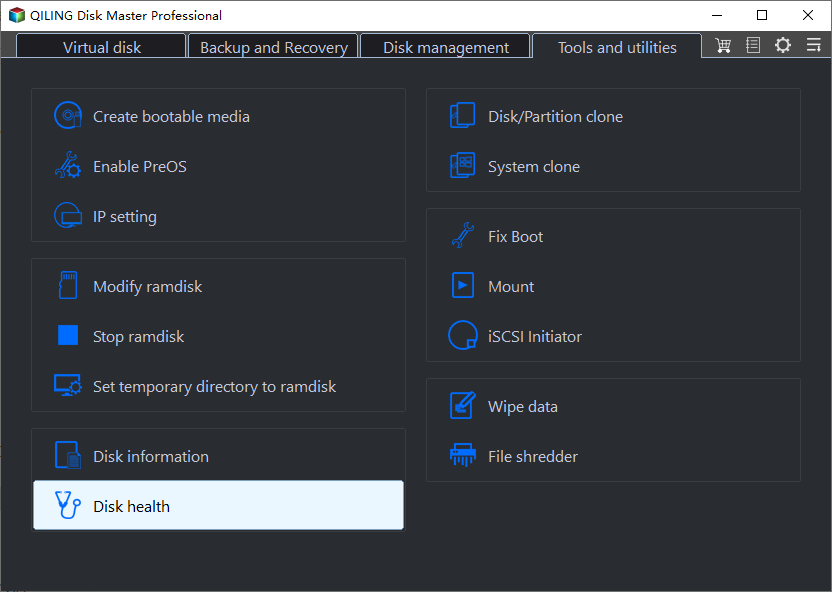
Step 1. Launch Qiling Disk Master, then click the blue arrow to activate the "Disk Health" feature from the "Tools and utilities" tab.
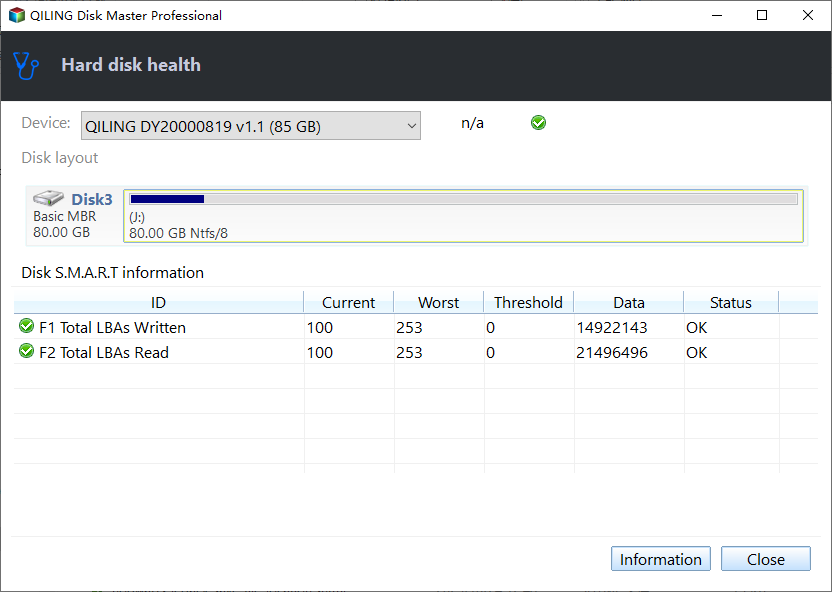
Step 2. Select the target disk and click the "Refresh" button to view its health condition.
Qiling Disk Master is a reliable hard drive health monitor that can perform various tasks, including
- Run disk performance test
- Test SSD read/write speed
- Check SSD health on Windows 10
- Run external hard drive speed test
- Check hard drive health on Windows 7/8/10/11
To check the health condition of your external hard drive, download this tool and run it. The detailed result provides you an idea of its current state, and based on that, you can take necessary actions to ensure its optimal performance.
#2. Via CHKDSK
To check the status of an external hard drive without downloading third-party software, you can use the Windows built-in tool CHKDSK. You can run the command to check the drive's status, but this method has limitations, as you can only retrieve limited data and won't be able to view other details. If you want a simple check, follow these steps:
Step 1. Right-click the Windows icon, select the "Run" option, and type "cmd" in the Run Window.
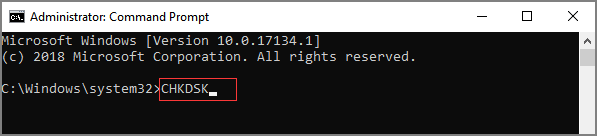
Step 2. Type chkdsk in the Command Prompt window and hit "Enter."
The Command Prompt will scan your external drive and display any errors found.
Here, I list some other topics related to external hard drives, so click them if you are in need of them.
Conclusion
Regularly checking the health of an external hard drive is crucial to prevent data loss. You can use CHDKSK commands to check the health, but it will only provide a simple result. For a more detailed analysis, including temperature and status, we recommend using Qiling Disk Master.
Qiling Disk Master helps monitor the health of an external hard drive by checking its SMART status, allowing you to take proactive measures to protect your device.
Don't wait - download this tool and run an external hard drive health check today to ensure your data is safe and secure.
Check External Hard Drive Health FAQs
Here's a one-paragraph summary: If your external hard drive is not spinning up, not showing up on your computer, or has a bad sector, you can try checking its health using built-in tools like Disk Utility on Mac or the Check Disk utility on Windows. You can also use third-party software like CrystalDiskInfo or HDTune to scan the drive and identify any issues. Additionally, you can try running a disk cleanup, disk defragmentation, or disk error checking to see if it resolves the problem. If none of these steps work, it may be time to consider replacing the external hard drive.
1. How can I test if my external hard drive is failing?
As mentioned above, you can connect your external hard drive to a Windows PC and follow the steps below:
Step 1. Download and launch Qiling Disk Master after connecting your external hard drive.
Step 2. Click the "Disk Health" option under the "Discovery" section.
Step 3. Choose the external hard drive and click the "Refresh" button.
This tool allows you to monitor the temperature and status of your external hard drive, providing a warning if any abnormality is detected.
2. How do I know if my external hard drive is physically damaged?
There are special signs when your external hard drive gets physically damaged, such as visible cracks, dents, or holes in the casing, and/or signs of overheating, such as burn marks, melting, or a strong burning smell.
- Strange sound
- Computer slows down
- The operating system fails to start
- Black screen issue
- Computer crashes frequently
- The file takes multiple attempts to open
3. How do I check if my hard drive is in good condition?
To check the health of your hard drive via the Command Prompt (CMD), follow these steps:
Step 1. To open the Command Prompt, press Windows + R keys together, type "cmd" in the Run window, and press Enter.
Step 2. To run the WMI (Windows Management Instrumentation) command-line tool, open the Command Prompt window and type the command `wmic` followed by pressing the "Enter" key. This will open the WMI command-line interface, allowing you to execute various WMI queries and commands.
Step 3. Finally, type "diskdrive get status" and press "Enter" again.
Step 4. Command Prompt will display all your hard drives' statuses:
- OK means the hard drive is healthy.
- Pred Fail means the hard drive may crash anytime soon.
Related Articles
- How to Wipe Hard Drive in Windows 10 - 3 Safe Ways 🔥
- How to Partition SD Card for Android
- Fix High RAM Memory Usage Issue on Windows 11/10 [10 Practical Fixes]
- Unable to Install Windows 10 on Dynamic Disk? 3 Fixes 💡
- Fixed: Blue Screen of Death Error 0x000000C5 | Top Ways
Struggling with the Blue Screen of Death Error 0x000000C5? This issue can be resolved quickly and efficiently with the right solutions and expert tips. - Acer Stuck on Loading Screen - 9 Quick Fixes 🔥
If your Acer laptop is stuck on the loading screen, you can fix it using advanced repair features and professional software.
Products
Articles & Tutorials
- Data Recovery
- Data Backup
- File Recovery
- File Backup
- System Backup and Restore
- Disk and Partition Clone
- Technical articles
- Mobile articles
- Disk Master Help
- Windows Data Recovery Tutorials
- Windows Secure Delete Tutorials
- Windows Partition Management Tutorials
- Windows File Backup and Restore Tutorials
- Windows System Backup and Restore Tutorials
- Windows Disk Backup and Restore Tutorials
- Windows Clone Tutorials