Use Diskpart to Create Primary Partition or Volume on Windows [For Beginners]
Key Takeaways
To create a primary partition, two methods are available: using DiskPart, a built-in tool that provides a complete process, and Qiling Disk Master Free, a third-party software that makes the process easy.
DiskPart Create Partition & Create Primary Partition
If you're looking for an easy alternative to create a primary partition, you can use Qiling Disk Master. This tool allows you to create a primary partition with ease, making it a great option for those who are new to partitioning or need a hassle-free experience.
Create Primary Partition FAQs
Need to Create Partition Primary?
Creating a primary partition is crucial for installing an operating system on a computer. It allows you to divide your hard drive into separate sections, improving organization and performance, and serves as a security measure to protect critical data from unauthorized access.
DiskPart Create Partition & Create Primary Partition
DiskPart is a text-DiskPart is a built-in disk partitioning utility in Windows that enables users to create, delete, and format disk partitions, as well as modify other attributes, and supports both MBR and GPT disks.
See DiskPart Create Volume:
Step 1. Open Command Prompt on your Windows PC.
- Press Windows + R to launch the "Run" box.
- Type "cmd" and click "OK".
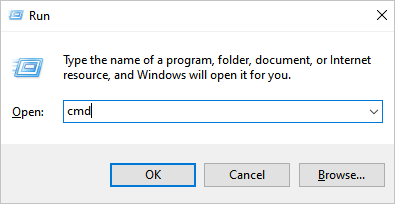
- Or you can search "Command Prompt" in the search box.
Step 2. Type diskpart and press Enter.
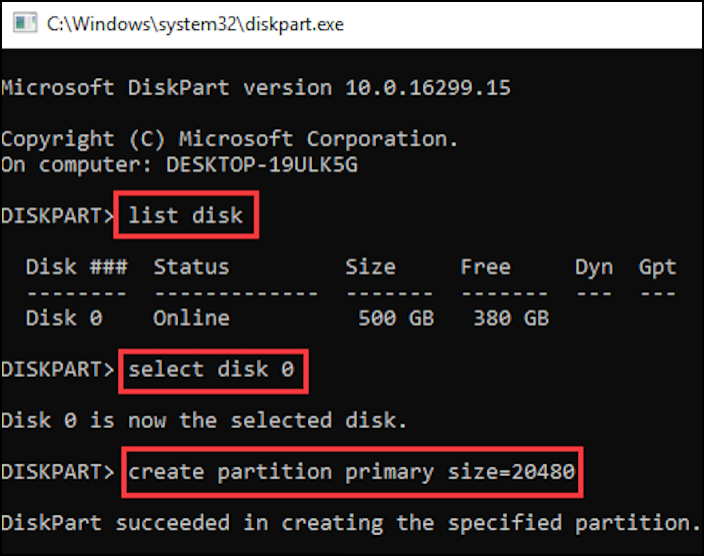
Step 3. On the Diskpart window, type the following commands:
list disk To create a primary partition on a specific disk, you first need to identify the disk you want to partition. The command `CMD` lists all storage devices currently used, allowing you to select the targeted disk. Once you've identified the disk, you can proceed with creating a primary partition on it.
select disk X To delete the partition or volume, you'll need to select the disk where it's located. You can do this by typing the command "select disk X", where X is the disk number you've chosen on the last step, like select disk 1. Once you've selected the disk, you can then delete the partition or volume by typing the command "delete partition" or "delete volume", depending on the type of disk you're working with.
create partition primary size=X If you want to create an extended or logical partition, you can use the command "create partition extended" or "create partition logical".
assign letter=X To avoid controversy, you can check all drive's letters on the File Explorer - This PC -> Devices and Drives, and then assign a new letter for the storage devices, like D, E, F. This approach ensures that you're not overwriting any existing drive letters, thereby preventing potential issues.
DiskPart Create Partition/Volume Tutorial
- 3:40 Create the Volumes
Easy Alternative to Create Primary Partition - Use Qiling Disk Master
DiskPart is a useful tool for creating a primary partition, but it has limitations that can make it difficult for beginners to use.
- The software is not user-friendly for beginners, as it requires administrator authority and specific commands to be entered in a particular order. This can lead to errors and frustration, such as incorrect partition size setup, which is a common issue.
- You cannot manually stop the operation.
- It cannot extend the system volume.
......
To avoid the limitations of the current partition creator, using another partition creator is a responsible option. You're in luck as Qiling Disk Master is an easy and professional partition manager that provides a user-friendly interface and features for Windows users, allowing you to create a volume in just three steps.
Step 1. Launch Qiling Disk Master, right-click on the unallocated space on your hard drive or external storage device and select "Create" from the main window.
Step 2. Adjust the partition size, file system, label, etc. for the new partition.
Step 3. Click the "Proceed" button to create a new partition.

How to Create Volume/Partition Using Diskpart?
Diskpart is a built-Disk Utility is a utility that offers multiple ways to assist you in creating partitions and handling volumes in Windows 11/10. Our article provides a guide on how to use Diskpart to create partitions, as well as other useful Diskpart commands.

Create Primary Partition FAQs
Still have questions about "DiskPart Create Primary Partition"? Use another tool? We collected the popular questions from Google Search.
How do I create a primary partition in disk management?
Honestly, here is not available
To create a partition with unallocated space:
1. Right-click the Windows icon and select Disk Management.
2. Select the disk on which you want to create a partition.
3. Right-click the unallocated space and select "New Simple Volume" from the list.
4. Set the file system and click Next.
Is c drive a primary partition?
When a computer is first turned on, the BIOS loads information from the Master Boot Record (MBR) on the hard drive's primary partition, which is usually the C drive. This information is then passed to the bootloader, which loads the operating system. The primary partition typically contains the essential files needed to start the operating system, making it difficult to delete or format without damaging the OS.
What is a primary partition in Windows 10?
In Windows 10, a primary partition is a type of partition that stores the operating system and its files, typically the C: drive. It can be created during the installation process or after Windows has been installed.
How do I create a primary and extended partition?
You must use a third-A partitioning tool is used to create primary and extended partitions on a disk. To use the tool, you must first create an extended partition, which can then hold multiple primary partitions. Within the extended partition, you can create as many logical partitions as needed, but only four primary partitions are allowed on a disk. This process allows for efficient use and organization of the disk.
Related Articles
- NVMe Speed Test Tutorial on Windows [3 Efficient Ways]
- How to Fix ASUS Stuck on Logo | 7 Efficien Solutions💡
- How to Format a Hard Drive Partition for Free
- How Do I Securely Erase Hard Drive/SSD, Wipe Confidential Data? Your Reliable Guide Is Here
- How to Format Galaxy S5 SD Card [2024 Newest Solutions]
this guide will help you figure out the reasons for formatting the Galaxy SD card and offer three solutions to show you how to format Galaxy S5 SD card on Windows, Mac, and Android. - How to Format Hard Drive from BIOS Windows 10
This guide will provide three complete guides to formatting the hard drives from BIOS Windows 10, including format via Qiling Disk Master, Command Prompt, and formatting the drive during Windows installation.
Products
Articles & Tutorials
- Data Recovery
- Data Backup
- File Recovery
- File Backup
- System Backup and Restore
- Disk and Partition Clone
- Technical articles
- Mobile articles
- Disk Master Help
- Windows Data Recovery Tutorials
- Windows Secure Delete Tutorials
- Windows Partition Management Tutorials
- Windows File Backup and Restore Tutorials
- Windows System Backup and Restore Tutorials
- Windows Disk Backup and Restore Tutorials
- Windows Clone Tutorials