[Fixed] EmuDeck Not Recognizing SD Card on Steam Deck
The Steam Deck allows users to expand storage with an SD card, making it possible to accommodate more games and content. Additionally, with EmuDeck, players can now enjoy a wide range of retro games, including Atari, Sega Megadrive/Genesis, and Dreamcast, among others.
If you're experiencing issues with the EmuDeck not recognizing your SD card on the Steam Deck, this guide from Qiling can help. To resolve the problem, continue reading to explore practical steps and solutions.
Why Does EmuDeck Not Recognize SD Card
EmuDeck not recognizing SD cards can be caused by various factors, including outdated firmware, corrupted SD card drivers, or issues with the SD card itself, such as physical damage or incorrect formatting.
Possible Reasons for EmuDeck Not Recognizing SD Card:
- Software Bugs: Glitches or coding errors in the EmuDeck software may prevent it from recognizing the SD card due to technical issues.
- Driver Issues: Outdated or incompatible drivers can cause communication issues between EmuDeck and the SD card, resulting in problems.
- Poor Contact: Physical connectivity issues, such as a loosely or improperly inserted SD card, can cause problems with the recognition process.
- Incompatible Format of SD Card: The Steam Deck's SD card format is EXT4, and if it's not supported, EmuDeck may not be able to recognize and interact with it.
- Corrupted SD Card: Data corruption on the SD card can prevent EmuDeck from properly accessing or detecting it.
- EmuDeck Misconfiguration: Incorrect EmuDeck settings may cause it to fail to recognize and use the SD card, leading to issues with emulation and game saves.
- Permissions and Security: Issues with user permissions or security settings can prevent EmuDeck from accessing the SD card.
The information is useful. The information is useful. The information is useful.
How to Fix EmuDeck Not Recognizing SD Card on Steam Deck
To fix the issue where your EmuDeck doesn't detect an SD card, you can try the following: First, ensure that the SD card is properly inserted into the EmuDeck and the SD card slot is clean and free of any debris. Next, try formatting the SD card using the EmuDeck's built-in formatting tool or a separate SD card formatting software.
- Solution 1. Reinsert the SD Card and Restart the Steam Deck
- Solution 2. Update Steam Deck's Drivers
- Solution 3. Check SD Card
- Solution 4. Format SD Card to EXT4
- Solution 5. Check EmuDeck Settings
- Solution 6. Reinstall EmuDeck
If your Steam Deck is not turning on, try reinserting the SD card and restarting the device. This simple step can resolve the issue. Make sure the SD card is properly inserted and the Steam Deck is turned off.
To resolve the Steam Deck's SD card recognition issue, simply reinsert the SD card into the Steam Deck's SD card slot and restart the Steam Deck. This straightforward solution corrects random bugs and ensures a proper connection, which may resolve the recognition issue on your handheld gaming device.
Solution 2. Update Steam Deck's Drivers
Updating Steam Deck's drivers can resolve various issues, including EmuDeck not recognizing the device. To do this, follow the necessary steps to ensure the drivers are up-to-date, which can help resolve the problem and get EmuDeck working properly again.
Step 1. Press the "STEAM" button and go to "Settings" > "System."
Step 2. Click "Check for Updates."
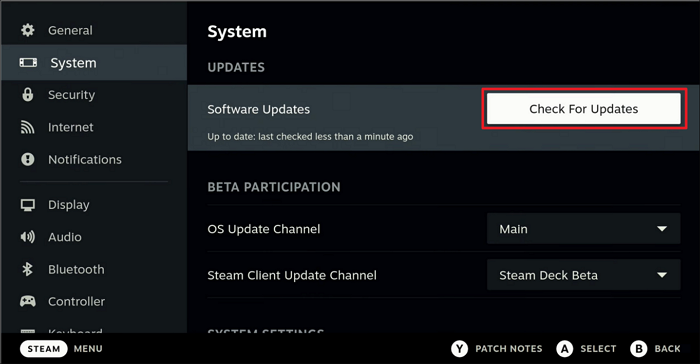
Step 3. The focus should be on updating device drivers, prioritizing any specific driver updates listed, especially those related to storage or SD card functionalities, as they are crucial for the overall system performance.
Step 4. Once all updates are installed, restart your Steam Deck and check if EmuDeck recognizes the SD card now.
If your SD card isn't working, try using it on another device like a PC or camera to see if it's still functional. If it doesn't work there either, it might be corrupted and need repairing.
For a more in-For a thorough analysis and repair of an SD card, consider utilizing Qiling Disk Master Free. This software provides valuable features such as "Check File System" and "Surface Test" to diagnose and address issues with the SD card, offering a comprehensive solution for free.
Examining the SD card's functionality on different devices and using a SD card repair tool can help identify and potentially resolve the underlying issues causing EmuDeck's SD card recognition problem on the Steam Deck.
Follow the steps to perform "Check File System":
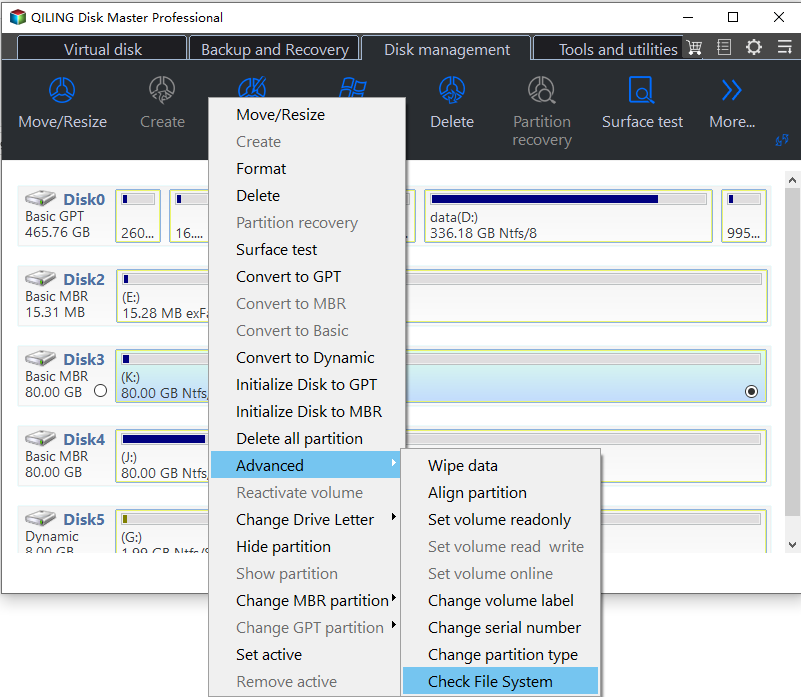
Step 1. To check the file system on a partition, open Qiling Disk Master on your computer, locate the disk, right-click the partition you want to check, and select "Advanced" > "Check File System".
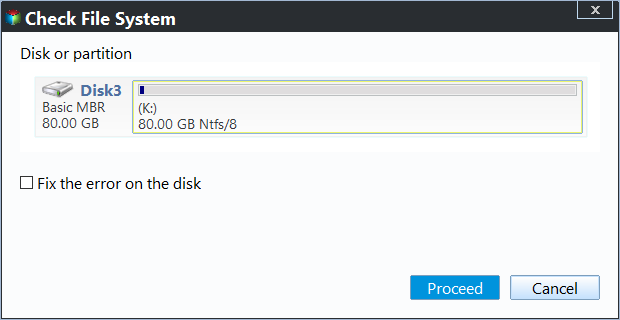
Step 2. In the Check File System window, select the "Fix the error on the disk" option and click "Proceed".
Step 3. The software will start scanning your disk's partition file system. Once it's done, click "Finish".
Follow the steps to perform "Surface Test":
Step 1. Open Qiling Disk Master, right-click the disk you want to check and click "Surface Test".
Step 2. The operation will be performed immediately, and all bad sectors will be marked red.
Solution 4. Format SD Card to EXT4
The Steam Deck's SD card should be formatted to EXT4 to avoid issues such as not detecting or recognizing the card.
- Warning
- Before formatting, make sure to back up any important data on your SD card by cloning it, to avoid losing it in the process. This way, you'll have a copy of your data if anything goes wrong during the formatting process.
To convert an SD card from FAT32 to EXT4, follow these steps:
Step 1. Connect the SD card to your EmuDeck Steam Deck, press the "STEAM" button, and choose "Settings".
Step 2. Navigate to the System section and locate the Format SD Card option on the right side.
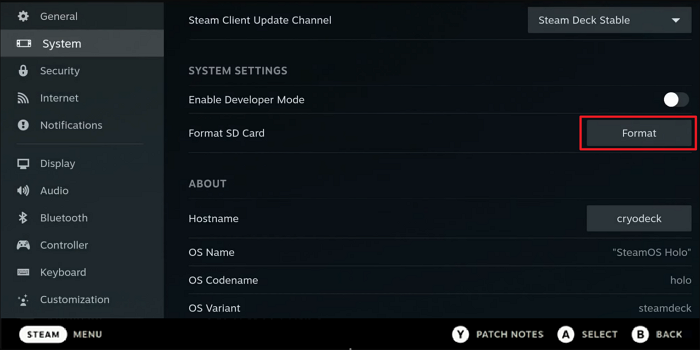
Step 3. Confirm the formatting process.
- Tip
- A user on Reddit reported that renaming the SD card after formatting, without any spaces in the new name, allowed them to successfully use the Steam Deck. Try renaming your SD card without any spaces in the new name after formatting. This may resolve the issue.
If you're having trouble formatting your Steam Deck's SD card, such as the SD Card format option being grayed out, you can try using the Qiling Disk Master's Partition Format feature instead, which can provide a more user-friendly experience and a 100% success rate.
Solution 5. Check EmuDeck Settings
To ensure EmuDeck is set up correctly, access the settings menu to review and configure the paths for your game libraries and emulators, making sure they are accurately set to avoid issues with recognizing the SD card.
A fresh reinstall of EmuDeck might resolve the issue of it not recognizing the SD card on Steam Deck, but it will delete your EmuDeck configuration and saved states, so be sure to back them up and remove any other external drives connected to the Steam Deck.
Follow the steps:
Step 1. To switch your Steam Deck to Desktop Mode, you can long-press the power button and select Desktop Mode from the options. This will allow you to access a full desktop environment on your Steam Deck, giving you more control and flexibility over your gaming experience.
Step 2. Visit the official EmuDeck website and download the appropriate installer for your Steam Deck operating system (SteamOS).
Step 3. Transfer the downloaded installer file to your Steam Deck's desktop in Desktop Mode.
Step 4. The EmuDeck installation script can be launched by double-clicking the installer file on your desktop. This will initiate the installation process.
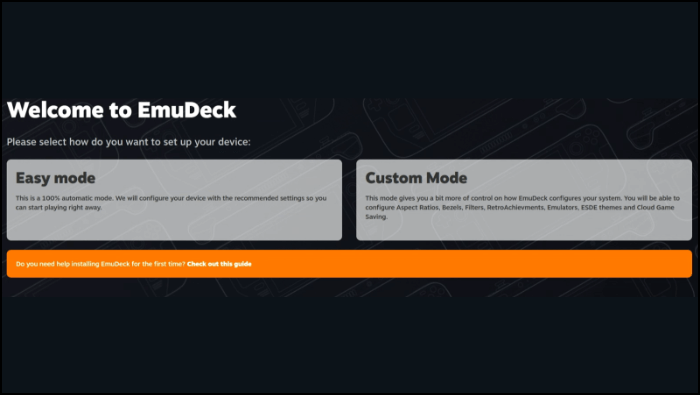
Step 5. The installer will be started. Choose your preferred options, either Easy Mode for simplicity or Custom Mode for more control.
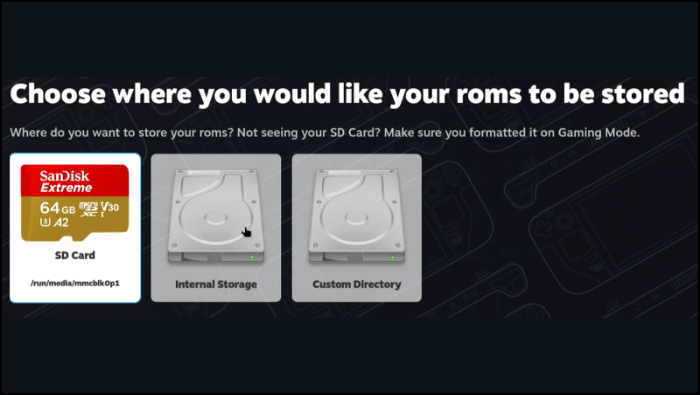
Step 6. Select where to install EmuDeck: Internal storage or SD card when prompted.
- Tip
- If this is your first time, we recommend Easy Mode, and we also recommend that you install it on your SD card.
EmuDeck users are experiencing an issue where the software is not recognizing their SD card, causing problems with game saves and loading. This issue is not unique to one user, and it's recommended that others who are experiencing the same problem check their SD card and ensure it's properly formatted and inserted correctly. Additionally, users can try updating their EmuDeck software to the latest version, as this may resolve the issue.
Final Words
This guide has explored various troubleshooting steps, from reinserting the SD card to updating Steam Deck drivers and formatting the SD card to EXT4, addressing specific aspects of the problem.
Checking the SD card from other devices, using tools like Qiling Disk Master for diagnostics and repairs, and examining EmuDeck settings can add a layer of comprehensiveness to the troubleshooting process. We recommend users leverage the advanced features of Qiling Disk Master for a more robust and user-friendly approach.
FAQs on EmuDeck Not Recognizing SD Card
If you have any queries about the topic, you may find appropriate answers from the following FAQs. The FAQs cover various aspects of the topic, including its definition, key features, benefits, and limitations.
1. Why is EmuDeck not recognizing my SD card?
EmuDeck may not recognize your SD card due to software bugs, driver issues, poor physical contact, incompatible SD card format, corruption, misconfigurations, or security settings, and the guide above provides comprehensive solutions.
2. Should I install EmuDeck on SD card or internal?
Installing EmuDeck on your SD card is generally recommended, especially if your internal storage is limited, as it frees up precious space for your game library and ROMs. However, if your SD card is slow or unreliable, consider internal storage for optimal performance.
3. Why can't my Steam Deck format my SD card?
Formatting issues can arise from various reasons, such as the SD card being write-protected, corrupted, or formatted in an incompatible format.
Related Articles
- How to Unlock ASUS Laptop Without Password - Tutorial
- How to Fix 'Can't Extend Volume' in Windows Server [2024 Guide]
- How to Fix ASUS Stuck on Logo | 7 Efficien Solutions💡
- Best 3 DBAN Alternatives to Wipe Hard Drive - 2024 New
- Best Hard Disk Speed Test Software Free Download for Windows 11/10 in 2024
Discover the best hard disk speed test software for Windows 11/10 and measure your disk performance in 2024 with the top-rated, free program. This software provides you accurate and reliable results, helping you understand what is hard disk speed test software and how it works. - Tutorial: How to Fix Hard Drive Failure on Windows 10
If you, too, are having a hard time understanding how to fix hard drive failure Windows 10, this detailed guide is what will help you get through it!
Products
Articles & Tutorials
- Data Recovery
- Data Backup
- File Recovery
- File Backup
- System Backup and Restore
- Disk and Partition Clone
- Technical articles
- Mobile articles
- Disk Master Help
- Windows Data Recovery Tutorials
- Windows Secure Delete Tutorials
- Windows Partition Management Tutorials
- Windows File Backup and Restore Tutorials
- Windows System Backup and Restore Tutorials
- Windows Disk Backup and Restore Tutorials
- Windows Clone Tutorials