How Much Disk Space Does Windows 10 Take [Full Explanation]
Windows 10 can consume up to 30 GB of storage, more than its initial requirement, due to various reasons. To manage disk space, consider deleting unnecessary files, uninstalling unused apps, and freeing up space by removing temporary files, system logs, and other data that can be safely deleted. Regularly cleaning up disk space can help maintain a healthy and efficient system.
View the Necessary Information for: How Much Disk Space Does Windows 10 Take:
| ⏱️Reading Time | 2-5 minutes |
| 💻Supported System | Windows 10 |
| 🧑💻Suitable Users | All users, including beginners |
| ✍️Page Content |
✔️How Much Disk Space Does Windows 10 Take |
How Much Disk Space Does Windows 10 Take?
Windows 10 consumes a significant amount of space due to the disk driver creating restore points and saving temporary files and old Windows data, which accumulates over time.
- For a 64-Installing the Windows 10 operating system typically requires 20 GB of free storage.
- And if you are using a 32-The Bit operating system is surprisingly efficient, using only 16 GB of free storage.
After installing Windows 10 from scratch, you can expect to have around 30 GB of free storage available. However, as the operating system is used more frequently, it creates restore points, saves temporary files, and retains older Windows data, gradually increasing the total space needed to run Windows 10.
You can analyze disk space on your Windows PC using the free disk space analyzer Qiling Disk Master. The free version of Qiling Disk Master is a fantastic disk management application that provides a feature called Space Analyzer to check disc space consumption. It has a user-friendly interface and offers a range of alternatives.
- Determining the hidden space's size
- Searching for duplicate files
- Directly deletes files
- Shows the proportion of space that is occupied
To see how much disk space Windows 10 takes, open the File Explorer, click on "This PC" or "Computer" from the left sidebar, right-click on the drive where Windows 10 is installed (usually C:), and select "Properties." The amount of used and available disk space will be displayed.
Qiling Disk Master is also a top-rated Windows 10 disk space analyzer. After analyzing the disk space, you can perform actions such as modifying or deleting files to optimize your disk usage.
What Is the Ideal Disk Space for Windows 10?
500 GB is sufficient for general use, but 1 TB is recommended for storage-intensive projects like 4K video editing or gaming.
If you're looking to free up some disk space on your Windows 10 PC, we'll be discussing some helpful tips in the next part. If you found this guide useful, you can share it with others who might need it by clicking the social buttons below.
How to Reduce Disk Space in Windows 10?
To minimize the hard disk space consumed by Windows 10, consider implementing some practical solutions. As the operating system is bound to grow over time, it's essential to free up disk space. The following tips can help extend or free up disk space.
Extend System Partition
To extend the system partition, you'll need to have an unallocated storage space on your HDD, which should be close to the partition you want to enlarge. This process effectively enlarges the system as a whole, but it requires a contiguous unallocated area. You can use a tool like Qiling Disk Master to carry out the procedure.
Option 1. Extend System C drive with unallocated space
- 1. Right-click on the System C: drive and select "Resize/Move".
- 2. To increase the size of the C: drive, drag the system partition end into the unallocated space, effectively adding it to the C: drive.
- 3. Click "Proceed" to execute the operations and extend the C drive.
Option 2. Extend System C drive without unallocated space
- 1. Right-click a large partition with sufficient free space on the system disk, and select "Allocate Space".
- 2. Select the system drive at the "Allocate Space From" (*) To section, and drag the end of the System C drive into the unallocated space.
- 3. Click "Proceed" to save the changes and extend the C drive.
Qiling Disk Master is a comprehensive tool that offers a wide range of features for managing disks and partitions, including the ability to repartition hard drives, among other functionalities.
- Delete/resize/shrink partitions
- Check hard drive health
- Optimize hard drives' performance
- Format hard drive that is not visible
Qiling Disk Master is a software that helps users with various disk-related needs, such as partitioning, formatting, and data recovery. It can be downloaded and used for free to assist with these tasks.
Turn off Hibernation
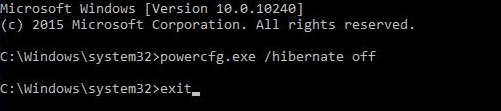
To turn off hibernation via Windows Terminal, you can run the command `powercfg /h off` in the Command Prompt or PowerShell. This will disable hibernation on your system.
Step 1. Open Windows Terminal as an administrator.
Step 2. To stop hibernation, copy & paste the command below and hit Enter:
Turn off System Restore
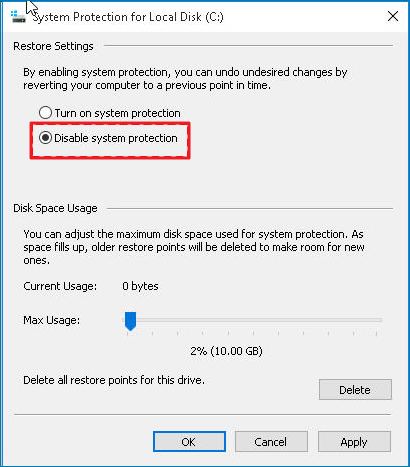
This is how you turn off system restore:
Step 1. Open File Explorer, right-click and choose the Properties option from the context menu.
Step 2. Click on the System Protection link next to Related Links.
Step 3. In the System Properties window, click on the Local Disk (C:) (System) option and then click on the Configure button below.
Step 4. To disable system protection, click the radio button next to "Disable system protection" in the System Protection window, then click Apply and OK to confirm the changes.
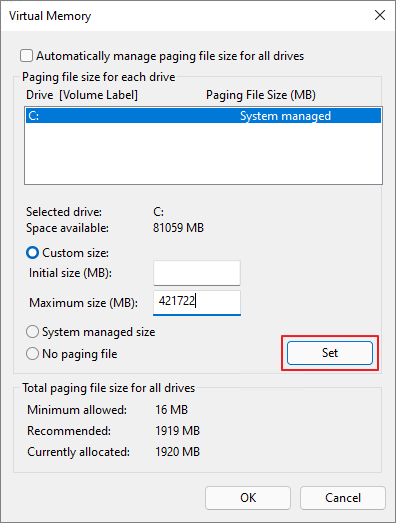
Reduce Virtual Memory Size
To reduce the virtual memory size and free up your PC's disk space, go to System Properties, then Advanced, and finally Performance Settings. In the Performance Options window, click on the "Change" button under the Virtual Memory section. In the Virtual Memory window, uncheck the box next to "Automatically manage paging file size for all drives" and then select a drive where you want to reduce the virtual memory size.
Step 1. Right-click on This PC > Properties > Advanced system settings.
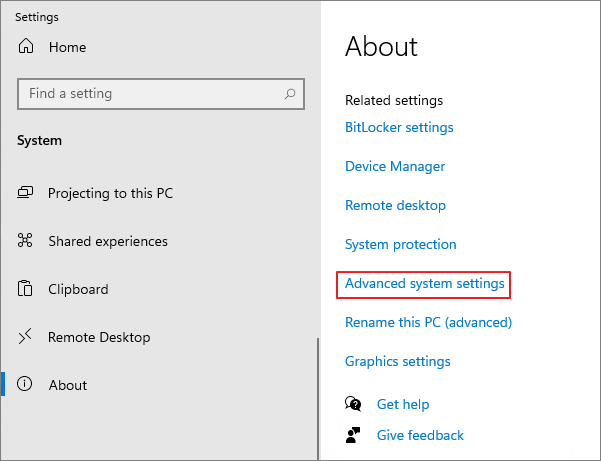
Step 2. To change virtual memory settings, select the Settings button from the Performance section, click the Advanced tab in the Performance Options box, and then click the Change button next to Virtual Memory.
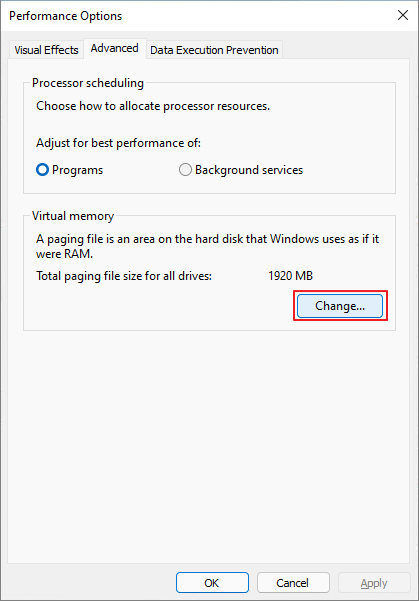
Step 3. To disable automatic virtual memory management, click the radio button next to "Automatically manage paging file size for all drives" in the Virtual Memory window, make any desired changes, and then click OK to save the changes.
Delete Temporary Files and Windows.old Folder
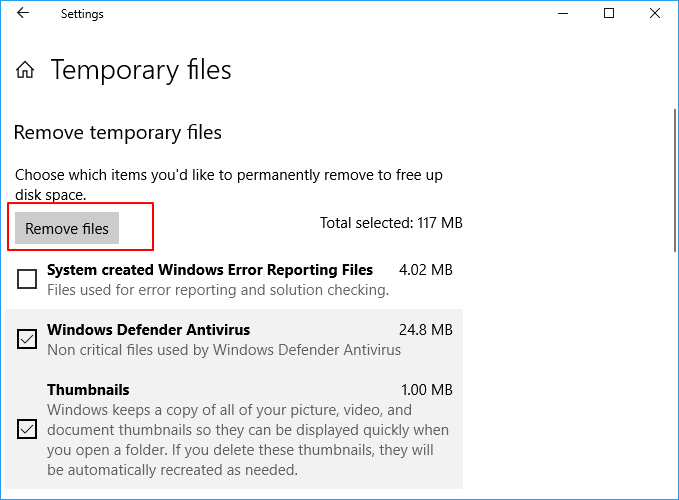
Windows saves old system info in a folder called Windows.old when updating, but you can delete it if you don't need it. This frees up space and removing temporary files also helps Windows run smoothly.
Note: After ten days, the Windows.old folder will be erased automatically, but you can delete temporary files manually.
Step 1. Open Settings > Storage > Temporary files.
Step 2. Click the Remove Files button to delete the temporary files.
Conclusion
Windows 10 requires a significant amount of storage, and updating to the latest version, such as Version 1903, requires even more space, with a minimum requirement of 32GB for the system partition.
To resize a partition in Windows 10, you can use Qiling Disk Master, which is a great option to start with. This tool not only allows you to resize a partition but also helps you check hard disk space and extend hard drive space. With Qiling Disk Master, you can easily manage your hard drive's capacity and ensure that you have enough space for your files and programs.
FAQs About How Much Disk Space Windows 10 Take
Windows 10 takes up a significant amount of space, and users often have questions about the minimum and maximum storage requirements. To address these concerns, here are some frequently asked questions and their answers: What is the minimum storage requirement for Windows 10? The minimum storage requirement for Windows 10 is 64 GB, but it's recommended to have at least 64 GB of free space to ensure a smooth installation.
1. Is 256GB SSD space enough for Windows 10?
256GB SSD may be sufficient for everyday use, but may not be enough for demanding tasks like gaming or video editing, requiring more storage space.
2. How much space does Windows 11 take on SSD?
Devices must meet the minimum hardware specifications of a 1 GHz or faster processor with 2 or more cores, 4 GB or more of memory, and 64 GB or more of free disk space to install or upgrade to Windows 11.
3. How to check how much hard drive space I have?
Here are the steps:
Step 1. Open File Explorer.
Step 2. Click on This PC on the left pane.
Step 3. The free space on your hard drive can be found under Devices and Drives.
Related Articles
- How to Crack Windows Password [Step-by-Step]
- How to Format a Hard Drive Partition for Free
- SATA vs SSD: Which One to Choose [Indepth Comparison]
- Tutorial: Surface Pro 8 SSD Upgrade [Step-by-Step Guide]
If you're running low on space on your Surface Pro 8 and want to upgrade the SSD. To do this, follow the step-by-step process outlined in this article, which will guide you through the process of upgrading the SSD on your device. - How to Test Western Digital Hard Drive Speed [Full Guide in 2024]
If you want to run Western Digital hard drive speed, this guide will tell you how to test Western Digital hard drive speed in two efficient ways, and you will also get bonus tips to speed up your hard drives. - Toshiba External Hard Drive Repair Tool | Fix Corrupted Drives Efficiently
If you're experiencing performance issues with your Toshiba external hard drive. By following the guide, you can find the perfect Toshiba external hard drive repair tool to fix any problems and get back to using your drive with confidence.
Products
Articles & Tutorials
- Data Recovery
- Data Backup
- File Recovery
- File Backup
- System Backup and Restore
- Disk and Partition Clone
- Technical articles
- Mobile articles
- Disk Master Help
- Windows Data Recovery Tutorials
- Windows Secure Delete Tutorials
- Windows Partition Management Tutorials
- Windows File Backup and Restore Tutorials
- Windows System Backup and Restore Tutorials
- Windows Disk Backup and Restore Tutorials
- Windows Clone Tutorials