Create Windows 10 Recovery USB (Including Windows 11, 8.1, 7)
Ⅰ. What Is a Windows 10 Recovery USB?
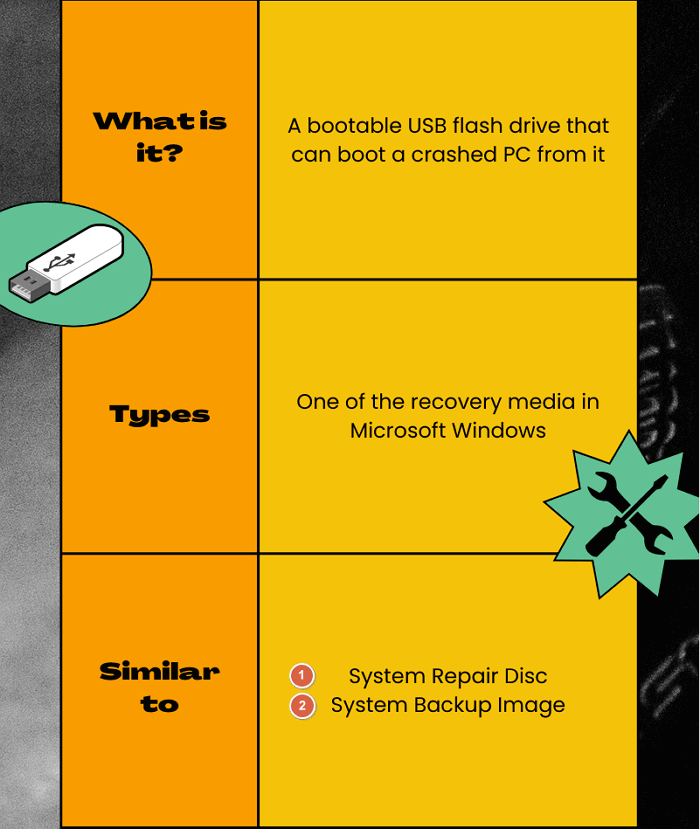
A Windows 10 recovery USB, disk, or drive is a bootable drive containing essential Windows installation files, allowing access to Windows Advanced startup options, such as System Restore, Startup Repair, Safe Mode, and Command Prompt. It essentially serves as a complete copy of your Windows 10 environment, stored on an external source like a USB flash drive, providing a backup and recovery solution.
A Windows 10 recovery USB allows you to repair or reinstall Windows 10 on a computer with a hardware failure or system corruption, effectively reviving it. It serves as a bootable drive that enables you to access advanced startup settings for repair or reinstallation.
LEARN MORE
There are three types of recovery media available in Windows 10: Windows 10 recovery USB, Windows 10 recovery DVD, and Windows 10 recovery ISO. Please follow the linked article for more information on Windows 10 recovery options and tools.
Ⅱ. Recovery Drive vs. System Repair Disc
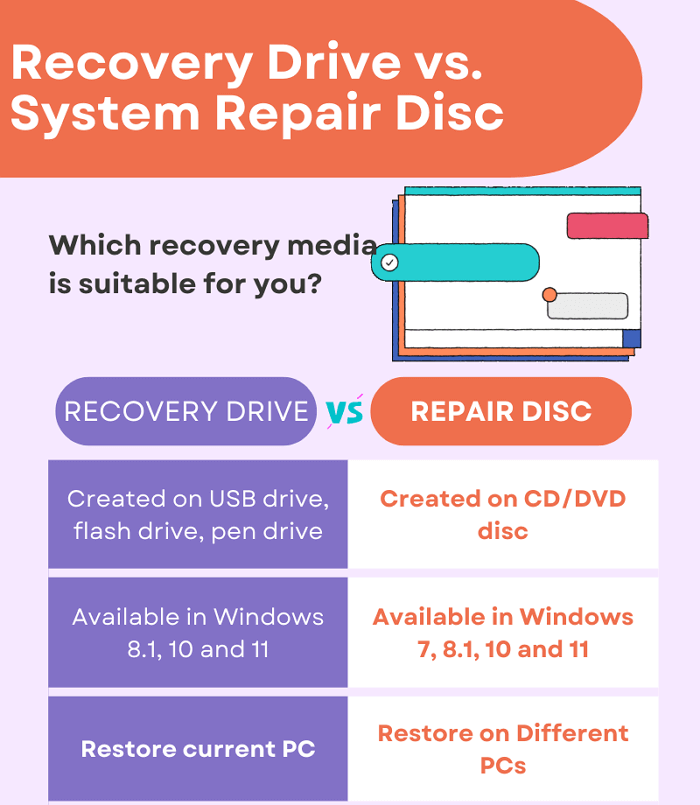
A system repair disc and a recovery USB drive are often confused with each other, but they serve different purposes. A recovery USB drive is a bootable USB drive that allows you to recover Windows from corruption and crash issues, while a system repair disc is a CD or DVD that contains tools to repair Windows problems, but it's not bootable and can only be used when Windows is already running. In other words, a system repair disc is more like a troubleshooting tool that can be used to fix specific issues, whereas a recovery USB drive is a more comprehensive recovery tool that can be used to recover Windows from more severe problems.
A system repair disc is a bootable CD/DVD that contains Windows installation files and recovery tools, allowing you to troubleshoot and restore your computer. It can be created using a blank CD/DVD within Windows 10 and used to boot up your PC for troubleshooting and restoring from a system image backup.
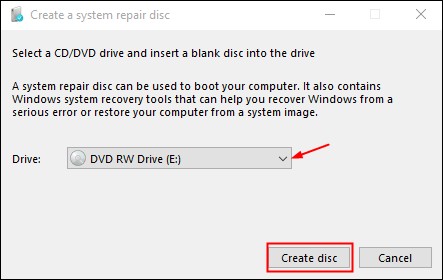
The process of creating a recovery tool differs between Windows versions. In Windows 8.1, 10, and 11, a recovery USB is created through the "Create a recovery drive" option. In contrast, Windows 7 users can create a system repair disc using the "Windows Backup and Restore" tool. Additionally, the type of media used also varies, with recovery USB drives supporting portable USB flash drives or pen drives, whereas system repair discs require a CD/DVD disc.
A recovery drive, which can be set up as a USB or CD/DVD, allows users to backup system files for reinstalling Windows. This differs from a system repair disc, which can be used on another computer with the same OS version for recovery, but is tied to the current PC for use. The recovery drive also enables users to backup system files, making it a useful tool for recovery purposes.
LEARN MORE
The main difference between a system repair disc and a recovery drive is that a system repair disc is a physical disc that contains a copy of the Windows operating system and is used to boot up a computer and repair or reinstall the OS, whereas a recovery drive is a digital copy of the OS that can be used to boot up a computer and repair or reinstall the OS, but can also be used to reset the computer to its original settings.
Ⅲ. Recovery Drive vs. System Image Backup
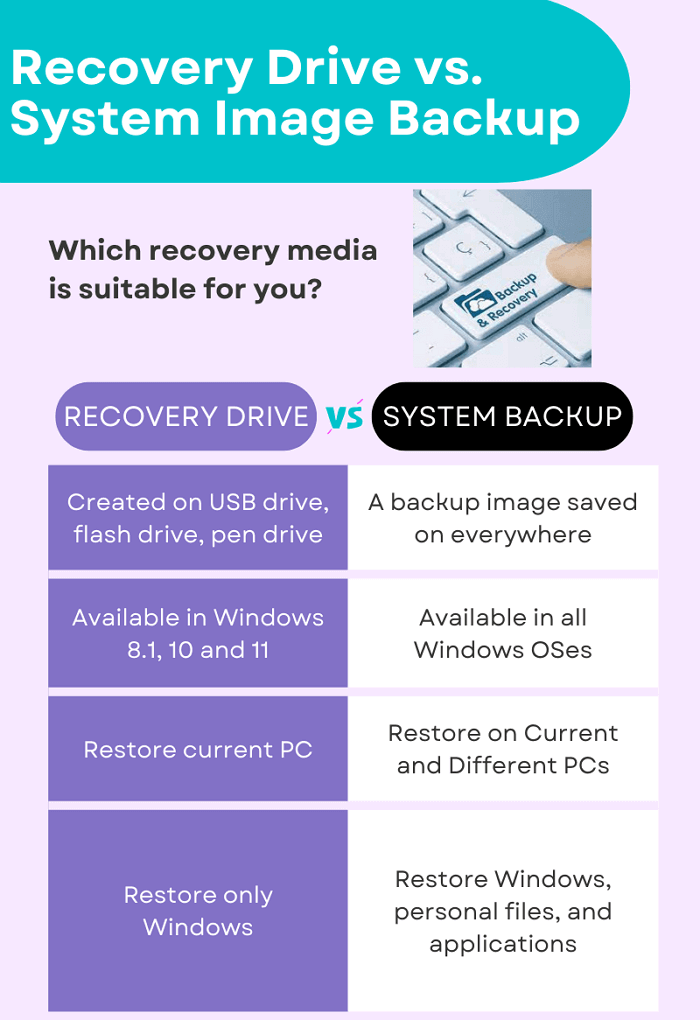
A system image backup is a complete backup of your computer's system, including all of its installed programs, settings, and data. It's essentially a snapshot of your entire system, which can be restored to a previous state in case of a problem or disaster. Unlike a Windows Recovery Drive, which only contains the necessary files to boot and repair your system, a system image backup is a more comprehensive backup that includes everything on your computer.
A system image backup is a snapshot of your Windows environment, including programs, settings, and files, allowing you to restore your computer to a previous state if needed.
System images are typically large files that are stored on external hard drives or network locations. In Windows 10, you can create a system image backup using the Backup and Restore tool, which can be useful for recovering your system if it crashes completely. Alternatively, many users prefer to use third-party backup software, such as Qiling, which offers a range of features and benefits. Once a system image file is created, it can be used to restore your system to a previous state, providing a safety net in case of a major system failure.
Windows Recovery Drive and System Image Backup are both used for Windows reinstallation, but they serve different purposes. A Windows Recovery Drive is a bootable USB drive that helps troubleshoot Windows startup issues, while a System Image Backup is an image file of your Windows environment that can restore your computer to an earlier state.
A Windows Recovery Drive contains only Windows installation files and recovery tools, whereas a System Image Backup includes all programs, settings, and files. If you want a clean Windows 10 reinstall, a Recovery Drive suffices, but for restoring your computer to an earlier state, a System Image Backup is necessary.
LEARN MORE
In modern times, system backup images have taken over the role of recovery USB drives in Windows 10, and other Windows versions, offering more advanced features. A system backup image can do more tasks than a simple recovery USB. Check the key differences on system backup image vs. recovery drive in every detail.
IV. How to Create a Windows 10 Recovery USB Drive (with Pictures)
* Microsoft Windows 8.1, 10, and 11 has the default option to let users create a recovery USB for unbootable Windows troubleshooting, so the following guide can be applicable to the covered operating systems. Microsoft suggests Windows 7 users create a system repair disc or use third-party backup and recovery software.
To create a Windows 10 recovery USB drive, you'll need to get prepared by gathering the necessary items: a blank USB drive with at least 8GB of free space, a computer with Windows 10 installed, and an active internet connection. Once you have everything, you can follow the simple and straightforward process to create a recovery USB drive that will allow you to recover your system in case of a problem.
USB Requirements:
- 16GB or larger USB flash drive
- If you're using a used USB drive, back up its contents before proceeding, as the creation process will erase any data stored on the drive.
- Keep the USB flash formatted with FAT32
- An internet connection
To access the "create a recovery drive" option, you can search for the "Recovery Media Creator" in Windows. This will directly take you to the option to create a recovery drive, allowing you to quickly and easily access the feature.
Step 1. To create a recovery drive, type "create a recovery drive" in the Windows 10 Search box and click "Open" to proceed.
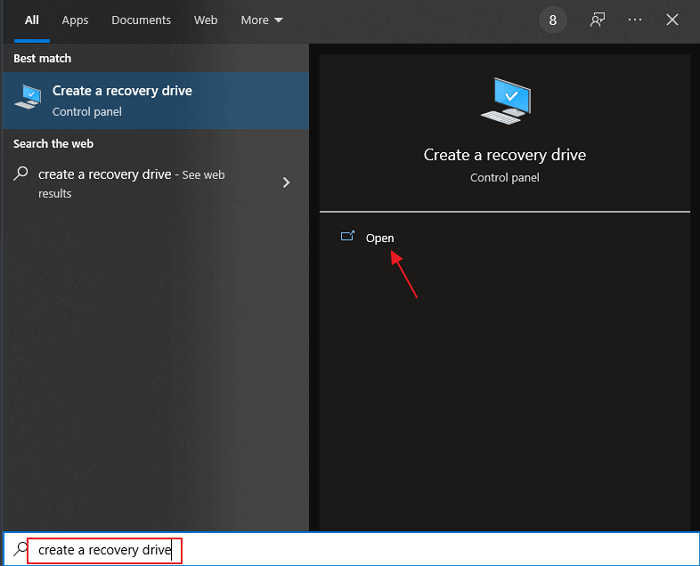
Due to different build versions of Windows 10, if you don't see the result in the picture, try entering "winver" in the Run dialog box.recovery" instead, this will bring you to the Control Panel, where the "create a recovery drive" option is located. Refer to the screenshot.
Figure 1.
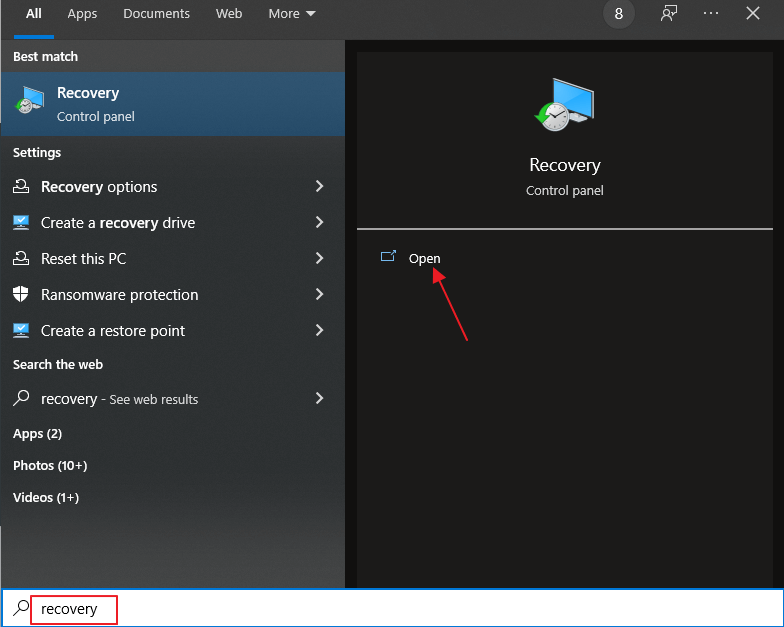
Figure 2.
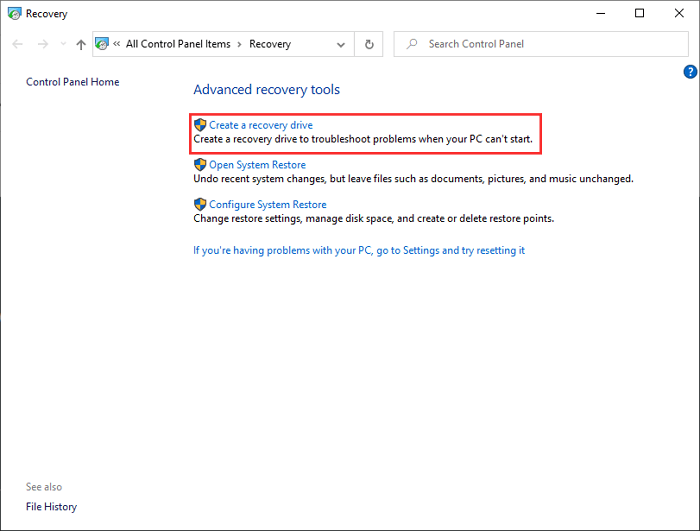
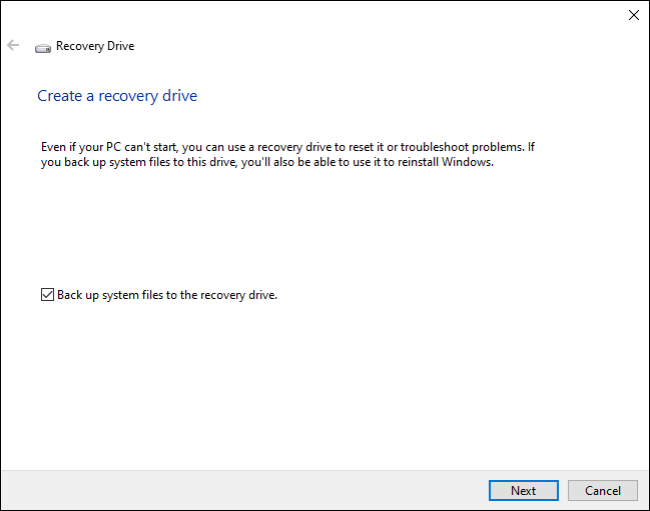
Step 2.After clicking on "Create a recovery drive", you'll be guided to a setup wizard. The message hints that even if your PC can't start, you can use a recovery drive to reset it or troubleshoot problems. You can tick the option to back up system files to this drive, allowing you to reinstall Windows. Click "Next" after selecting this option.
Step 3. To proceed, select the USB flash drive you prepared and connected, and confirm to select the correct drive letter. Click "Next".
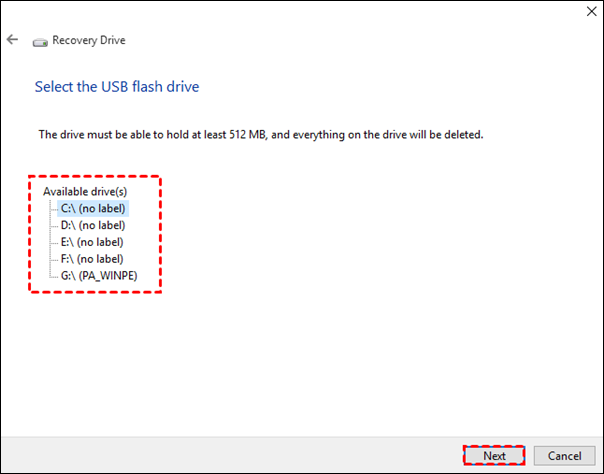
Step 4. The user is being warned that they will lose all data on their USB flash drive if they proceed with the next step. They are being given a final chance to copy any important files from the drive before it will be deleted. A button labeled "Create" needs to be clicked to proceed.
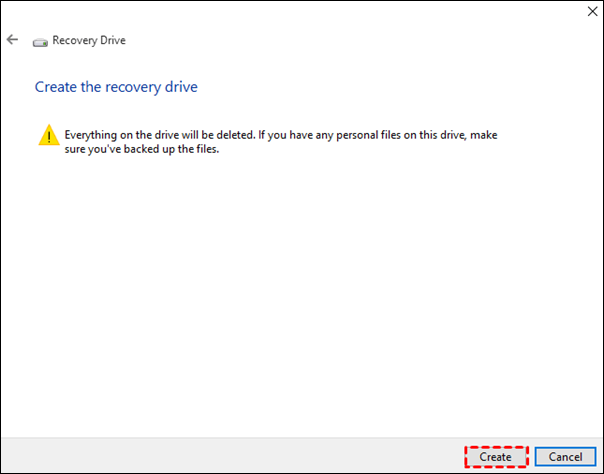
Tip: How long does it take to create a Windows 10 recovery USB?
The process of creating a recovery USB flash drive in Windows 10 typically takes around 15-30 minutes for a USB 3.0 device, but can take longer, up to 60 minutes, for a USB 2.0 device, depending on the speed of your internet connection and the USB port used.
Ⅴ. How to Repair Windows 10 with a Recovery USB Drive
If your Windows PC won't turn on, plug in a recovery USB drive and boot from it. This will take you to advanced recovery settings, where you can run an automatic repair.
Step 1. If your PC automatically boots from the recovery USB, the Windows recovery drive will load immediately. If not, press the specific boot menu key (usually F2, F10, Esc) when turning on the PC. If you're unsure, search your PC's model number to find the correct key. Once you've identified the key, continue pressing it until the boot menu appears, then select the USB flash drive as the boot device to power on your computer.
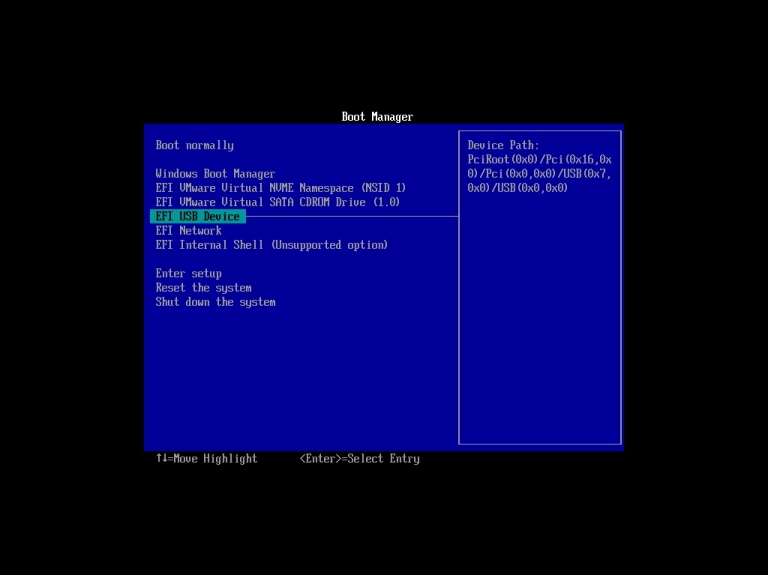
Step 2. Select the keyboard layout and proceed.

Step 3. If you want an automatic repair at first, click "Troubleshoot".
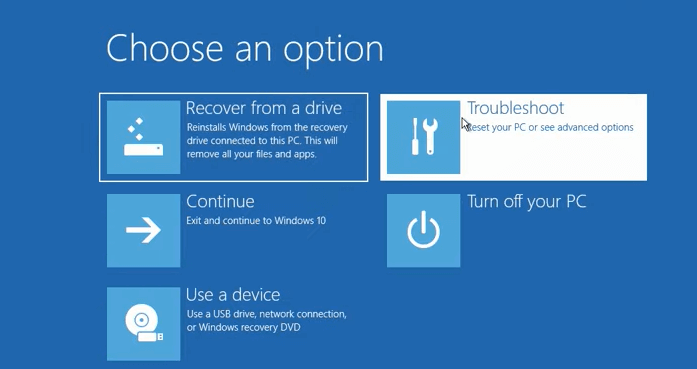
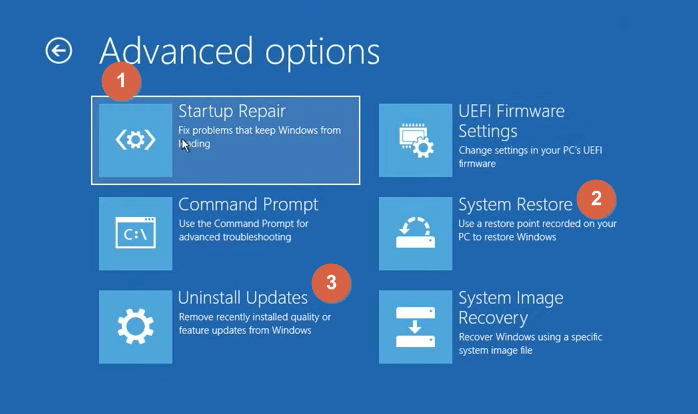
Step 4. To troubleshoot a Windows system that won't load, start with the Advanced options, where you can try Startup Repair, System Restore, or Uninstall Updates, depending on the suspected cause of the issue.
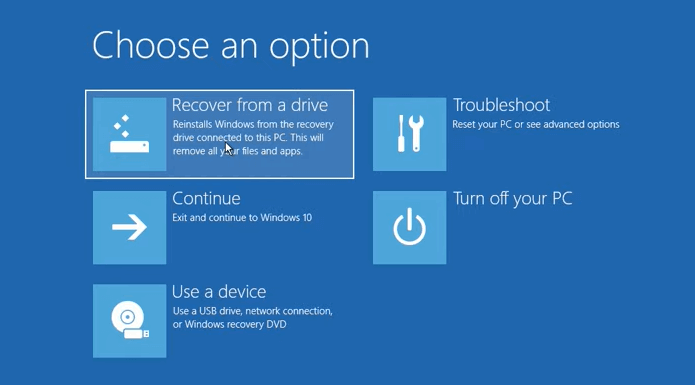
Step 5. If the three options provided don't work for you, go back to the Troubleshoot menu and select "Recover from a drive" as a last resort, which will completely wipe everything and restore Windows to its original state.
Ⅵ. Can You Make Windows 10 Recovery USB for Another Computer?
If your system crashes before creating a recovery drive, you can still recover your Windows 10 PC by using a recovery tool like Windows 10's built-in System Repair feature or a third-party recovery software. You can also try booting from a Windows 10 installation media, such as a USB drive or CD/DVD, and then using the System Repair feature to restore your system to a working state. Additionally, if you have a backup of your important files, you can try to recover them from the backup.
You can create a Windows installation drive from a working PC, boot from it, and perform recovery or reinstall the OS. Microsoft offers a native method using a USB flash drive, DVD, or ISO file, but a faster and more convenient way is to use Qiling Backup to restore a system image to another computer.
LEARN MORE
To create a recovery USB drive for Windows 10 on another computer, you can use the built-in tool "Windows Recovery Environment" or download a third-party tool like Rufus. With the Windows Recovery Environment, you can boot from the USB drive and access the recovery options. Alternatively, you can use Rufus to create a bootable USB drive that can be used to install or repair Windows 10 on another computer.
To start, download the Windows backup software on a working PC.
An overall introduction to Qiling Backup:
- Create full/incremental/differential backup
- This tool allows for backing up an entire hard drive, partition, individual files, emails, and even the operating system, providing a comprehensive and secure way to protect valuable data.
- Save backup images on the network drive or cloud so you can access the backup remotely. This allows you to access your backup from anywhere with an internet connection, making it easier to recover important data in case of a system failure or other disaster.
- To clone a failed computer hard drive on a new working hard drive without losing data, you can use a cloning software such as Qiling Backup. These software tools allow you to create a bit-for-bit copy of the entire hard drive, including all operating systems, programs, and data.
- To create a WinPE bootable rescue media, you can follow these steps: first, download the Windows Assessment and Deployment Kit (ADK) from Microsoft's website, which includes the Windows PE (WinPE) tool; next, use the WinPE tool to create a bootable USB drive or CD/DVD that can be used to boot a crashed computer; once booted, you can use the WinPE environment to access and restore a system image, making it possible to recover a crashed computer and restore it to a previous working state using system restore.
To create a recovery USB drive for another computer and restore its system, follow these steps. You can use the built-in recovery tool or a third-party software to create a bootable USB drive that can be used to restore the system to its original state.
Step 1. Create an emergency disk on a healthy computer
Consider creating an emergency disk on a USB or external hard drive instead of a healthy computer to save time and energy, and make the most of Qiling Backup.
1. Connect an empty USB flash drive or external hard drive with over 100GB of space to your PC.
2. Run Qiling Backup and click "Tools > Create bootable Disk".
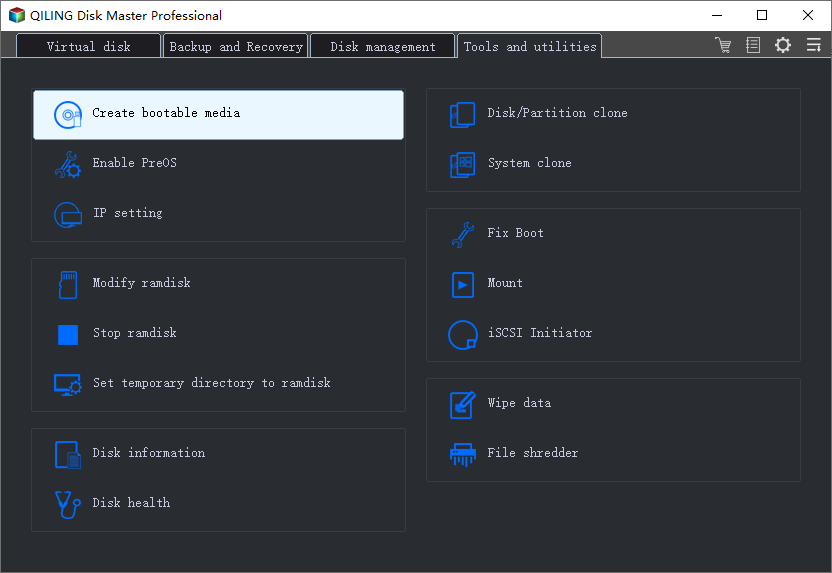
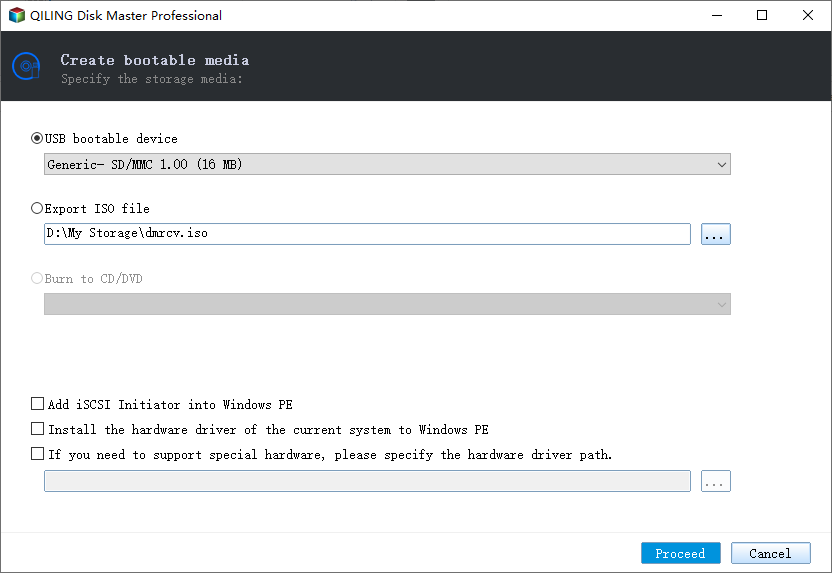
3. Choose USB as the disk location to create an emergency disk, which can help boot a computer when it fails to boot or restore the system to a new PC with a different hardware configuration.
4. Click "Proceed".
Step 2. Create a Windows system image backup for restoring to dissimilar hardware
1. Run Qiling Backup on the healthy computer and click "System backup" to back up the system.
2. Select the Windows OS and choose the USB flash drive containing the emergency disk as the destination disk to save the system image.
If you're concerned about data loss from saving the system image to an emergency disk drive, consider saving the system backup to another external hard drive with at least 100GB of free space.
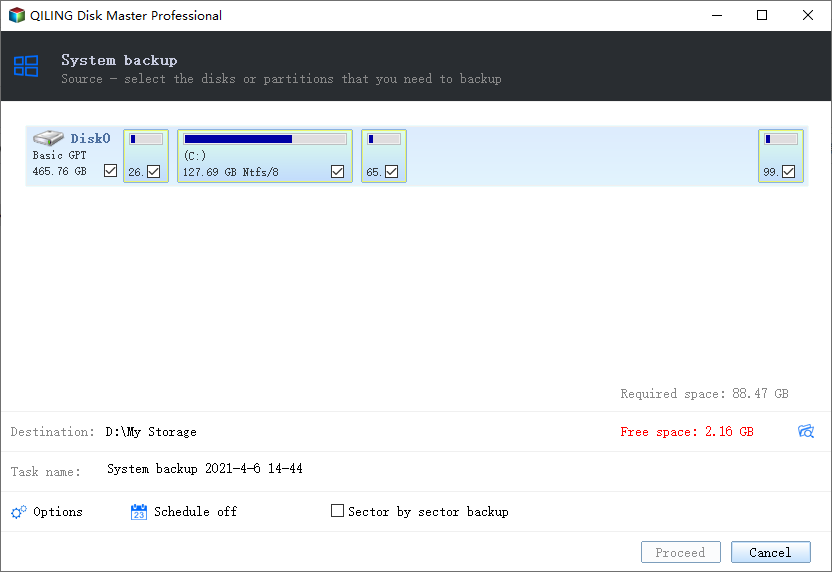
To create a full backup of your Windows system and installed programs on your C drive, select the device you want to save the backup to, and then follow the instructions to complete the backup process.
3. Click "Proceed" to start creating a system backup image to the target device. Click "Proceed" to initiate the system backup process to the target device.
Step 3. Boot the dissimilar hardware/computer from Qiling Backup emergency disk
1. Connect the USB flash drive or external hard drive with the system backup image to the new computer.
2. Restart PC and press F2/F8 to boot into BIOS.
3. Change the computer's boot drive to the Qiling Backup emergency disk, which will allow it to boot from that drive instead of its original one.
Then you'll enter Qiling Backup main interface.
Step 4. Transfer and recover the system to dissimilar hardware or new computer
1. On Qiling Backup main window, click "Backup and recovery" page.
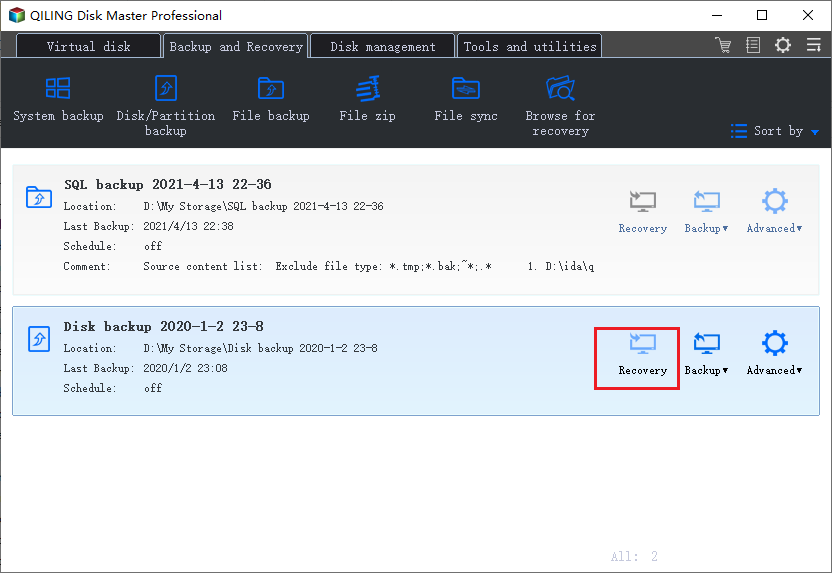
2. To proceed, select the system image on your drive and click on the "Recovery" option.
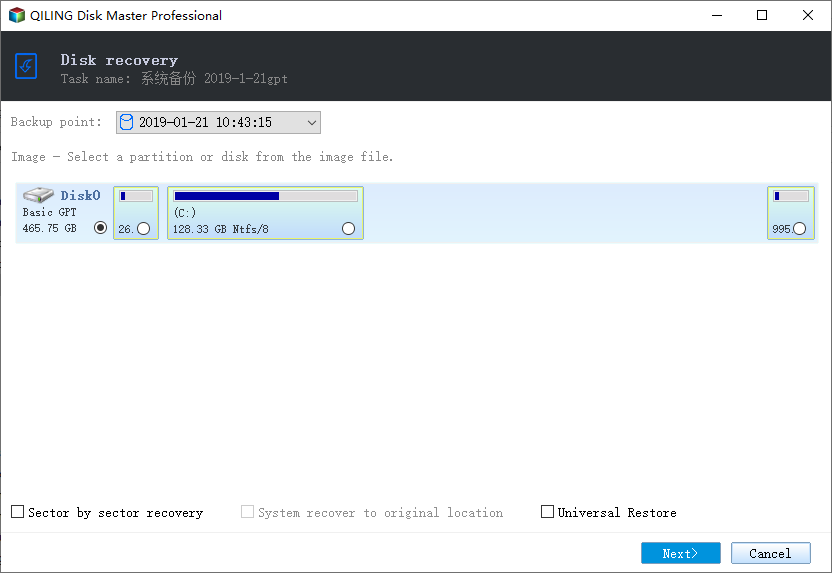
3. Then click "Proceed" to start transferring system and even some installed programs on system C: drive to the new hardware computer now.
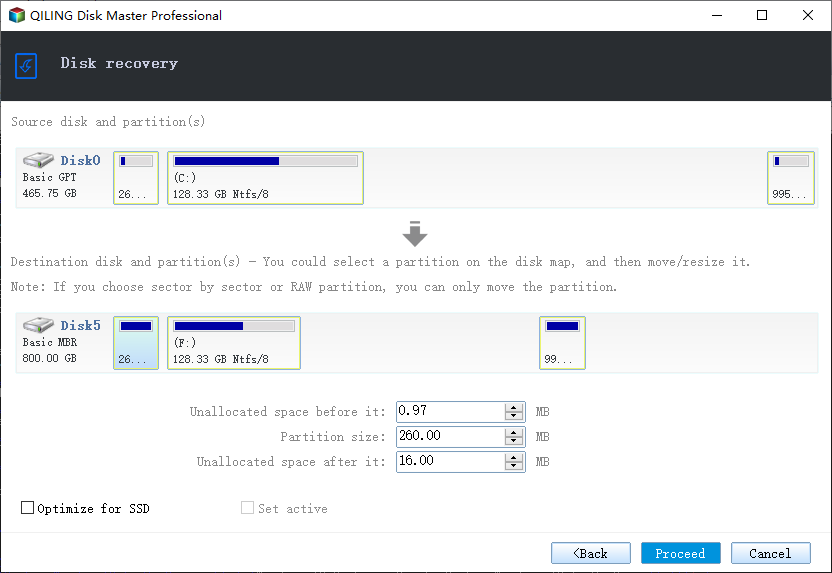
Step 5. Restart PC with transferred system
1. Change boot sequence in BIOS to set the computer to boot up from the drive with the transferred system.
2. Save all changes and restart your computer.
3. To get your new computer up and running smoothly, it's essential to update all drive drivers and programs. This will ensure that all hardware components, such as the graphics card, sound card, and network card, are functioning correctly.
Ⅶ. How to Fix Windows 10 Can't Create a Recovery Drive
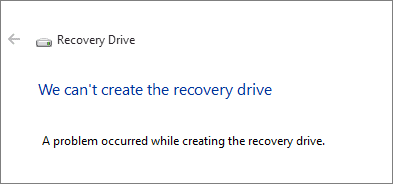
While having a recovery USB for Windows 10 is crucial for reviving a PC, the default tool to create one has its shortcomings, including the frustrating error message "can't create a recovery drive. A problem occurred while creating the recovery drive".
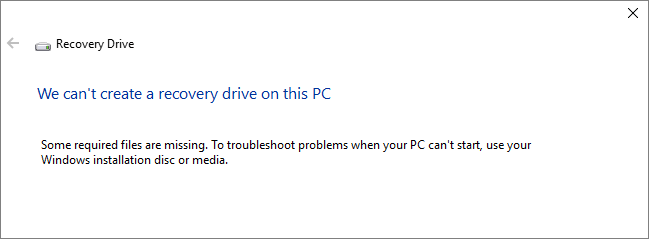
The error message "We can't create a recovery drive on this PC. Some required files are missing..." suggests that there are some necessary files missing that are required to create a recovery drive on your current PC. This could be due to various reasons such as corrupted system files, missing Windows installation media, or a problem with the Windows Recovery Environment.
The error is likely due to a mismatch between the expected and actual data types in the database or a programming error in the code that is interacting with the database. This could be caused by a variety of factors, such as a mismatch between the data types of columns in a table, or a programming error that is attempting to store a value of the wrong data type in a column.
- USB errors, including bad sectors, incompatible file system, insufficient capacity...
- There are conflicting background services
- Some temporary glitches
If you're struggling to complete the creation process, don't get discouraged. Start by ruling out any issues with your USB flash drive, as mentioned earlier. Then, take a closer look at what's going wrong and where the problem lies.
If you're experiencing issues creating a recovery drive on Windows 10, there are six possible solutions to help fix the problem. Firstly, ensure that the USB drive is at least 16GB in size and formatted as FAT32.
Solution 1. Prepare another USB flash drive
Solution 2. Disable Antivirus software
Solution 3. Check & repair system files corruption via CMD
Solution 4. Check and format the USB drive
Solution 5. Run DISM tool via CMD
Solution 6. Create a USB recovery drive in another way
LEARN MORE
If you're experiencing issues with creating a Windows 10 recovery drive, you can try fixing the problem by following a step-by-step guide, which requires a higher level of computer skill, but can be done with confidence. Alternatively, you can check out the 6 Solutions for Windows 10 Can't Create a Recovery Drive article for further assistance.
Ⅷ. Conclusion
Windows recovery USB is a broad topic that encompasses various aspects, including definitions, differences, and usage. It refers to a USB drive containing Windows 10 recovery tools, distinct from a Windows 7 system repair disc and a system backup image. The main content guides users on how to create and use a recovery USB for Windows 10, as well as restoring a crashed computer. Additionally, a solution is provided to create a recovery USB for a different PC using third-party Windows 10 backup software.
To create a Windows recovery USB drive, follow these steps: download the Windows Media Creation Tool, run it, and select the USB drive as the installation media. If the process fails, check that the USB drive is properly formatted and has enough free space. You can also try using a different USB drive or running the tool in a different environment.
*Watch the video review - What makes Qiling Backup the best Windows backup software.
Related Articles
- (2022) An Ultimate Guide to Backup Hard Drive and Restore Your Computer
- One for All Guideline: How to Clone a Hard Drive
- A Complete Guide to System Image Recovery in Windows 11/10/8.1/7
- (2022 Guide) What Is Disk Image? Check More and See How to Create
- Windows 10 Not Accepting Password? 7 Quick Solutions
If your Windows 10 is not accepting your password, preventing you from logging in, this guide can help you resolve the issue. - How to Fix Windows 10 Won't Install on SSD | 100 % Working⭐
This guide offers three efficient solutions to resolve the issue of Windows 10 not installing on an SSD, in addition to identifying the underlying reasons that may be causing the problem.
Products
Articles & Tutorials
- Data Recovery
- Data Backup
- File Recovery
- File Backup
- System Backup and Restore
- Disk and Partition Clone
- Technical articles
- Mobile articles
- Disk Master Help
- Windows Data Recovery Tutorials
- Windows Secure Delete Tutorials
- Windows Partition Management Tutorials
- Windows File Backup and Restore Tutorials
- Windows System Backup and Restore Tutorials
- Windows Disk Backup and Restore Tutorials
- Windows Clone Tutorials