(2022) An Ultimate Guide to Backup Hard Drive and Restore Your Computer
Creating regular backups is a crucial task that computer users should never neglect. Many people have experienced data loss or system crashes due to hard drive failures, making backup hard drives a vital way to protect irreplaceable files from any disasters.
Here, backing hard drive refers to the process of creating a copy of a computer's hard drive, including all data, settings, and programs, to prevent data loss in case of hardware failure, software corruption, or other disasters. This can involve backing up a separate system drive or an entire hard disk drive with multiple partitions.
Ⅰ. What Is Hard Drive Backup? Learn Backup Basics
A backup is a second copy of your important data, stored separately from the originals, to retrieve in case the originals are lost or corrupted.
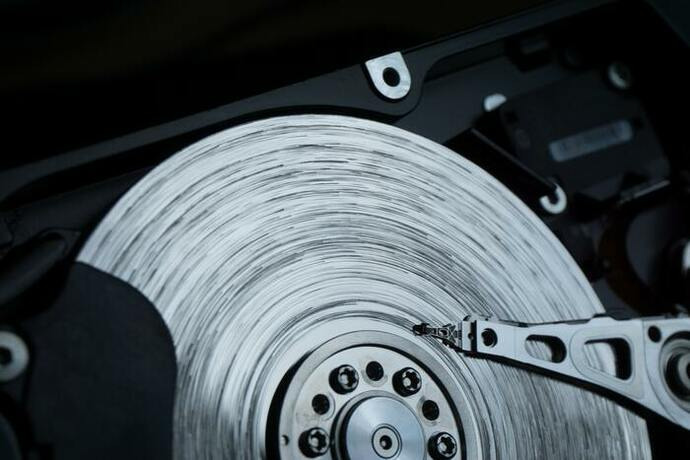
Backing up computer hard drive data can be done in four primary ways. These methods include using an external hard drive, cloud storage services, a USB drive, or a CD/DVD.
- 🎨Copy and Manual Transfer: You can manually back up data by copying it from one location to another, such as from your computer's hard drive to an external hard drive or cloud storage.
- 🥇Backup Through Advanced Software: You can also use professional backup software that automates the process of creating backups, offering features like scheduling, incremental backups, and more.
- 💾Use a Specific Backup Hard Drive: Some hard drives are designed specifically for backup and sync purposes, such as Seagate's models, which can automatically back up important files from a computer to a storage device using the Seagate Toolkit app.
- 🎭Clone a Hard Drive: Cloning a hard drive involves creating a precise copy of the original drive, serving as a backup in case the original fails or crashes.
Regular computer backups are not a one-time task, but rather an ongoing process. To make backups of a designated hard drive useful, it's essential to perform them regularly. Three types of hard drive backups can help achieve the best backup experience: they help decrease disk usage for storing growing backup files and improve recovery speed from a critical backup.
There are three types of backup that serve different backup purposes:
- 📊Full backup: A full backup copies all selected files, regardless of whether they have been backed up before or not, resulting in the largest backup size since it includes all data.
- 📈Incremental backup: Incremental backups copy only files that have changed since the last backup, resulting in smaller backup sizes compared to full backups.
- 📉Differential backup: Differential backups copy all selected files that have changed since the last full backup, typically larger than incremental backups but smaller than full backups.
LEARN MORE
Do you know how to fully implement the incremental and differential backup strategies on your computer hard drive? Compare incremental vs. differential backup and choose a preferable backup method.
Ⅱ. Where to Backup Hard Drive? Follow Backup Rules
There are many different storage locations that you can use to back up your hard drive data, including external hard drives, cloud storage services, flash drives, CDs and DVDs, and online backup services.
- Other local hard drives or a second internal hard drive on your computer can be used to store your files. This allows you to access your files quickly and easily, without relying on an internet connection.
- An external hard drive, such as a USB hard drive, SD card, or a USB flash drive, is a portable storage device that allows you to store and transfer files between devices. It can be connected to a computer via a USB port, and can also be used to store and transfer files between devices, making it a convenient and efficient way to manage your digital files.
- - Cloud storage (e.g., OneDrive, Dropbox, Google Drive, etc.)
- - Network Attached Storage (NAS)
- - Optical discs (CDs, DVDs, etc.)
- - Tape drive
The 3-2-1 backup rule suggests keeping three copies of your data, on two different types of storage media, with one copy being located offsite. In the context of hard drive backup files, this would mean having three copies of the data, stored on two different types of media (such as an external hard drive and a cloud storage service), with one copy being stored offsite, such as on a USB drive or a separate computer. This ensures that your data is safe in case of a disaster or equipment failure.
The 3-2-1 backup rule is a simple yet effective principle that advises you to have two backups for every one item you want to protect, ensuring that you always have a duplicate or alternative in case the original is lost, damaged, or otherwise compromised. This rule helps to minimize the risk of losing important information or items, and promotes a habit of preparedness and redundancy in your daily life.
- - Keep at least three (3) copies of your data,
- Store the backup data in two (2) different locations, and ensure that at least one of those locations is not on the same premises as the original data. This helps to protect against data loss in case of a disaster or equipment failure.
- - Have at least one (1) backup copy offsite.
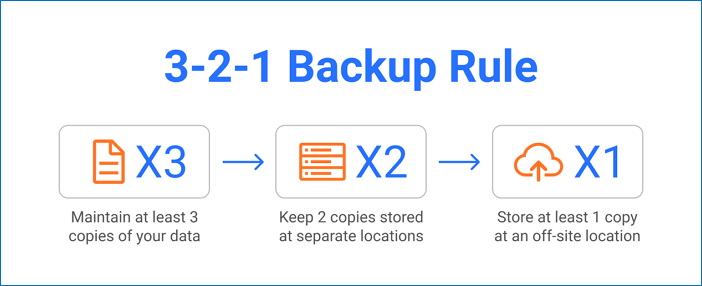
[Image source: https://www.msp360.com]
To protect your data, you can back up important files to an external hard drive, clone the hard drive to a backup hard drive, and upload critical data to a cloud backup service, following the 3-2-1 backup rule. This ensures that your data is safe in case one of the backup locations fails or is corrupted.
LEARN MORE
If you're still curious about how to employ the 3-2-1 backup rule, check out the full post for more information.
Ⅲ. What Should You Back Up on Your Computer Hard Drive?
When it comes to back up, it's essential to decide what to protect. Some people only back up data files such as photos, music, and documents, while others choose to back up everything, including the operating system, applications, and settings. A general rule of thumb is to back up anything that you cannot afford to lose.
Here are some things you may want to consider backing up: your computer files, phone data, photos, videos, important documents, and any other digital information you don't want to lose. You can use cloud storage services like Google Drive, Dropbox, or OneDrive to back up your files, or use an external hard drive to store them locally.
- - Essential Data files: This includes photos, music, videos, documents, etc.
- - Application settings: This includes preferences, customizations, and configurations.
- - Operating system: This includes the Windows Registry and system files.
- - Emails: This includes messages, contacts, and account settings.
- - Databases: This includes financial records, customer information, inventory, etc.
Selecting the right backup contents and knowing when to back up are crucial for a meaningful backup. Regular backups are ideal, especially for frequently changing data, such as photos and videos. For less dynamic data, like documents and spreadsheets, less frequent backups may suffice. The frequency of backups depends on how often your data changes, ensuring you always have a recent backup in case of data loss.
LEARN MORE
Before reinstalling Windows or factory resetting your PC, it's essential to back up files from your computer hard drive to prevent data loss. Key files to prioritize include documents, photos, videos, music, and contacts. Additionally, consider backing up system files, such as the operating system, installed programs, and drivers.
Ⅳ. How to Back Up Hard Drive? 4 Ways Are Available
Backing up your data is an essential step in protecting it from unexpected disasters like hard drive failure, virus attacks, system crashes, and human errors. To back up your hard drive, you can use various methods such as external hard drives, cloud storage services, or backup software. It's crucial to pay attention to the backup process, ensuring that all important files and data are included, and that the backup is regularly updated to prevent data loss.
Method 1. Copy Hard Drive Data (Small hard drive backup choice)
Backing up data by manually copying and pasting important files from your computer's hard drive to an external hard drive is the most common method, but it has several disadvantages.
- First, it is more time.
- Second, it is easy to overlook important files and folders.
- Third, it is difficult to automate this process.
- Lastly, it does not back up system files or application settings.
Tip: Users who are advanced in Windows Command Prompt operations can utilize the Xcopy and Robocopy tools to create backups of files and directories from one hard drive to another.
LEARN MORE
If you're looking for command lines to perform an exact file backup in Windows 10, you can use Xcopy or Robocopy. For a full guide on Windows 10 backup command line, you can check out the link provided.
If you want to create a real backup file of your hard drive, there are three valid methods to consider. These options allow you to compare and choose the best solution for your needs.
Method 2. Backup an Entire Computer Hard Drive with Qiling Backup
Backing up data can be done through third-party Windows backup software, providing a more reliable method than manual backup. This approach allows for a complete backup of everything on the hard drive, offering a higher level of security. Various backup software programs are available, including Qiling Backup Free, among others.
Backup software allows you to create a backup of your entire hard drive or selected files and folders, and can be scheduled to run automatically, saving the backup files to an external drive, network drive, or cloud storage.
When choosing backup software, you should consider the following factors:
- Ease of use: The backup software should be easy to install and use.
- Abundant backup options: The backup software should allow users to create a full backup, incremental backup, or differential backup, catering to different backup needs and preferences.
- Scheduling options: The backup software should allow you to schedule automatic backups.
- Storage options: The backup software should enable users to store backup files on various locations, including an external hard drive, network drive, or cloud storage, providing flexibility and convenience in managing and retrieving backed-up data.
- File encryption: The backup software should allow you to encrypt the backup files.
- Support: The backup software should have good customer support in case you run into any problems.
To back up your computer's hard drive, we recommend using Qiling Backup, which meets all the requirements of a good backup software, including ease of use, reliability, and flexibility.
When selecting backup contents, you should know that this backup software allows you to create backups of individual files/folders, operating system, an entire hard drive or a single partition with all data and programs in it, and Outlook mails are included as well. You can download and install Qiling Backup for free and follow the guide to back up your hard drive.
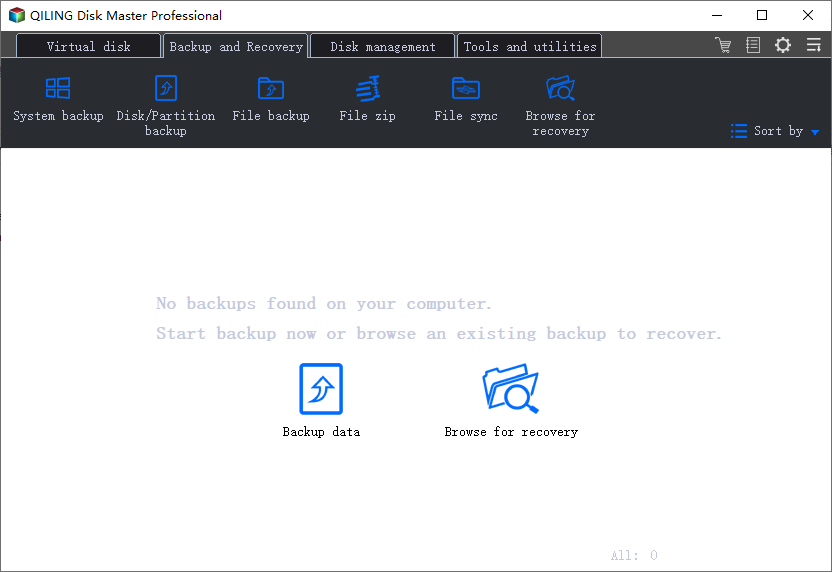
Step 1. Open Qiling Backup and choose "Disk/partition Backup" on the home page.
Step 2. Qiling Backup gives you the flexibility to choose between backing up an entire disk or a specific partition, allowing you to tailor the backup process to your needs.
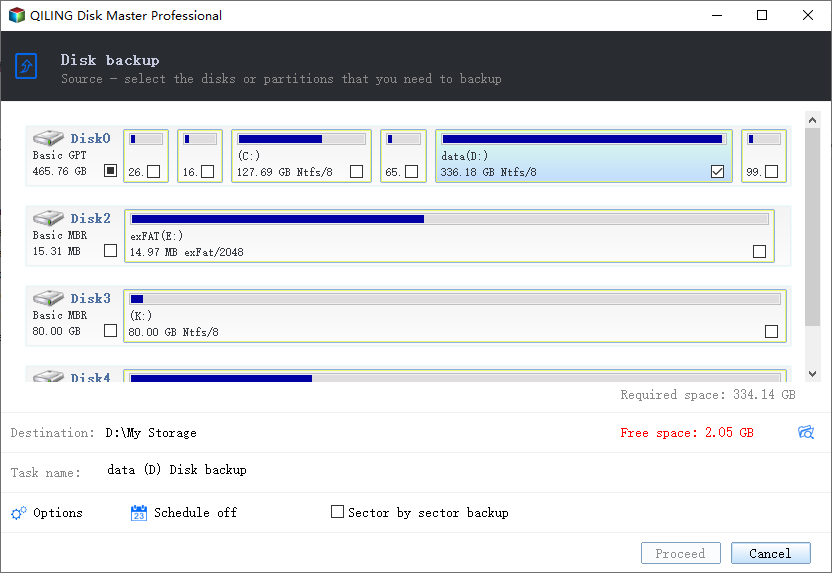
Step 3. Where would you like to save the backup of the disk? You can choose to save it to a local drive or to a network attached storage (NAS) device.
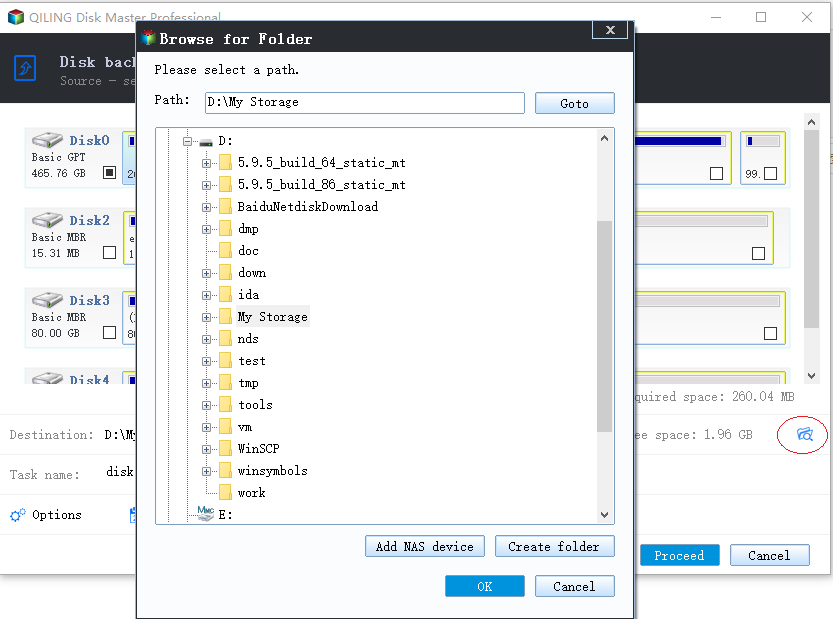
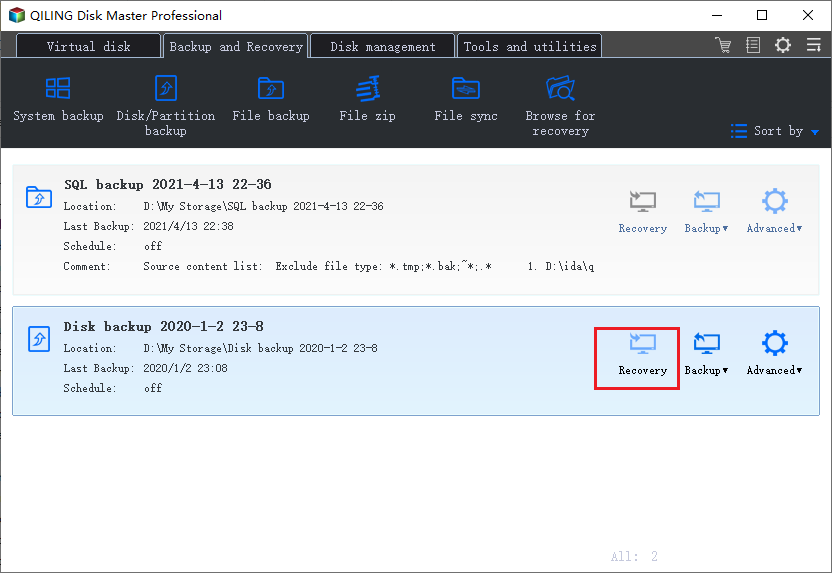
Step 4. After completing the backup process, click "Proceed". You can then manage your backup by clicking on any task, such as recovering it, creating an incremental backup, and more.
Method 3. Buy External Hard Drive for Backup
To frequently back up your hard drive, consider purchasing an external hard drive, which allows you to easily back up your data with a simple connection and a few clicks.
There are various external hard drives available, including options from Seagate, WD, and Samsung.
When selecting an external hard drive for backup purposes, consider several key factors. Firstly, ensure the drive has sufficient storage capacity to accommodate your data, taking into account any future growth in data size.
- Capacity: The external hard drive should have enough storage capacity to hold all the backup files.
- Connection type: The external hard drive should have a USB 3.0 or Thunderbolt 3 connection for fast data transfer.
- Size: The external hard drive should be compact and portable, able to fit in a pocket or bag, making it easy to take with you on the go.
- Compatibility: The external hard drive should be compatible with your computer's operating system.
- Price: The external hard drive should be affordable.
Here, we will take Seagate One Touch as an example to show you how to back up your computer's hard drive. To do this, first, you need to connect the Seagate One Touch to your computer via the provided USB cable.
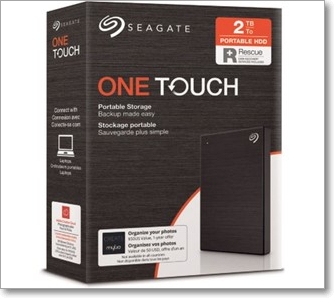
The Seagate One Touch is a portable external hard drive that offers up to 5TB of storage, a USB 3.0 connection for fast data transfer, and compatibility with both Windows and macOS. It also comes with the Seagate Dashboard software, making it easy to back up your hard drive.
To back up your hard drive with Seagate One Touch, simply connect the external hard drive to your computer, launch the Seagate Dashboard software, select the hard drive you want to back up, and click the "Backup" button.
You can also schedule automatic backups and encrypt the backup files with Seagate Dashboard software.
LEARN MORE
Here's a collection of the best external hard drives for reliable backup, ranging from budget-friendly to high-performance options, each with its own unique features and benefits.
Method 4. Backup Failing Hard Drive
If your hard drive is failing, back up your data immediately to avoid losing it when the hard drive fails completely.
Here are some signs that imply a dying hard drive:
- Your computer is taking longer to start up or load programs. This could be due to a variety of reasons, such as a slow hard drive, outdated software, or too many programs running in the background.
- Your hard drive is making strange clicking or grinding noises.
- You are seeing more error messages than usual.
- Your computer is crashing more often.
If you notice any of these symptoms, back up your data right away. The most effective way to back up a failing hard drive is to use the clone method.
The clone method is the best way to back up a failing hard drive as it creates an exact copy of the original hard drive by copying all the data from one hard drive to another.
To clone a failing hard drive, you'll need two hard drives of the same or larger size, and a cloning software like Qiling Backup Home.
Step 1. On the main page, click on the "Tools and utilities" tab, which will display a list of available utilities, including clone and other options.
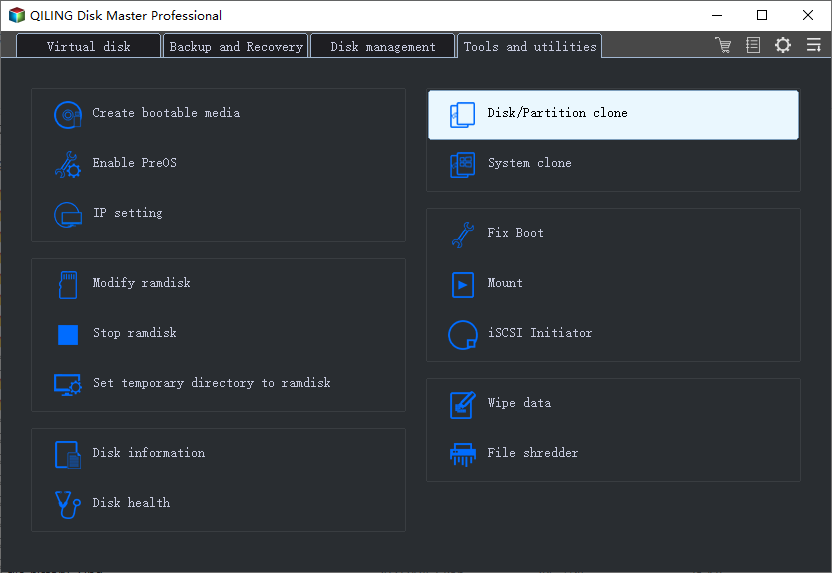
Step 2. Choose the source disk or partition, click "Next".
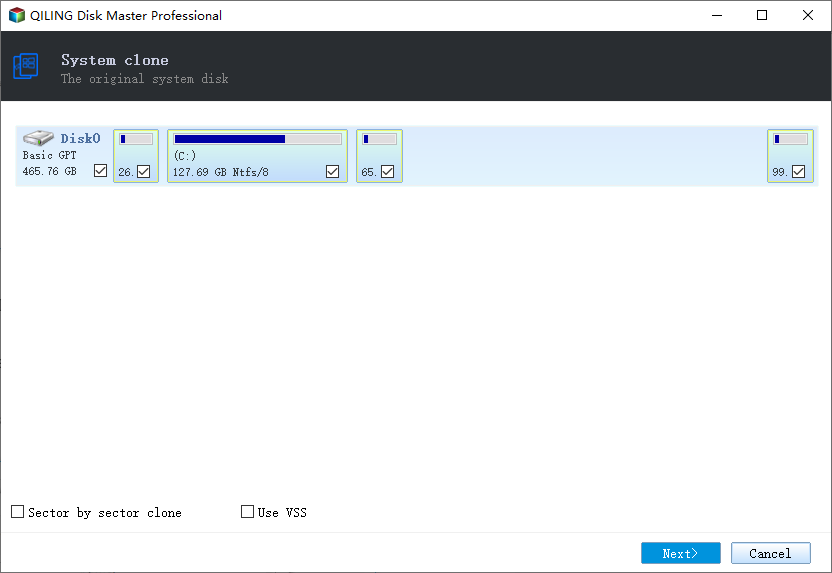
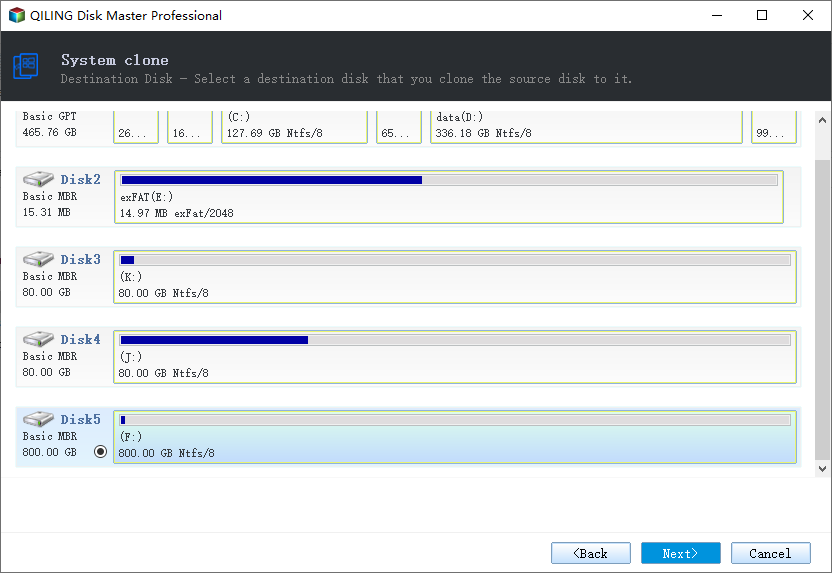
Step 3. To begin the process, you need to select the source disk or partition that you want to clone. Then, you need to choose the target disk, ensuring it is larger than the source disk or partition to accommodate the cloned data.
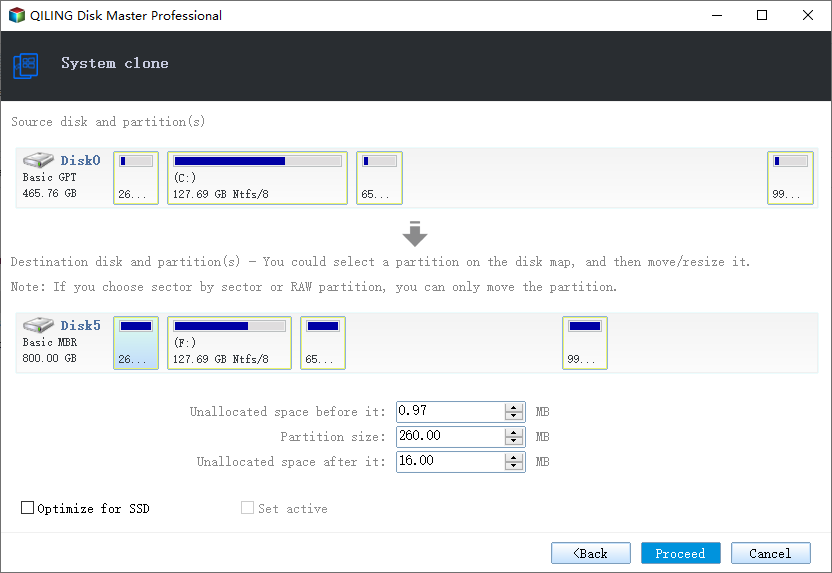
Step 4. A warning window will inform you that cloning will permanently wipe out all data on the target disk/partition, prompting you to click "Continue" to proceed with the cloning process.
Ⅴ. Backup Hard Drive FAQs
1. What's the difference between a backup drive and an external hard drive?
A backup drive is specifically for storing backups, while an external hard drive can be used for both backup and other purposes.
2. Should I choose a 500GB or 1TB external hard drive for backup?
To determine the best external hard drive for your needs, consider the amount of data you need to back up. If you have a large amount of data, a 1TB external hard drive would be a suitable choice. However, if you have less data, a 500GB external hard drive would suffice. Additionally, take into account the price of the drive when making your decision.
3. How do you back up a hard drive on Mac?
On a Mac, you can back up your hard drive using various methods, including Time Machine, Carbon Copy Cloner, and SuperDuper. Time Machine, an integrated backup solution in macOS, is the most popular and widely adopted backup method for Mac users.
4. How do you back up a hard drive on Windows 10?
To backup a hard drive on Windows 10, you can use various methods, including File History, Backup and Restore (Windows 7), or third-party backup software such as Qiling Backup Free.
5. How often should you back up your hard drive?
You should regularly back up your hard drive, ideally at least once a week, to prevent data loss. If you have critical information, consider more frequent backups, such as hourly or daily, to ensure its safety.
6. How long does a backup take?
The time it takes to back up a hard drive depends on the amount of data. A full backup of a 1TB hard drive can take several hours.
Related Articles
- (2022) SD Card Backup and Restore on Android, PC and Raspberry Pi
- [July 2022] Complete Guide on How to Back Up Computer (Windows & Mac)
- A Complete Guide to System Image Recovery in Windows 11/10/8.1/7
- 2022 Ultimate Guide to Clone Hard Drive to SSD
- How to Transfer Files from Windows Vista to Windows 10 [Step-by-Step Guide]
This article provides a step-To transfer files from Windows Vista to Windows 10, follow these steps: First, ensure both computers are connected to the same network, then create a shared folder on the Windows Vista computer and copy the files you want to transfer to it. - 3 Ways to Transfer Files to Your Windows 11 New Computer
You have three powerful options to transfer files to your new Windows 11 computer. Let's explore which one is the best fit for you.
Products
Articles & Tutorials
- Data Recovery
- Data Backup
- File Recovery
- File Backup
- System Backup and Restore
- Disk and Partition Clone
- Technical articles
- Mobile articles
- Disk Master Help
- Windows Data Recovery Tutorials
- Windows Secure Delete Tutorials
- Windows Partition Management Tutorials
- Windows File Backup and Restore Tutorials
- Windows System Backup and Restore Tutorials
- Windows Disk Backup and Restore Tutorials
- Windows Clone Tutorials