How to Free Up Hard Drive Space in Windows 10/11 [Step-by-Step Guide]
If your computer is running out of space or clutter is overwhelming your hard drive, you're not alone. To help free up hard drive space in Windows 10/11, consider these ten solutions: follow the steps below.
What's Taking Up My Hard Drive Space?
You may be wondering what's taking up space on your hard drive, especially when you notice your disk space disappearing. It can be tricky to figure out what's using up space just by looking at installed applications and files in Windows Explorer. Luckily, Windows provides a way to help you solve this mystery.
To check which drive is taking up the most space, go to Settings > System > Storage, and select a drive to view its usage.
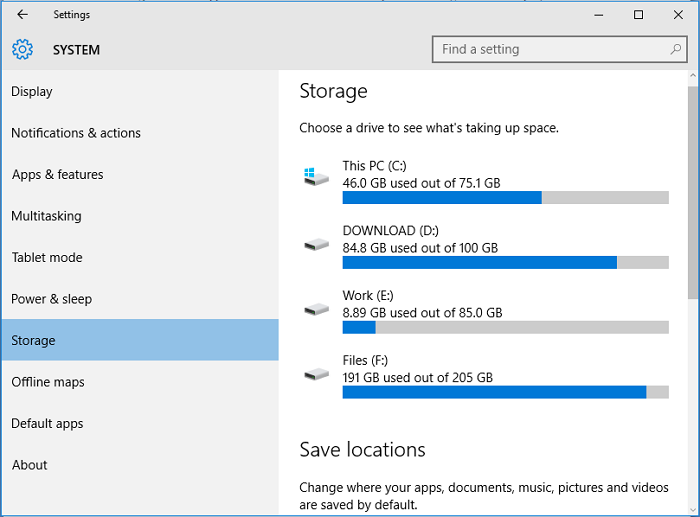
You can click through each item to see how much disk space the application or game is taking up. Once you know the space usage, you can learn how to free up hard drive space in Windows 10/11 in the next part.
We prepare some links for you since you may also like to know:
Ten Ways to Free Up Hard Drive Space in Windows 10/11
With the increasing demand for disk space due to larger game files and applications, it's easy for hard drives to become full. To address this issue, here are ten ways to free up space: (insert ten ways to free up space here).
Way 1. Extend Hard Drive Partitions
Way 2. Use Storage Sense to Delete Unnecessary Files
Way 3. Uninstall Apps You No Longer Need
Way 7. Disable Hibernation Mode
Way 9. Turn on OneDrive Files On-Demand
Way 10. Reduce the Size of the WinSxS Folder
To free up hard drive space, you can try the following ten ways, which we'll guide you through step-by-step: 1) delete unnecessary files, 2) empty the recycle bin, 3) uninstall unused programs, 4) clean up temporary files, 5) compress files, 6) use cloud storage, 7) sell or give away unwanted items, 8) cancel subscription services, 9) upgrade to a larger hard drive, and 10) use a hard drive cleaning tool.
Way 1. Extend Partitions via Qiling Partition Master
If you're looking for a professional disk management tool for Windows, you might want to consider Qiling Partition Master Professional. This user-friendly tool features a clear interface and can help you extend partitions to get more space, making it a more efficient and effective way to free up space compared to other methods. To get started, simply download Qiling Partition Master and follow the steps to expand your hard drive's capacity.
Step 1. Locate the Target Partition.
To resize or move a partition in Partition Manager, locate the target partition and select the option "Resize/Move" from the context menu. This will allow you to adjust the partition's size or move it to a different location on the disk.
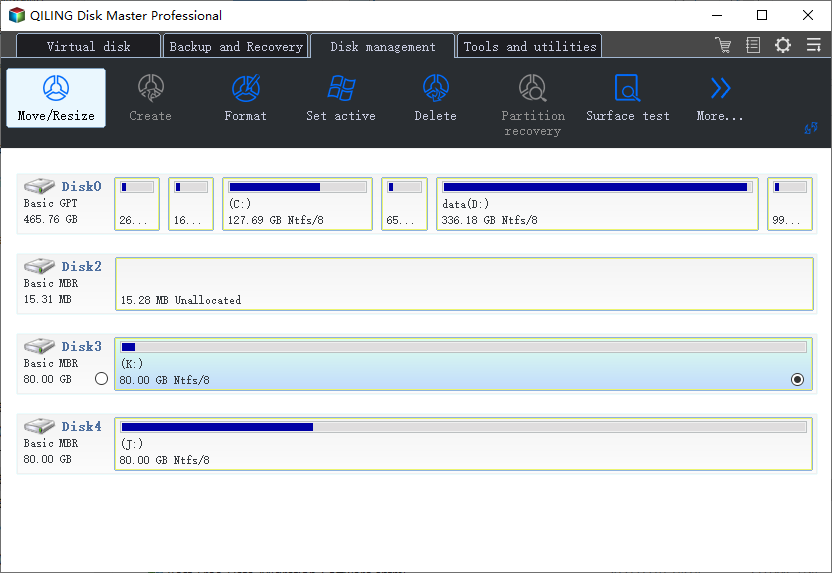
Step 2. Extend the Target Partition.
To add unallocated space to your current partition, drag the partition panel rightward or leftward to incorporate the unallocated space into your current partition.
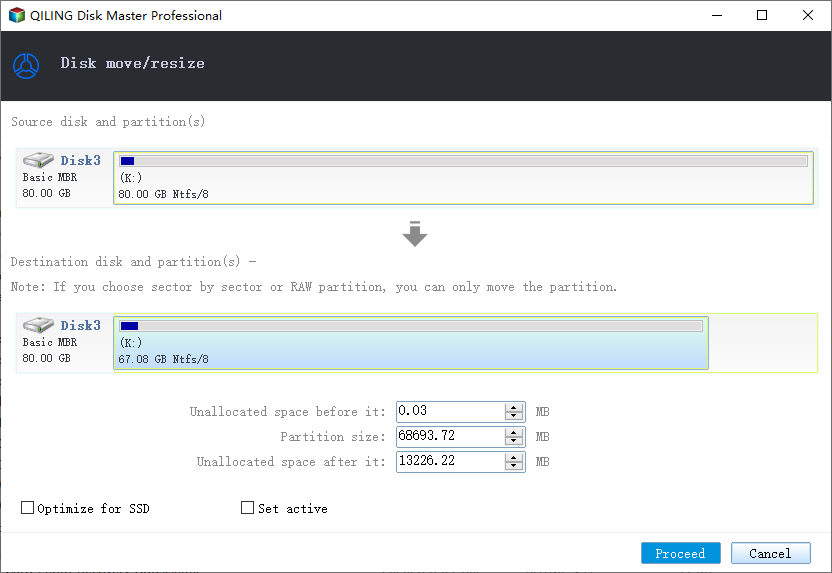
Extra Option: Get Space from Another Drive
If there's not enough unallocated space on your disk, right-click on a larger partition with sufficient free space, select "Resize/Move" to free up space.
To extend the target partition, select the partition you want to expand at the "Allocate space to" column.
Step 3. Execute Operations to Extend Partition.
Drag the dots of the target partition into the unallocated space.
Then Click the "Proceed" to keep all the changes.
Qiling Partition Master also offers various features to manage your hard drive, including resizing partitions, creating and deleting partitions, and managing disk space, in addition to its ability to clone and migrate disks.
- Migrate OS to SSD/HDD
- Expand SSD C drive across disks
- Format and reformat hard drive
- Move, merge, resize, and create partitions
- To extend your C drive, you'll need to move the D drive's unallocated space to the C drive. This can be done by right-clicking on the "Computer" or "This PC" icon, selecting "Manage," then "Disk Management.
You see! It is a nice helper, isn't it? Hence, don't hesitate to download it to help.
Way 2. Use Storage Sense to Delete Unnecessary Files
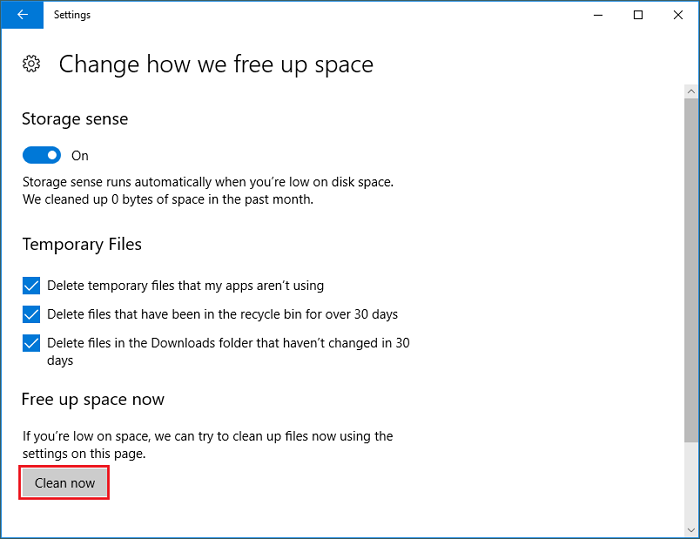
Storage Sense, introduced in Windows 10, automatically frees up disk space by deleting files you don't need, including temporary files and Recycle Bin contents, if enabled in Settings.
If the Storage Sense is still off, you can make it work by going to Settings > Storage > Storage Sense, and then toggle the switch to the “On” position. This will allow the feature to automatically free up storage space on your device.
Step 1. To free up space on your computer, go to the Start Menu, click on Settings, then System, and finally Storage. From there, turn on Storage Sense and click the "Change how we free up space" option.
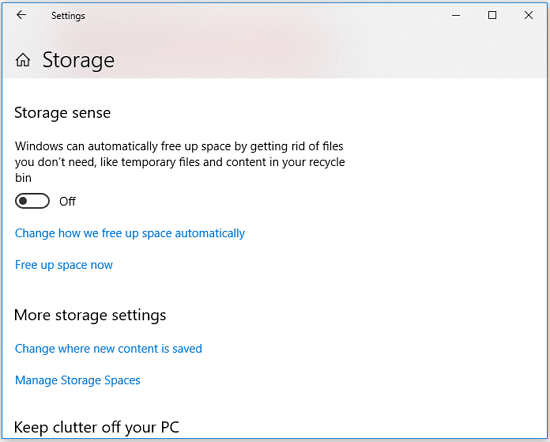
Step 2. You can free up disk space by checking the type of temporary files you want to delete and pressing "Clean up now" immediately.
Way 3. Uninstall Apps You No Longer Need
If you have installed some programs that you no longer need, you can uninstall them to free up space on your hard drive.
Step 1. To access the "Apps & Features" option, right-click the Windows Start menu and select it from the context menu.
Step 2. To uninstall an unwanted program, first, go to the Control Panel and select the "Programs and Features" option. Next, choose the program you no longer need and select Uninstall.
Step 3. You can repeat this process to remove all unnecessary applications.
Way 4. Transfer Larger Files
You can transfer large files from one drive to another using a software like Qiling Disk Master, which helps free up more space on your computer.
Step 1. Run Qiling Disk Master on your PC. Choose "Large File Cleanup" and click the "Start" button to begin the process.
Step 2. Select the disk you want to scan, click "Scan."
Step 3. When the scan is complete, files larger than 20M will be listed. Select the desired files and choose a target drive to move them to. You can either click the triangle icon to select a destination or click "Browse" to choose a specific location.
Step 4. To move files, click the "Move" button, check the files on the pop-up window, and then click the "Move" button again.
Way 5. Empty Recycle Bin
To clear the entire Recycle Bin, you can disable Storage Sense, which will allow you to manually empty the Recycle Bin. To do this, go to Settings > System > Storage, and toggle off the "Storage Sense" switch. This will disable the feature and allow you to manually empty the Recycle Bin, including files older than thirty days.
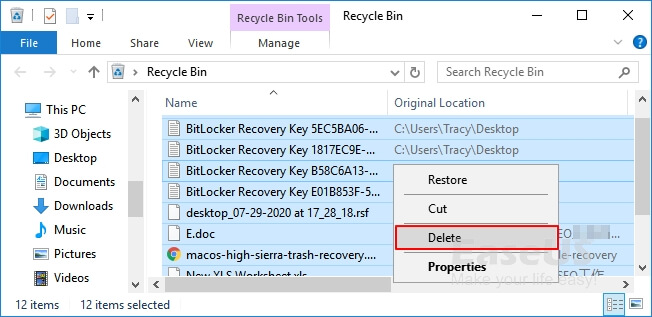
Step 1. Click the "Recycle Bin" icon on your desktop.
Step 2. Select all the files in your Recycle Bin, right-click on them, and click "Permanently Delete".
Way 6. Run Disk Cleanup
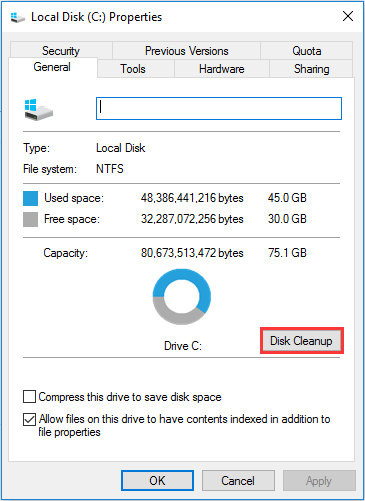
To use Disk Cleanup on Windows, follow these steps: Open the Disk Cleanup tool, select the drive you want to clean up, and choose the types of files you want to delete. Then, select the files you want to delete and confirm your choice. The tool will delete the selected files, freeing up storage space on your computer.
Step 1. To free up space on your computer, click on "This PC" and right-click on the hard drive you want to clean up. From the menu that appears, select "Disk Cleanup".
Step 2. Choose what you want to delete and click "OK".
Way 7. Disable Hibernation Mode
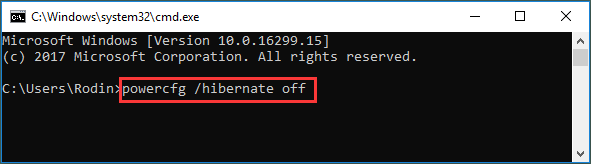
To free up space on your C drive, you can disable Hibernation Mode in Windows, which takes up several GB of space. To do this, you can follow a guide that will show you how to turn off this feature and reclaim the space.
Simply open CMD and run the following command:
powercfg /hibernate off
Way 8. Enable Compact OS
Compact OS can reduce the footprint of Windows applications to free up disk space, but be sure to back up important data on the target disc before using it.
Step 1. To run the Command Prompt as an administrator, first, you need to search for "Command Prompt" in the Start menu or use the Windows key + R shortcut to open the Run dialog box and type "cmd" in it. Once you find the Command Prompt, right-click on it and select the "Run as administrator" option from the context menu.
Step 2. Then, type the following command and press Enter: Compact.exe/CompactOS:always
Be patient for about twenty minutes.
Way 9. Turn on OneDrive Files On-Demand
Enabling OneDrive Files On-Demand can help free up disk space on your PC. This feature allows you to access OneDrive files without having to download them all, keeping your disk drive usage low.
Step 1. To open OneDrive, click on the OneDrive icon, and sign in to your account.
Step 2. Right-click the OneDrive icon and select Settings.
Step 3. To save space and download files when you use them, go to the Settings tab and verify that the option is checked.
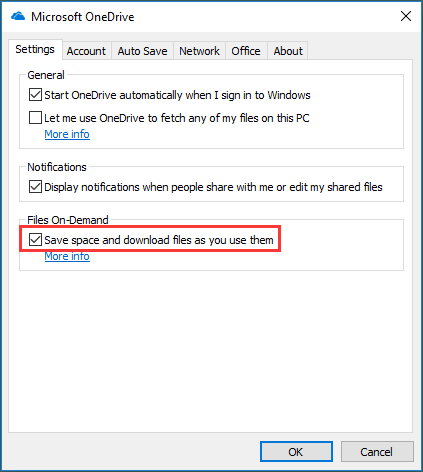
Step 4. To free up space on your Windows disk, open OneDrive, select all files and folders, right-click, and choose "Clear Space". This saves all files to the cloud, freeing up local disk space.
Way 10. Reduce the Size of the WinSxS Folder
If the C drive keeps filling up, you can find a folder named "WinSxS." By looking at its properties, you will see that it takes up quite a bit of disk space. Follow this guide to free up your disk space.
Step 1. Go to the "Control Panel."
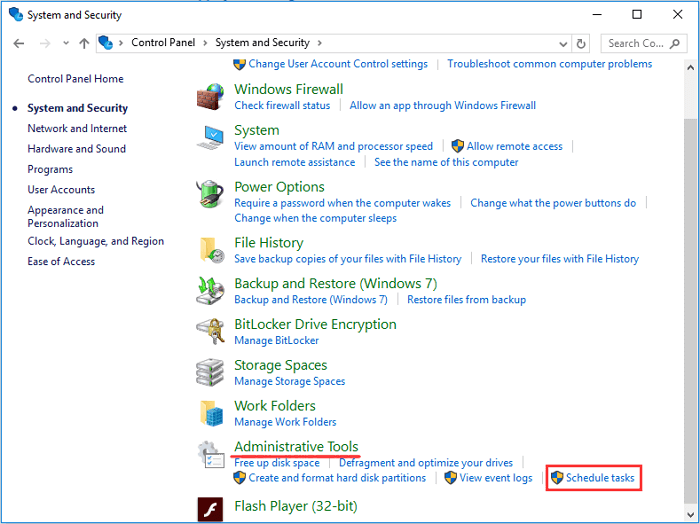
Step 2. To view the System and Security settings in Windows, you can set the view to "Category" and select "System and Security" from the options. This will display a list of categories related to system and security settings, allowing you to navigate and access the desired settings with ease.
Step 3. Select "Scheduled Tasks" under the "Administrative Tools" section.
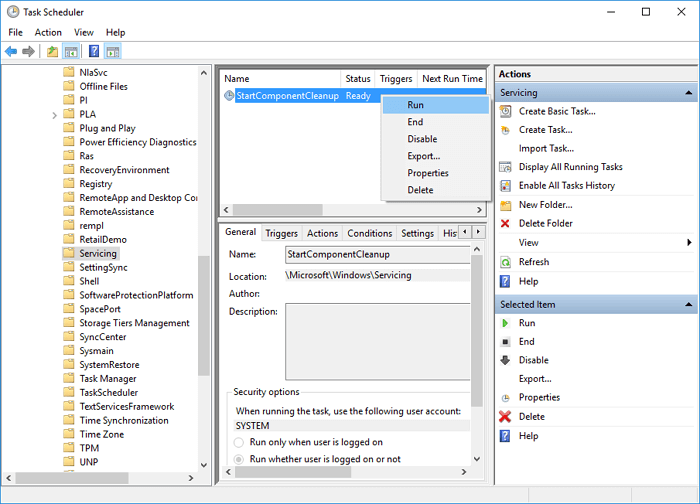
Step 4. To access the Task Scheduler Library, click on the left panel and navigate to Task Scheduler Library > Microsoft > Windows > Servicing.
Step 5. Right-click on "StartComponentCleanup" in the middle panel and select "Run."
You may also like:
Conclusion
If you're running low on hard drive space, there are simple ways to free up some room. You can start by deleting unnecessary files and programs, or consider upgrading to a cloud storage service to store less frequently used files. Additionally, you can empty the recycle bin, delete temporary files, and uninstall unused applications to reclaim some space. If you're still struggling, you can also try compressing files, using a disk cleanup tool, or even upgrading your hard drive to a larger one.
FAQs About Free Up Hard Drive Space
This part lists three questions related to freeing up hard drive space in Windows, so continue to read if you need.
1. Why is my C drive full?
After using your computer for a long time, your system's C drive often gets cluttered with large junk files, big files, huge installers, and temporary files, taking up most of the available space.
2. What can I delete from C drive?
You can delete files such as Recycle Bin contents, upgrade log files, device driver packages, Windows Update cleanup files, temporary Internet files, and other temporary files.
3. How do you find out what is taking up disk space?
You can follow this path to check:
To see what's taking up space on your device, go to Settings > System > Storage, where you'll see a list of all the drives. Selecting a drive will show you what's occupying space.
Related Articles
- We Couldn't Update the System Reserved Partition Windows 10
- How to Format Write Protected USB/Pen Drive [7 Ways]
- How to Convert MBR to GPT in Windows Server 2022/2019/2016/2012
- How to Remove Your Login Password in Windows 11? Quick Fixes!
- How to Break Windows 10 Hard Drive Limit without Data Loss?
What's the maximum hard drive size for Windows 10? How to break the hard drive size limit in Windows 10? All are explained right here. - How to Move Windows 10 Recovery Partition without Data Loss?
If Windows 10 Recovery partition is in the way of extending C: partition, you can move recovery partition in Windows 10 safely with a free tool.
Products
Articles & Tutorials
- Data Recovery
- Data Backup
- File Recovery
- File Backup
- System Backup and Restore
- Disk and Partition Clone
- Technical articles
- Mobile articles
- Disk Master Help
- Windows Data Recovery Tutorials
- Windows Secure Delete Tutorials
- Windows Partition Management Tutorials
- Windows File Backup and Restore Tutorials
- Windows System Backup and Restore Tutorials
- Windows Disk Backup and Restore Tutorials
- Windows Clone Tutorials