How to Rebuild RAID Without Losing Data [for RAID 0/1/5]
Standard RAID Levels Overview
RAID levels are used to store data across multiple disks, providing redundancy, performance, and capacity. The three main types are RAID 0 (striped disks), RAID 1 (mirrored disks), and RAID 5 (striped disks with parity). Each has its strengths and weaknesses, and can be damaged by various factors such as hardware failure, software corruption, or physical damage.
- The most common reason for a damaged RAID controller is physical damage to the controller itself.
- Malware attacks. A virus or malware can cause RAID failure.
- When a disk in a RAID setup fails, the entire system crashes, putting your valuable data at risk of being lost.
- When replacing old drives in a RAID array, it's essential to choose the correct drive to replace the old one. The target drive should be appropriately formatted before being used to replace the old drive, ensuring the integrity and functionality of the RAID array.
If you encounter issues with your RAID, you may need to rebuild it, which can be a delicate process to avoid data loss. Having RAID backups is ideal, but if you don't have backups, you can recover data from the RAID using RAID data recovery software before rebuilding. This approach can help ensure that your data is preserved during the rebuilding process.
Recover Data from RAID Before Rebuild [RAID Data Recovery]
If you're familiar with RAID data recovery, you might try to recover data yourself, but if you're a RAID novice, attempting to do so manually can lead to complete data loss. Additionally, rebuilding RAID can also cause data loss, and incorrect rebuilding can result in the loss of all data.
Downloading and installing reliable RAID recovery software can be a great help. We recommend Deep Data Recovery, which can safely scan and recover data from damaged RAID, including different levels, in just three easy steps.
Deep Data Recovery
- Recover lost data from RAID with a 99.9% success rate.
- Supporting not only RAID 0 data recovery but also data recovery from RAID 1, 5, and 10 drives ensures comprehensive protection for various storage configurations. This capability provides peace of mind for users who rely on these setups, knowing that their data is safeguarded in the event of a system failure or other disaster.
- Recover various file types from RAID storage, including photos, music, audio, documents, and more.
Step 1. Scan the RAID drive
Choose the RAID drive from which you wish to recover data, click "Scan", and wait for the scanning process to finish. The deleted files will then be displayed one by one.

Step 2. Find and preview lost RAID files
To quickly locate deleted or lost files, you can use the "Filter" feature for navigation. Alternatively, you can also use the "Search" function to find your lost RAID drive files by their file name or extension.

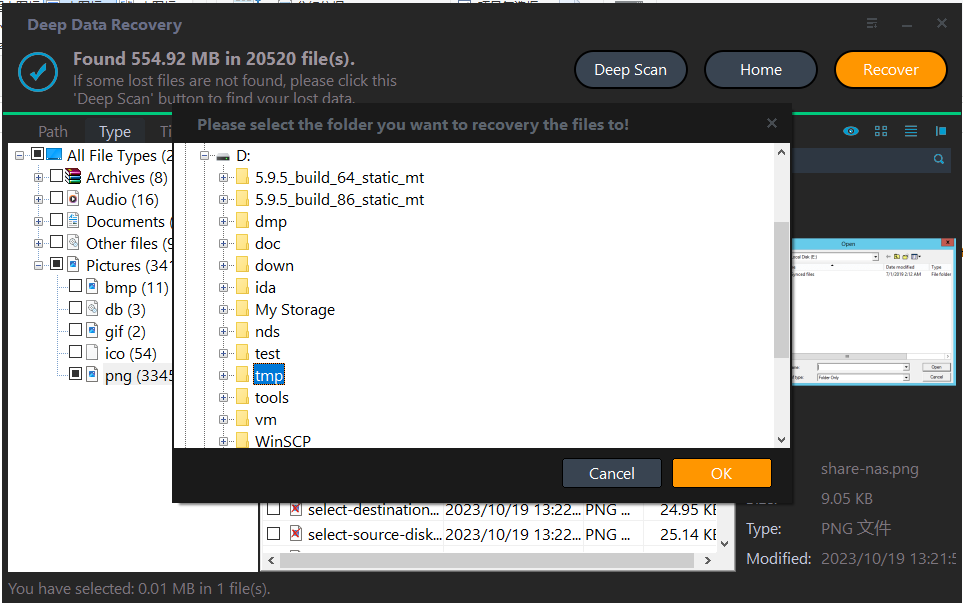
Step 3. Restore lost RAID drive files
Select the wanted files and click "Recover". Save these files to another secure location.
How to Rebuild RAID Without Losing Data
If you need to rebuild a RAID 1 setup without losing data, you can do so manually or with the help of RAID rebuild software. To avoid data loss, follow these tips.
- 1. Creating a RAID structure image and a backup on a separate volume is the first step. This ensures that your data is protected and can be easily restored in case of a system failure or data loss.
- 2. It's generally recommended to avoid creating a new RAID on old drives to prevent potential data loss.
- 3. Run the CHKDSK tool after creating the backup to ensure the repair tool doesn't overwrite file pointers and cause data loss.
- 4. Don't move, add, or delete files from the damaged RAID, instead, copy or back up the files.
- 5. If you don't want to lose the correct sequencing of your drives, you should not remove more than one disk at the same time.
- 6. Be aware that ignoring warnings about RAID failures can lead to significant data loss. RAID (Redundant Array of Independent Disks) failures can occur due to various reasons such as hardware malfunction, software issues, or even user error.
To rebuild a RAID without losing data, follow the rules: ensure the RAID is not degraded, check for any disk errors, and verify the RAID configuration. If the RAID is degraded, add the missing disk and rebuild the RAID.
Rebuild RAID with RAID Repair and Recovery Services
If you're having trouble with your RAID system, we suggest seeking professional help from a reputable data recovery service, such as Qiling, which has a team of experts experienced in RAID repair and recovery. They can assist with rebuilding your RAID and recovering data from various storage devices, including hard drives, flash drives, and NAS.
Consult with Qiling data recovery experts for one-on-one manual recovery service, which includes the following services after a FREE diagnosis:
- Rebuild RAID arrays of various levels, including RAID 0, 1, 5, 6, and 10, as well as custom configurations.
- Data recovery from enterprise RAIDs like QNAP, Synology, WD, and Buffalo can be challenging, but it's not impossible. These devices often employ complex RAID configurations and proprietary systems, making it difficult to access the data without proper tools and expertise.
- Retrieve lost RAID data caused by any issues
- Repair data from RAID remotely, no need to ship
Bottom Line
Before rebuilding RAID, it is necessary to recover data from RAID first with RAID recovery software – Deep Data Recovery.
Deep Data Recovery can help you recover deleted files from RAID and serve as a handy repair tool. It can also assist with photo and video repair if the files are corrupted or damaged on RAID. This makes it a useful tool for dealing with various types of data recovery and repair issues.
When you have trouble that this RAID recovery software cannot help, you can recover lost data with Qiling data recovery services.
Rebuild RAID Without Losing Data FAQs
The good news is that you can rebuild a RAID without losing data. If you have a RAID 1, 5, or 6, you can simply swap out the faulty drive and let the system rebuild the array.
Will rebuilding the RAID 1 array erase data?
When rebuilding RAID 1, it's crucial to back up the data first to avoid loss. If a backup isn't available, a data recovery tool like Deep Data Recovery can be used to retrieve the data. This ensures that your data is safe during the rebuilding process.
- 1. Scan the target RAID drive.
- 2. Find and preview the lost RAID files.
- 3. Restore lost files.
Can I rebuild RAID without losing data?
To avoid losing data during a RAID rebuild, make sure to back up your data before starting the rebuild process, and also check the integrity of your data during the rebuild process to ensure that it's being done correctly. This will help prevent data loss and ensure that your data is safe and recoverable. Additionally, consider using a RAID controller with built-in redundancy and data protection features, such as hot sparing or mirroring, to provide an extra layer of protection against data loss.
- 1. To create a RAID structure image and a backup on a separate volume, you can use a tool like Qiling backup.
- 2. Try not to create a new RAID on old drives.
- 3. Run the CHKDSK tool after creating the backup.
- 4. Don't move, add or delete files from the Damaged RAID.
- 5. You shouldn't remove more than one disk at the same time.
- 6. Do not ignore RAID failure warnings.
How long does a RAID 6 rebuild take?
Rebuilding a RAID can take anywhere from a few hours to over 24 hours, depending on the size of the data and the RAID capacity.
How can I recover data from a damaged RAID 5?
If you're familiar with RAID data recovery, you can manually recover lost data. Alternatively, if you're not familiar with RAID data recovery, you can use Deep Data Recovery to recover your data.
- 1. Scan the target RAID drive.
- 2. Find and preview the lost RAID files.
- 3. Restore lost files.
If you're unable to recover your data using the software, you can seek assistance from Qiling's data recovery services to help you retrieve your lost information.
Related Articles
- How to Unlock SD Card Without Switch [6 Methods]
- Sony Handycam Camcorder Video Recovery
- FIX: Seagate External Hard Drive Not Working Without Losing Data
- 3+ Solutions: Cannot Format Raw Drive Error in 2023
- How to Install Windows 10 Step by Step with Pictures
- How to Install Windows 10 Without a Microsoft Account
Here is a step-by-step guide on how to install Windows 10 without a Microsoft account in 4 different ways. The article will also introduce a tool called Qiling Disk Master to help you set up Windows 10 without a Microsoft account.
Products
Articles & Tutorials
- Data Recovery
- Data Backup
- File Recovery
- File Backup
- System Backup and Restore
- Disk and Partition Clone
- Technical articles
- Mobile articles
- Disk Master Help
- Windows Data Recovery Tutorials
- Windows Secure Delete Tutorials
- Windows Partition Management Tutorials
- Windows File Backup and Restore Tutorials
- Windows System Backup and Restore Tutorials
- Windows Disk Backup and Restore Tutorials
- Windows Clone Tutorials