Download and Create Windows 10 To Go
| Workable Solutions | Step-by-step Troubleshooting |
|---|---|
| 1. Overview of Windows To Go | Before you jump more into the deeper details, you have to know what is Windows To Go...Full steps |
| 2. Windows 10 To Go Download | Microsoft has discontinued Windows To Go. Unfortunately, due to these restrictions...Full steps |
| 3. Windows To Go vs Download ISO Image | The features of Windows To Go and Download ISO Image and the major differences between...Full steps |
The "Portable System USB" has gained popularity as a convenient way to run Windows without a traditional download and install process.
The portable USB system allows you to load and run an operating system by connecting it to a computer, providing a quick way to access Windows on any computer.
Our article provides a comprehensive introduction to Windows To Go, covering its primary functions and supported system versions. We'll delve into the details without delay, so let's get started.
Overview of Windows To Go
Windows To Go is a feature in Windows 8 and later versions that allows users to create a portable version of Windows that can be booted from a USB drive. This portable version of Windows can be used on any computer that supports booting from a USB drive, without the need for a physical hard drive or installation of Windows on the host computer. It's essentially a self-contained operating system that can be taken on the go, hence the name "Windows To Go".
Windows To Go
If you have to work from home, you'll need to ensure that your home computer's operating system is compatible with your workplace's system. Since your workplace runs Windows 10, but your home computer runs Windows 11, you may need to use a virtual private network (VPN) or a remote desktop connection to access your workplace's system from home. Alternatively, you could consider upgrading your home computer's operating system to Windows 10 to match your workplace's system. Either way, you'll need to take steps to ensure that your home computer meets the necessary security and compatibility requirements to access your workplace's system.
Windows To Go allows you to boot Windows operating system directly from a USB device, eliminating the need to install or load anything. Simply plug in your USB drive, and you're ready to work on Windows 10.
Windows To Go is a feature by Microsoft that enables you to create a portable image of your Windows 10 operating system, which can be loaded directly from a USB drive onto any computer.
Main Functions of Windows To Go
- Plug and Play: You can plug in your external USB drive, and it will start to load the Windows operating system image from it.
- Data Loss Prevention: Windows To Go gives users 60 seconds to plug the USB drive back in if it's accidentally removed, after which the system safely shuts down to prevent data loss.
- Automatic Drivers Installation: When booting from Windows To Go, it automatically installs all the necessary hardware drivers, allowing it to run smoothly with your computer.
Supported System Versions
Windows To Go, a feature available in certain Windows versions, allows users to create a portable version of Windows that can be booted from a USB drive. This feature is supported in Windows 8 Enterprise, Windows 8.1 Enterprise, Windows 10 Education, and Windows 10 Enterprise, but was discontinued in later versions.
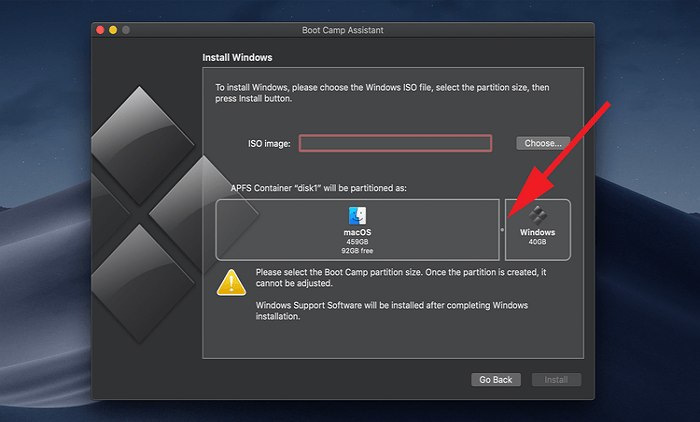
Windows To Go for Mac: How to Install and Use
If you've bought a Mac with standard 256 GB storage space and need to run a Windows-only program, don't worry, you're not out of luck. You can still use your Mac to run Windows and your desired program without breaking the bank or sacrificing storage space. There are alternatives to purchasing an external hard drive or upgrading your Mac's storage, such as using a cloud storage service or a virtual machine like Parallels or VMware.
Windows 10 To Go Download
Microsoft has discontinued Windows To Go, making it unavailable for download and use, and it is also not compatible with Windows 11.
You don't have to worry about getting Windows 10 To Go, as there's a simple solution. Qiling OS2Go software can help you achieve this in a few easy steps.
Qiling OS2Go
Qiling OS2Go utilizes Windows To Go's capabilities without any restrictions or limitations, making it compatible with all Windows 8/10/11 system versions. Additionally, it offers the feature to create Windows Installation Media.
Note: If you want to download Windows 11 ISO files, you can use Qiling OS2Go to download ISO files with just a few clicks.
Features
- Create Portable Windows: Using Qiling OS2Go, you can create a portable Windows that can run on Windows 10/11.
- Mac usable Windows: Qiling OS2Go can create a bootable Windows USB for macOS.
- User-Friendly Interface: The software has a user-friendly interface that enables users to create portable Windows To Go USB drives with ease, requiring only a few clicks to set up.
- Multiple Computers Support: The Windows 10 To Go USB created by it can be used in various computers simultaneously on a network.
- Cost-Effective: Qiling OS2Go offers a cost-effective solution for Windows installation, making it a cheaper alternative to buying hard drives.
- 24/7 Technical Support: Qiling's trustworthiness stems from its dedicated professional team, who are always available to assist with any issues that may arise when using their OS2Go software.
Steps to use Qiling OS2Go
Step 1. To use Qiling OS2Go, first install it on your Windows computer, which will display the used space on your system drive. Next, plug in a USB drive that is larger than the used space on your system drive. Then, choose the target USB drive and click Next to continue.
Step 2. The notification warns that deleting all data on the drive would result in the loss of important data, and asks you to confirm by clicking the Continue button.
Step 3. Adjust the disk layout on the target drive to match the resource drive, or customize it as needed. If using a Solid State Drive as the Windows bootable drive, select the corresponding option and click Proceed.
Step 4. Qiling OS2Go will create a portable USB drive, taking a while depending on the OS and network condition. Once the progress reaches 100%, the USB drive will be bootable.
Step 5. To boot from a portable Windows USB, start your computer, press the required key (usually F2, DEL, or F10) to access the BIOS, and select the USB disk as the boot device.
Note: To ensure a smooth boot process, it's essential that the boot mode of your portable USB drive and the target computer match. If they don't, you might encounter issues with booting.
See also:
Windows To Go vs Download ISO Image
Windows To Go and Download ISO Image are two distinct features of Windows, with different purposes and functionalities. Windows To Go allows users to create a portable version of Windows on a USB drive, enabling them to boot and use Windows on any compatible device without affecting the host machine.
Portable System USB drive by Windows To Go.
A portable system USB drive contains a complete working version of Windows 10, allowing you to boot Windows directly from it by plugging the USB drive into your computer.
Windows Installation Media (Download ISO Image)
Windows installation media, such as a USB with a downloaded Windows ISO image, is used to install a Windows OS on a computer, whereas a portable System USB is a separate device that contains a portable version of the Windows operating system, allowing you to run Windows on any compatible computer without needing to install it.
The age-old debate between Windows To Go and standard installation continues. Windows To Go allows users to create a portable, self-contained Windows environment on a USB drive, providing a convenient and secure way to access Windows on any computer. On the other hand, a standard installation requires users to install Windows directly on a computer's hard drive, which can be more time-consuming and may require additional hardware upgrades.
Businesses are now supporting the Bring Your Own Device (BYOD) system, where they provide Windows To Go USB drives to create a secure workspace on any gadget, rather than giving employees a computer.
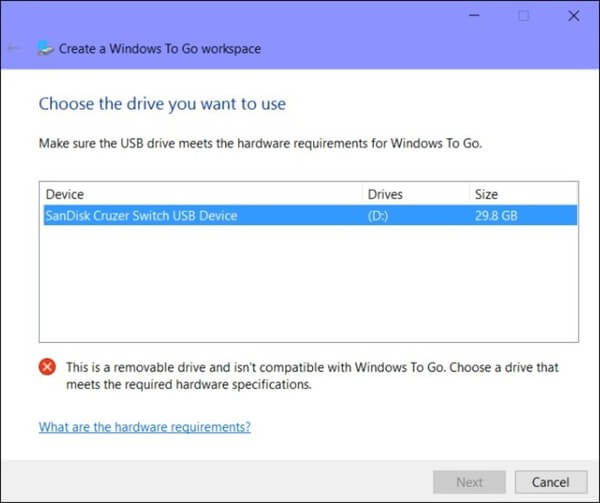
Difference between Windows To Go vs Windows Installation Media
Windows installation media and Windows To Go serve different purposes. Windows installation media, typically in the form of an ISO file, allows you to install a copy of the Windows operating system on your computer. On the other hand, Windows To Go creates a portable system USB with the OS already installed, enabling you to run a self-contained Windows environment on any compatible computer.
Conclusion
Microsoft's Windows To Go feature was released to help enterprises adapt to changing Windows environment needs, allowing users to boot a fully functional Windows 10 operating system from a USB drive, providing a quick workaround for various Windows-related issues.
Microsoft initially supported Windows To Go in a few versions of Windows, but discontinued it after the May 2020 update of Windows 10.
Although Microsoft no longer supports Windows To Go, users can still have this functionality for all Windows versions, including Windows 11, thanks to software like Qiling OS2Go. This reliable tool allows users to create a portable Windows environment with just a few clicks, making it easy to have a Windows To Go-like experience.
Related Articles
- For Mac Users - How to Install Windows on Mac without Boot Camp
- How to Run Windows on Mac for Games
- Windows 10 Boot Drive Size & How to Create a Windows 10/11 Bootable Drive
- How to Effectively Create Bootable Windows 7 USB Drive
- How to Back Up Outlook Folder to Hard Drive (2 Ways)
You can learn why backup Outlook folder to hard drive and 2 safe methods to achieve the goal. Each method includes a detailed tutorial. Keep reading and scroll down for more details. - Backup Outlook PST Files to OneDrive with 2 Tested Ways
You will learn both manual and automatic method to back up Out PST files to OneDrive, even breaking the file locking issues. Get more below and back up your PST files now.
Products
Articles & Tutorials
- Data Recovery
- Data Backup
- File Recovery
- File Backup
- System Backup and Restore
- Disk and Partition Clone
- Technical articles
- Mobile articles
- Disk Master Help
- Windows Data Recovery Tutorials
- Windows Secure Delete Tutorials
- Windows Partition Management Tutorials
- Windows File Backup and Restore Tutorials
- Windows System Backup and Restore Tutorials
- Windows Disk Backup and Restore Tutorials
- Windows Clone Tutorials