FIXED: DISM /Online/Cleanup-Image/Restorehealth Stuck🔥
DISM (Deployment Image Service and Management) is a built-in Windows command line utility used for Windows images. It can be used to find and repair corrupted system files, but sometimes it gets stuck at a certain percentage, such as 20%, 40%, or 62.3%.
If DISM gets stuck or takes a long time to repair system files, it could be due to various reasons such as running out of memory, lack of administrator identity, or an outdated Windows system. Fortunately, Qiling has a detailed solution to help fix the issue.
Run DSIM Alternative to Fix Corrupted Files
The "DISM/online/cleanup-The "restore health" command in Windows is complex and can lead to data loss and computer crashes, so it's recommended to use a reliable third-party tool like Qiling Disk Master Professional for Windows repair.
This tool offers a range of repair solutions for Windows disk and system issues, surpassing the capabilities of Windows built-in tools, and is dedicated to addressing various problems that may arise with Windows systems.
- Disk Health is used to check disk health and temperature conditions.
- Disk Surface Test for checking and marking bad sectors.
- To check and repair corrupted system files, check the file system by running the command `chkdsk` in the Command Prompt. This will scan the file system and identify any corrupted files.
- Boot repair can fix any boot errors caused by system files, allowing the system to boot normally again.
Qiling Disk Master can provide any solution you need. The tool is easy to use, so even if you are new to computers, you can easily manage your computer and disks and fix the dism /online/cleanup-image /restorehealth is stuck error.
Step 1. Right-click the target partition that has a problem.
Step 2. Choose "Advanced" > "Check File System".
Step 3. Confirm if you want to hide the partition or not.
Step 4. In the Check File System window, select the "Fix the error on the disk" option.
Step 5. Click "Start" to check errors on your partition.
Qiling Disk Master offers advanced repair functions, including installing Windows from ISO files in case of system crashes, and fixing the defaultuser0 password error when booting the PC. It can be downloaded and tried.
How to Fix DISM /Online/Cleanup-Image/Restorehealth Stuck
To resolve the issue with DISM /Online/Cleanup-Image/Restorehealth stuck at 40%, 62%, 100%, or other points, ensure you've entered the commands correctly and waited long enough. If your system has too much corrupted content, the DISM command may take several hours to complete. If the progress bar doesn't change, try running the command with elevated privileges, or try running the SFC /SCANNOW command to scan and replace corrupted system files. If the issue persists, you can try running the DISM command with the /ForceOptimize option to optimize the image before attempting the restore. Additionally, you can try running the System File Checker (SFC) command to scan and replace corrupted system files.
- Method 1. Restart PC and Run the Command Prompt As Administrator
- Method 2. Check RAM
- Method 3. Run CHKDSK
- Method 4. Run SFC
- Method 5. Update Your Operating System
Here are the methods to solve the problem:
Method 1. Restart PC and Run the Command Prompt As Administrator
Running unnecessary processes and services in the background can slow down your computer and prolong the time it takes to run DISM /online /cleanup-image /restorehealth.
You can reboot your system, close unwanted services and programs, and then run the DISM /online /cleanup-image /restorehealth command as an administrator to resolve most issues.
Step 1. Reboot and search for cmd in the taskbar.
Step 2. Right-click on Command Prompt and run as administrator.
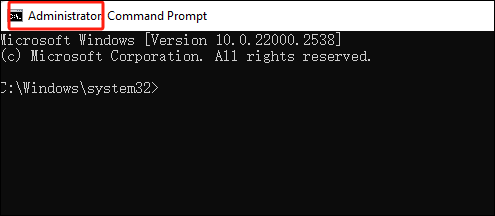
If you're not running the command prompt as an administrator, it may keep getting stuck on the % symbol. This is because certain commands and operations require elevated privileges to function properly, and running the command prompt as an administrator allows it to access these privileges.
Method 2. Check RAM
Your computer may get stuck while running the DISM command if it lacks sufficient RAM, so ensure it has enough RAM to execute the command successfully.
4GB of RAM is not sufficient for Windows 10/11. It is recommended to upgrade or replace it with a larger RAM.
Method 3. Run CHKDSK
CHKDSK is a command-line utility in Windows that scans and fixes disk errors, including those that may be causing the "DISM /online/cleanup-image /restorehealth Is Stuck" issue. It can be used to check and repair disk errors, bad sectors, and other issues that may be preventing the DISM command from running successfully. To use CHKDSK, open the Command Prompt as an administrator, type `chkdsk /f`, and press Enter.
Step 1. Run CMD as administrator.
Step 2. To run the chkdsk command on the C: drive, type "chkdsk C: /f /r/x" and press the Enter button. This will initiate a thorough scan of the drive, checking for errors and attempting to repair any issues it finds.
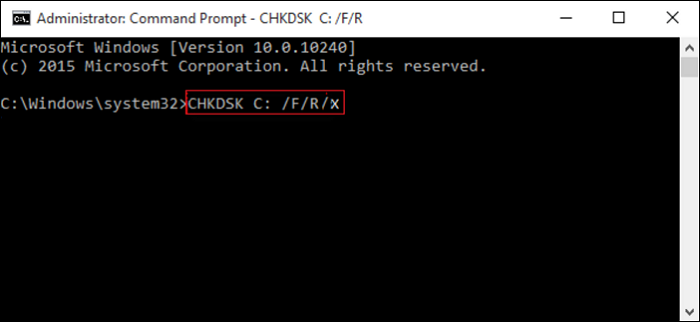
Step 3. When you're done, continue running the command "dism /online /cleanup-image /restorehealth" in cmd.
Method 4. Run SFC
In addition to using the DISM command, you can also fix system file issues on Windows 11/10 with the SFC (System File Checker) command. This tool scans and repairs corrupted system files, helping to resolve problems encountered with the operating system.
Step 1. Open Command Prompt as administrator.
Step 2. Type sfc /scannow and press Enter to execute the command.
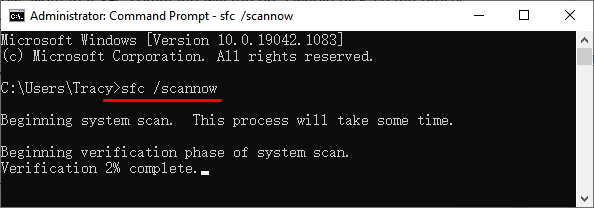
Step 3. Wait patiently for the process to complete and repair the corrupted system files.
If the SFC (System File Checker) process gets stuck, it's recommended to seek assistance from a professional tool like Qiling Disk Master for a smooth and efficient repair.
Method 5. Update Your Operating System
If your Windows system is outdated, it may cause issues like "dism /online /cleanup-image /restorehealth stuck" or other system errors. To resolve this, ensure your Windows system is updated.
Step 1. To open the Settings app, press and hold the Windows key and the "I" key at the same time, which is represented by the keyboard shortcut Windows + I.
Step 2. Find Windows update under settings.
Step 3. You can check if an update is available for installation, and if so, click "Download and install" to manually check for updates.

Step 4. Restart your computer and complete the update process.
Read Also:
How Long Does DSIM /Online/Cleanup-Image/Restorehealth Take
DISM /Online/Cleanup-The command "Image/Restorehealth" has several parameters that can be used to customize its behavior. To understand how long the command takes, we need to consider the complexity of the task it performs and the resources required to complete it. The command likely involves a series of complex calculations and data processing steps, which can take varying amounts of time depending on the specific parameters used and the system's available resources.
- DISM stands for Deployment of Image Services and Management
- /online tells the system to check the image of the currently running operating system.
- /cleanup-image removes unnecessary and corrupted files from the image.
- /restorehealth restores normal functionality as expected.
This command checks for corrupted files and replaces them with good ones, but its running time depends on the size of the corrupted files, the number of files, and the computer or internet speed. If it takes too long, it may get stuck. A user on a Microsoft forum experienced this.
Running DISM /online /cleanup-Running DISM.exe /online /cleanup-image /restorehealth can take a significant amount of time, potentially several minutes or even hours, depending on the extent of corruption in the image. If the process appears stuck or never completes, further assistance may be necessary.
Conclusion
DISM /online /cleanup-If your DISM /online/cleanup-image /restorehealth command is stuck, try the five solutions provided in the article to resolve the issue, which can get stuck at various percentages like 0%, 40%, 62.3%, or 99%.
If you're struggling with the command prompt, you might find the Qiling Disk Master tool helpful. It's designed to assist with system repair and can potentially resolve various issues, making it a more user-friendly option compared to the command prompt.
FAQs About DISM /Online/Cleanup-Image/Restorehealth Is Stuck
The DISM command is used to manage and repair Windows images. It can be used to capture and apply images, as well as to repair issues with the Windows installation. The DISM command can be used to scan and fix corrupted system files, and to troubleshoot issues with the Windows installation.
1. What if DISM gets stuck?
If DISM gets stuck, you can try rebooting your system or using other tools to repair corrupted system files, such as SFC, CHKDSK, or a third-party tool like Qiling Disk Master.
2. Can I stop the DISM command?
You can cancel the DISM command by closing the Command Prompt window at any time, whether you've just started or are in the middle of the process, but be careful to close the window while the command is running to avoid data loss.
3. Why DISM does not work?
When DISM (Deployment Image Servicing and Management) fails, it may be due to Windows Update Service interference. This occurs when an update is initiated, but the service doesn't support it, disrupting the system's normal operation. In such cases, resetting the Windows Update Service can resolve the issue.
Related Articles
- Windows 7 Password Reset Tools - Top 5 Checklist
- How Do I Shred Files for Free in Windows with Pictures
- Tutorial: How to Fix Hard Drive Failure on Windows 10
- Free Partition Tool for SD Card [With How-to Guide]
There is a free SD card partition tool called Qiling Disk Master that allows you to create, delete, resize, extend, shrink, and merge partitions on SD cards. Install it now! - How to Free Up Disk Space on Windows 8 [100% Works]
Want to free up disk space on Windows 8/9/10? Here are the best and most efficient fixes to fix your disk space problems quickly and effectively without running it. - How to Free Up Space on C Drive in Windows 11/10 [8 Efficient Ways]
This article gives eight solutions to help the problem: How to free up space on C drive. It teaches readers step-by-step and introduces a professional disk manager tool to extend the C drive to get more space.
Products
Articles & Tutorials
- Data Recovery
- Data Backup
- File Recovery
- File Backup
- System Backup and Restore
- Disk and Partition Clone
- Technical articles
- Mobile articles
- Disk Master Help
- Windows Data Recovery Tutorials
- Windows Secure Delete Tutorials
- Windows Partition Management Tutorials
- Windows File Backup and Restore Tutorials
- Windows System Backup and Restore Tutorials
- Windows Disk Backup and Restore Tutorials
- Windows Clone Tutorials