How Do I Format Hard Drive on Windows 11? 2024 Complete Guide
Many modern Windows users, including those with Windows 11, continue to experience difficulties with formatting hard drives, making it challenging for them to utilize their storage space. The reasons behind these issues are not well understood, but understanding the root causes and finding a solution is crucial.
There are plenty of ways to format a hard drive. So, which one is the best? To format a hard drive in Windows 11, you can follow these top methods, which are 100% effective: select the drive you want to format, right-click on it, and choose "Format" from the context menu; use the built-in Disk Management tool to format the drive; use the Command Prompt to format the drive using the "format" command; use a third-party formatting tool, such as Qiling Disk Master, to format the drive; or use the Windows built-in "This PC" feature to format the drive. Simply select the method that works best for you and follow the on-screen instructions to complete the formatting process.
- #1. Qiling Disk Master
- #2. Windows File Explorer
- #3. Windows Disk Management
- #4. CMD - Diskpart Command Line
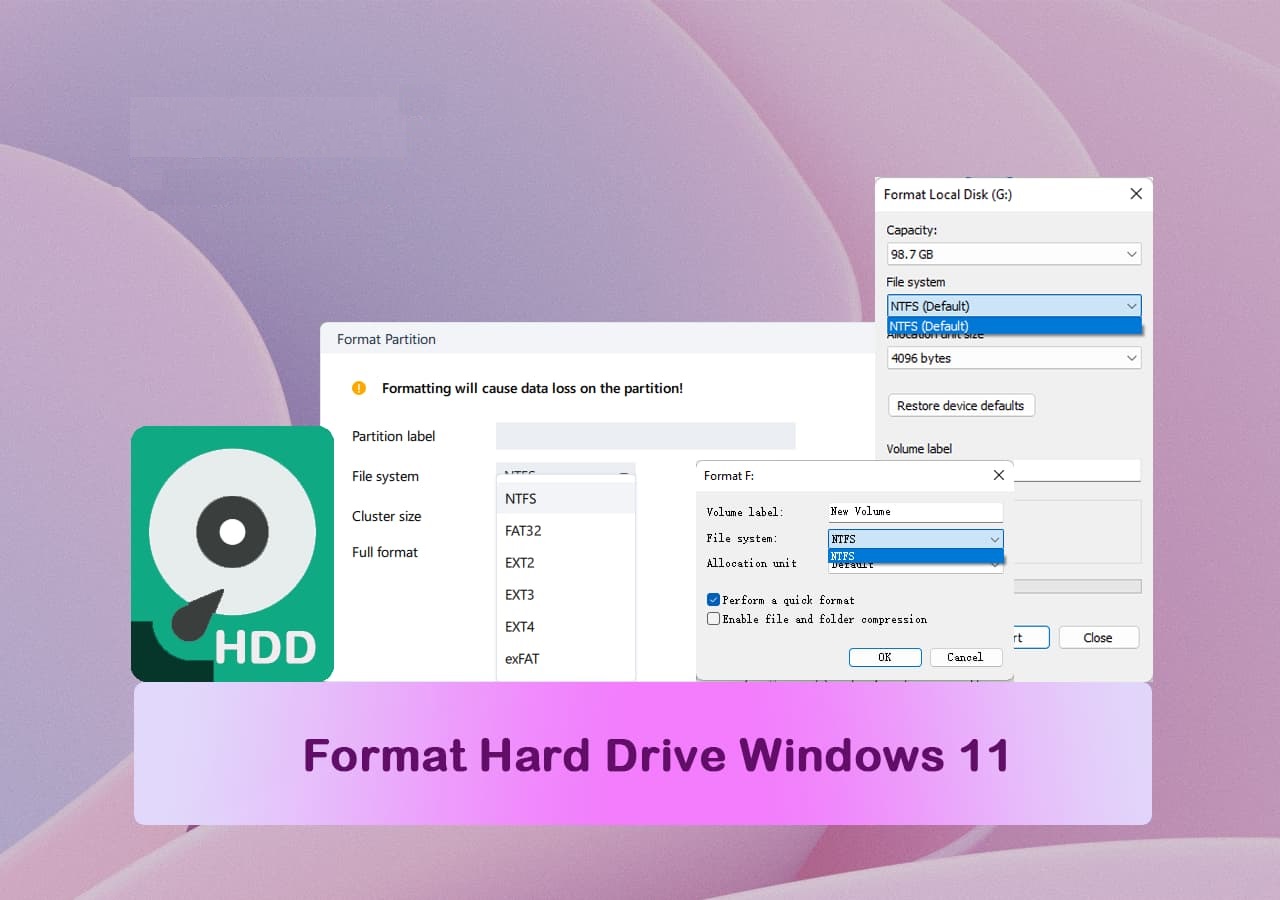
Hard drives come in various types with different interfaces, such as SATA drives and NVME drives. Formatting a hard drive can be beneficial for normal Windows users, offering advantages like improved performance and efficiency.
- ✔️Quickly clean out data on the hard drive
- ✔️Change the file system for specific usage
- ✔️For data transfer, gaming, or quick file storing, a suitable format would be a microSD card. These small, portable memory cards can be easily inserted into a device, such as a smartphone or tablet, and provide a convenient way to expand storage capacity.
So, let's keep digging and find out how to do that comprehensively.
How to Format Hard Drive on Windows 11 [4 Free Formatting Methods]
Formatting an external drive on a Windows computer can be done through various options, and the best one to use depends on the specific situation. The four main options available to Windows users include using the built-in Disk Management tool, the Command Prompt, a third-party formatting software, or a cloud storage service like Google Drive or Dropbox. Each option has its own set of advantages and disadvantages, and understanding these differences is crucial in determining the most suitable choice for formatting an external drive.
| Hard Drive Format Tools | Who to Use | Easiness |
|---|---|---|
| #1. Qiling Disk Master🏆 | Beginners, advanced and professional users | Easiest |
| #2. File Explorer🏅 | Beginners | Easy |
| #3. Disk Management | Advanced users | Medium |
| #4. CMD | Professionals | Complex |
When choosing a disk formatter for Windows 11, it's essential to select a suitable option that doesn't put you in vulnerable positions and formats your hard drive effectively, unlike other options.
#1. Format Hard Drive in Windows 11 with Qiling Disk Master
Qiling Disk Master Free is the first and most reliable option to format an external hard drive in Windows 11, making it the recommended tool for users and Windows owners.
| Pros | Cons |
|---|---|
|
|
This remarkable tool is a must-have for any external drive owner, offering numerous benefits. With its ability to recover lost files, repair corrupted data, and even clone drives, it's a game-changer for anyone who's ever lost important files or experienced drive issues. Its user-friendly interface and comprehensive features make it easy to use, even for those who are not tech-savvy.
- Right-To format an external drive or USB, simply click on it and select the "Format" option.
- Set the Partition label, File system (NTFS/FAT32/EXT2/EXT3/EXT4/exFAT), and Cluster size.
- Click "Yes" to continue.
- Click the "Proceed" button to format the hard drive partition.
Qiling Disk Master offers a range of amazing options, including the ability to clone a disk in minutes, recover data from damaged or corrupted disks, and create a bootable USB drive with a live Linux system. Its user-friendly interface and advanced features make it a powerful tool for anyone looking to manage and recover their data.
- Resize or move your partition easily
- Create or delete partition on internal or external drives
- Format or wipe external hard drive partitions with ease
- Create a new partition quickly
- The software has the ability to convert MBR to GPT, allowing users to switch from the older Master Boot Record (MBR) partitioning scheme to the newer Globally Unique Identifier Partition Table (GPT) scheme. Additionally, it can convert primary partitions to logical partitions, providing more flexibility in partition management and usage.
If this method helped you format your hard drive to the desired file system format efficiently, please share this tutorial with your friends by tapping your mouse and posting it online to help them.
#2. Format External Hard Drive with Windows File Explorer
To format your device using File Explorer, follow these steps: Open File Explorer, right-click on the device you want to format, select "Format" and then follow the prompts to complete the process. This method is quick and convenient, but it's essential to ensure that you have backed up any important data from the device before formatting it. Formatting a device will erase all data, so make sure you have a backup of any files you want to keep.
| Pros | Cons |
|---|---|
|
|
The app is user-friendly and easy to use, making it accessible to all types of users. This is likely due to its intuitive design and simple navigation, which allows users to quickly find what they need and get started with minimal effort. Whether you're a beginner or an experienced user, the app's straightforward interface ensures that you can easily find your way around and make the most of its features.
- Press Windows + E on your keyboard
- To format a hard drive, select the target hard drive and right-click on it, then click on the "Format" option.
- Pick a file system for the hard drive
- Check quick format
- Click on Start
- Confirm when prompted and wait for the format to finish
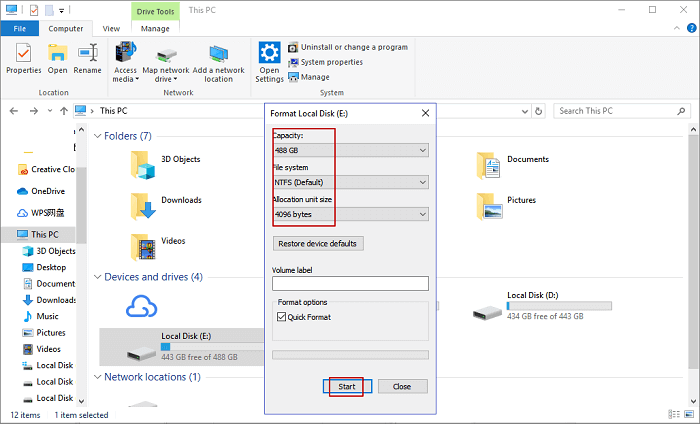
To format your hard drive, start by opening the Disk Management tool. Select the partition you want to format and right-click on it. From the context menu, choose "Format.
When formatting a drive, it's essential to check the Quick Format option. If you don't, the process will take longer than you'd like, as it executes a full format. Checking the Quick Format option ensures a faster formatting process.
- Extended Reading:
- Full format refers to the process of completely reinitializing a storage device, such as a hard drive or solid-state drive, by reformatting it and restoring it to its original factory settings. This process is also known as a "low-level format" and is often used when a drive is severely corrupted, infected with malware, or is no longer recognized by the operating system. In contrast, Quick format is a faster and less invasive process that simply deletes the file system and frees up space on the drive, but does not reinitialize the drive's underlying structure. The main difference between Quick format and Full format is that Quick format is a non-destructive process that preserves the drive's original structure and data, whereas Full format is a destructive process that completely erases all data on the drive, including any operating system, programs, and files.
#3. Format External HDDs/SSDs with Disk Management
To format your hard disk drive using Disk Management in Windows 11, follow these steps: Open the Disk Management feature by searching for it in the Start menu. Select the disk you want to format from the list of available disks. Right-click on the disk and select the "Format" option from the context menu.
| Pros | Cons |
|---|---|
|
|
So, in order to use that, here's what you will do:
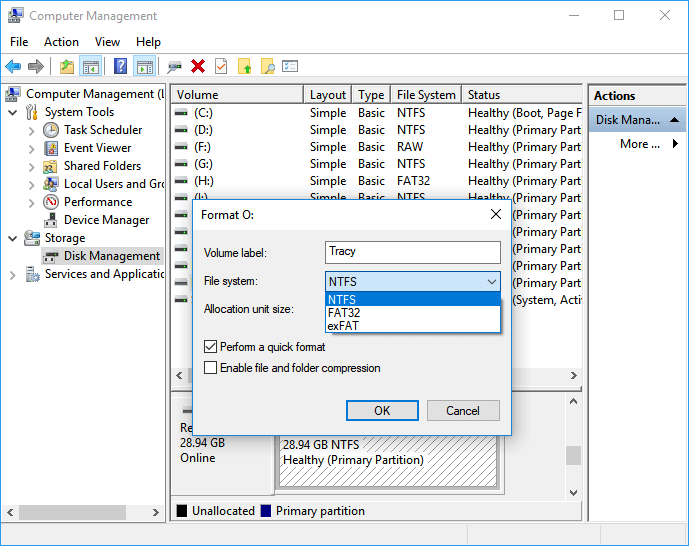
- Press Windows + X and click on Disk Management
- To format a hard drive, locate the drive you want to format, right-click on it, and select the "Format" option from the context menu. This will erase all data on the drive.
- Click on "Yes" when a warning prompts you to access formatting options, allowing you to customize the appearance of your text.
- Select the file system for the target hard drive
- Check "Perform a quick format"
- Press OK and wait for it to finish
#4. How to Format External Hard Drive Using CMD - Diskpart Command Line
To format an external device using the command line in Windows, you can use the Diskpart command to prompt the command line, then use the format command to format the device. This method is reliable and can be done through the command line.
| Pros | Cons |
|---|---|
|
|
Here's how to do that:
- Open Command Prompt as Administrator
- Type Diskpart hit Enter
- Type list disk hit Enter
- The disk we wish to format is DISK 2
- To select a disk, you would type `select disk 2` and then press the Enter key, replacing the number 2 with the actual number of your disk.
- Type list volume and hit Enter
- Type select volume 10 and hit Enter (replace 10 with the external drive volume number)
- Type format fs=NTFS quick (Qiling will be the partition label)
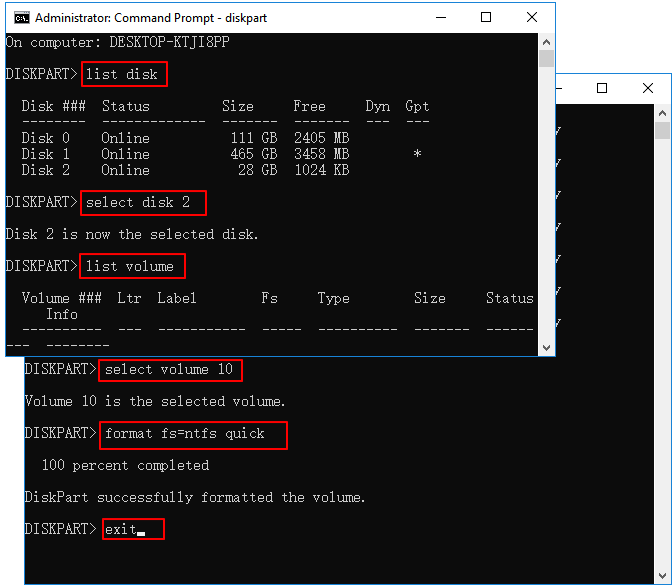
- Type exit and hit Enter. Done.
To format a hard drive, ensure you have the correct disk selected. Then, click on the "Start" button and select "This PC" or "Computer." Right-click on the hard drive you want to format and select "Format.
The methods for formatting external hard drives also work for other types of storage devices, including USB drives and memory cards. The four methods mentioned above can be used to format these devices, allowing you to prepare them for use with your computer.
Conclusion
Formatting an external hard drive on your computer can be done through various methods, each with its own advantages and disadvantages. The Command Prompt method is considered the most reliable, but it can be challenging to use. Other methods include using the built-in Disk Management tool, the Diskpart command, or third-party software like Qiling Partition Master. Each method has its own set of instructions and requirements, and the choice of which one to use depends on personal preference and specific needs.
Using a third-party professional tool like Qiling Disk Master is the most convenient, safest, and most reliable option for cloning a disk, as it is easy to use and provides a high level of reliability and safety.
FAQs about Formatting Hard Drive in Windows 11
If you have any further questions about this isse, then you can find your answers here.
1. Can I format hard drive on Windows 11 from Settings?
To format a hard drive in Windows 11, you can follow these steps: go to Settings, then select "System" and click on "Storage" from the left menu, select the drive you want to format, click on the "Properties" button, and then click on the "Format" button. This will erase all data on the drive and make it ready for use. Note that formatting a drive will delete all files and data on it, so make sure to back up any important files before proceeding.
- Right-click the Windows icon and select to open Settings.
- Click on System and select the Storage tab.
- Click "Advanced storage settings".
- Then, click "Disk & volumes" from the settings.
- Select the hard drive you tend to format from the list.
- Then select "Properties", and click the "Format" button.
2. Why Can't I format my hard drive Windows 11?
In Windows 11, formatting a hard drive can be blocked due to various reasons and causes, including issues with the operating system, corrupted system files, and problems with the disk itself. This can be frustrating, but there are steps you can take to resolve the issue and successfully format your hard drive.
- Unsupported file system in hard drive for Windows 11
- Hard drive contains unknown errors
- Hard drive is locked
- Unknown virus or malware infection, etc.
If you're experiencing issues with formatting your Windows 11, you can refer to the tutorial article "Windows Was Unable to Complete the Format in Windows 11" for assistance.
3. Should I format hard drive to NTFS or FAT32 in Windows 11?
In Windows 11, the file system you format a hard drive to is largely dependent on the intended use of the disk drive. For example, if you're planning to use the drive for storing and running operating systems, such as Windows, you would typically format it to the NTFS (New Technology File System) file system.
- If you tend to use a hard drive to save and store personal data, run programs, or even install a new operating system, NTFS should be the default format.
- If you need a special file system format, such as FAT32, to build a test environment or store games, you can set the format as FAT32.
2TB hard drive can't be formatted to FAT32 because FAT32 has a file size limit of 4GB. You can't format a 2TB hard drive to FAT32 because it exceeds the file size limit of FAT32. You can format a 2TB hard drive to NTFS, exFAT, or HFS+, which have no file size limits.
Related Articles
- FIXED: DISM /Online/Cleanup-Image/Restorehealth Stuck🔥
- USB Flash Benchmark Download with Complete Review in 2024
- How to Format Read Only Disk to Normal Windows 11
- How to Format SD Card for Dash Cam on Windows/Mac/Dash Cam
- Top 5 NVMe SSD Benchmark Software [2023 New Ranking]
If you're looking for the best NVMe SSD benchmark software, this article is a practical guide to use, as it provides a detailed comparison of the 5 best benchmarks, along with their pros and cons. - 5 Best OS Cloning Software Recommend and Free Download
If you're looking for reliable OS cloning software to clone your operating system to a new disk or computer, this page highlights the top 5 options you shouldn't miss.
Products
Articles & Tutorials
- Data Recovery
- Data Backup
- File Recovery
- File Backup
- System Backup and Restore
- Disk and Partition Clone
- Technical articles
- Mobile articles
- Disk Master Help
- Windows Data Recovery Tutorials
- Windows Secure Delete Tutorials
- Windows Partition Management Tutorials
- Windows File Backup and Restore Tutorials
- Windows System Backup and Restore Tutorials
- Windows Disk Backup and Restore Tutorials
- Windows Clone Tutorials