A Complete Guide to Recover Deleted Files
Deleting a file can be a frustrating experience, especially when it's something important. This happens when we intentionally or unintentionally delete data, and it's not uncommon for people to regret deleting a file at least once in their lifetime. Whether it's a crucial document, a cherished wedding video, or something else, losing a file can be devastating. Fortunately, this tutorial provides a guide on how to recover deleted files, helping you navigate the process and retrieve lost data.
How Do You Delete Files on a Computer
Many people believe that data deletion is unlikely to happen to them, but the reality is that everyday activities can lead to these instances.
Deleting a file removes it from the computer's storage, either intentionally or unintentionally. This can be done by right-clicking on the file, selecting "Delete," or pressing the "Delete" key, and also by selecting multiple files to delete simultaneously.
To permanently delete a file without recovery, you can press the Shift+Delete keys simultaneously, use the del command in the Command Prompt, or employ a third-party file deletion tool. This will ensure the file is completely erased and cannot be recovered.
Where Do Deleted Files Go on Windows 10/11
When you delete a file from a PC or laptop running Windows 10 or Windows 11, it doesn't actually get deleted. Instead, it gets moved to the Recycle Bin. The Recycle Bin is a temporary storage space where deleted files are kept until you empty it.
When you delete a file on Windows using the Delete key from File Explorer, it's sent to the Recycle Bin, which is usually visible on the desktop. However, if you empty the Recycle Bin or use the Shift + Delete shortcut, the file is permanently deleted and won't be recoverable with a simple search.
- Tip
- When a file is removed from a hard disk, it goes to the Recycle Bin, but if it's removed from a portable storage device like a USB or SD card, it's lost forever.
Can Deleted Files Be Recovered on Windows 10
If you delete files, you can easily recover them from the Recycle Bin or Recently Deleted folder by simply restoring them to their original location.
Permanently deleted files can be recovered because when a file is deleted, the operating system doesn't delete the data itself, but rather marks the file's location on the hard drive as deleted, allowing new data to be written to that space without erasing the original file.

When a file is deleted, the data itself isn't immediately erased. The disk's record of the file remains until new data is written to the same location, allowing advanced recovery methods to recover the deleted file by reading the existing data from the disk.
To restore deleted files on Windows 10, you can try using the built-in File History feature, which automatically backs up files to an external drive or network location. If you've enabled File History, you can access your backed-up files through the File History interface.
- Recover Deleted Files on Windows 11/10 Without Software
- Recover Permanently Deleted Files on Windows with File Recovery Software
- Recover Deleted Files with a Professional Recovery Service
- Recover Permanently Deleted Files in Different Formats
- Recover Deleted Files from Multiple Devices
How to Recover Deleted Files on Windows 11/10 Without Software
To recover deleted or permanently deleted files in Windows 10/11, you can use various methods, including those outlined in a guide that explains the Windows 10 files recovery process without software.
Method 1. Recover Deleted Files from Recycle Bin
Deleted files can often be easily undeleted from the Recycle Bin, even after they've been removed from the original location, giving you a chance to recover them. To retrieve files from the Recycle Bin, you can follow the usual steps to access and restore them.
Step 1. Find the Recycle Bin icon on your desktop and open it.
Step 2. Select the files you want to restore and click Restore. The files will be placed back in their original location, and you will be notified when the process is complete. If you want to restore a file to a different location, you can select the file and click Restore to.
Step 3. If you need to recover a file, select the desired file and click "Restore". This will return the file to its original location.
Full Guide
Click here to follow the instructions on Recycle Bin recovery.
Some users report that they can't find deleted files in Recycle Bin although they didn't permanently delete the files. Why are deleted files not in Recycle Bin? There may be three reasons for this problem.
- The system automatically deletes files in the Recycle Bin if they are stored for too long.
- The file was permanently deleted, likely due to its large size, which bypassed the Recycle Bin. This means the file is gone for good and cannot be recovered.
- You're running low on space in the Recycle Bin, which means you can't temporarily delete any more files. You'll need to empty the Recycle Bin to free up space.
In-depth reading on recovering deleted files not in Recycle Bin.
Method 2. Recover Deleted Files with Backup
Recovering deleted files can be a simple process if you have a recent backup, such as Windows 10's automatic File History backups, which can be used to recover deleted files without the need for additional software.
To access and restore deleted files from File History:
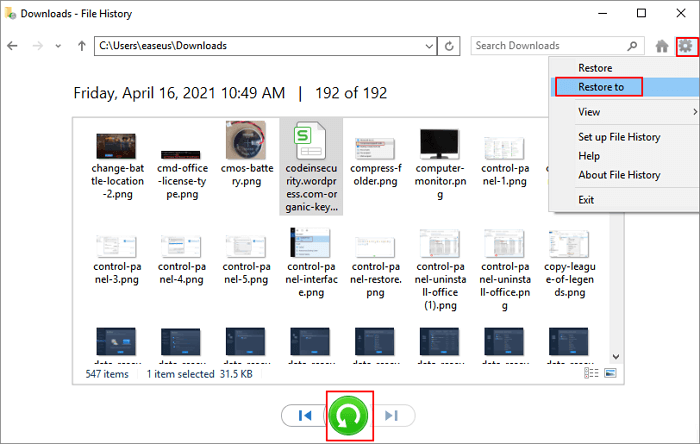
Step 1. To recover deleted files, type "file history" in the Search box and click "Restore your files from File history".
Step 2. When you access the File History window, locate and preview the deleted files you wish to restore.
Step 3. Select the files you want to restore, and then click the gear icon near the upper right corner of the window to save the selected files to a customized path.
Restore Deleted Files from the Previous Version
To restore a deleted file from a previous version, you can follow these steps: First, you need to identify the version of the file you want to restore from. This can be done by checking the file history or version control system used by your computer or cloud storage service.
Step 1. To recover a deleted file, open "This PC" or "My Computer" and navigate to the folder that previously contained the file or files you want to recover.
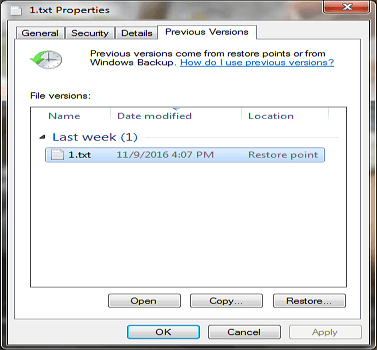
Step 2. Right-click on a file and select "Previous Versions" to view a list of saved versions, which were created with Windows backup or saved as restore points.
Step 3. To recover a previous version of a file, double-click the file you want to recover. Then, drag the file to a new location where it will be saved and available for use.
Recover Deleted Files on Windows with File Recovery Software
Using file recovery software, such as Deep Data Recovery, is the most effective method for recovering deleted files, even if no backup is available. This software can scan your hard drive for any remaining traces of deleted files and attempt to recover them, often successfully. Permanently deleted files can be recovered easily with this tool, making it a reliable option for recovering lost data.
- Recover deleted files from various storage devices, including SD/memory cards, USB drives, and hard drives.
- Recover lost or deleted files, photos, videos, documents, and more.
- Data recovery software can help retrieve lost data from various devices, including computers, smartphones, and external hard drives. These tools can scan the device's storage for deleted files and attempt to recover them, often with a high success rate.
- Restoring data from computers damaged by viruses or other malware involves retrieving and recovering valuable information that was lost due to a cyber attack. This process typically requires specialized tools and expertise to safely and effectively recover data from affected systems, minimizing the risk of further damage or contamination.
- Offer a preview function that lets users see the files that can be recovered before starting the recovery process, allowing them to assess the potential outcome and make an informed decision.
To recover deleted files on your Windows PC, download and install Qiling data recovery software from our website, then follow the steps to recover deleted files, which can be done for free with Qiling's Free edition if the deleted files are under 2GB.
Step 1. Select a specific hard disk or location.
Choose the drive or partition where you deleted files, or select a specific location to scan, such as the Recycle Bin, Desktop, or a folder. Then, click the Scan button to start the search for deleted files.
Step 2. Start a quick or advanced scan for lost data.
The scanning time depends on the file size and disk health, and once complete, you can view detailed results and filter files by type.
Step 3. Preview and recover the files you need.
After scanning, verify the file you want to recover, then click the "Recover" button to save the recovered files.

Recover Deleted Files with a Professional Data Recovery Service
If all other solutions have been tried and failed, professional data recovery services may be the best option, but they come with a cost.
Here are the steps to consider if you are thinking of using a professional data recovery service:
- If you're looking for a reliable data recovery service, consider searching Google for a reputable option. One such service is Qiling Data Recovery Service, which has a good reputation and may be worth considering.
- Make sure your device is compatible with the software you're trying to install. Check the system requirements and ensure your device meets them.
- To schedule a remote connection for a free diagnosis, you can make an appointment by simply clicking on the link provided. This will allow our team to remotely connect to your device and perform a thorough diagnosis at no cost to you.
- Complete the financial transaction with the recovery service and let them recover your files.
- Check the device and start using your files again.
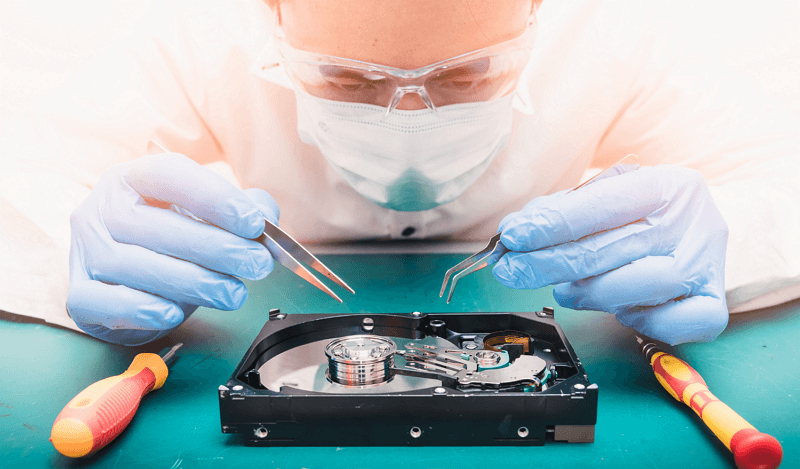
Dealing with deleted files is a common issue, and it's easy to regret deleting something important. Whether it's a crucial document, a cherished wedding video, or any other valuable file, it's reassuring to know that recovering deleted files in Windows 10 is often possible.
Full Guide
If you're still having issues, you can check out the article on how to recover deleted files in Windows 10.
Recover Permanently Deleted Files with Windows File Recovery Tool
Here, we'll show you how to recover deleted files with Windows File Recovery, a Microsoft utility that enables users to recover deleted photos, lost Word documents, or missing files from their computer's hard drives or portable storage devices.
To recover deleted files on Windows 10 using this free utility, follow these steps: First, download and install the free utility, then launch it and select the drive where the deleted files were located. Next, the utility will scan the drive and display a list of recoverable files.
Step 1. Download and launch Windows File Recovery from Microsoft Store.
Step 2. To recover files using Windows File Recovery, enter the command "Windows File Recovery" in the search box, and then select the "Windows File Recovery" option that appears.
Step 3. To recover lost files, open the Command Prompt window and type the command `chkdsk /r` and press Enter. Follow the on
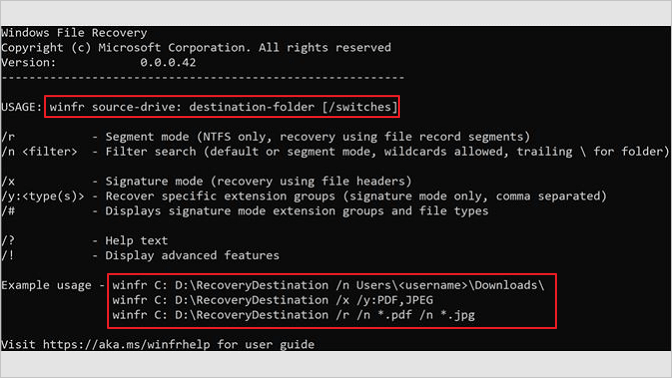
Default mode example - Recover a specific file from your C: drive to the recovery folder on an E: drive.
winfr C: E: /n \Users\Documents\QuarterlyStatement.docx
Segment mode example (/r) - Recover PDF and Word files from your C: drive to the recovery folder on an E: drive.
winfr C: E: /r /n *.pdf /n *.docx
Signature mode example (/x) - When using the signature mode, it's helpful to check the supported extension groups and corresponding file types first.
info /#
Step 4. When prompted to confirm the recovery operation, enter "Y" to start the recovery process.
If you've accidentally deleted files, Windows File Recovery can help you recover them.
Recover Deleted Files from Multiple Devices
Portable devices and cloud disks are popular storage means, but accidental file deletion is also common. Fortunately, detailed tutorials are available for recovering deleted files from various storage media, including SD cards, USB flash drives, external hard drives, and cloud disks.
Recover Deleted Files from an SD Card
SD cards, commonly used in digital cameras to store photos, can be a source of frustration when files are accidentally deleted before transferring them to longer-term storage. Fortunately, recovering deleted data from an SD card used in a camera or phone is possible with the help of SD card recovery software, which can help retrieve lost files.
Step 1. To connect the SD card to your computer, place the SD card into an SD card reader, which is a small device that plugs into your computer's USB port. The SD card reader typically has an SD card slot on one end where you can insert the card, and a USB connector on the other end that you can plug into your computer.
Step 2. Wait for your computer to recognize the SD card.
Step 3. To recover data from your SD card, open the SD card data recovery software on your Windows PC.
Step 4. Recover deleted files from the SD card with the data recovery software.
Retrieve Deleted Files from USB Drive (External Disk)
Restoring deleted files from a USB or external hard drive is not rocket science if you have reliable data recovery solutions. The best method to recover deleted files from USB drives involves using a reliable data recovery solution, which can help retrieve your lost data.
Step 1. Connect the USB flash drive to your computer.
Step 2. Wait for your PC to recognize the USB drive.
Step 3. Open the USB drive recovery software on your PC.
Step 4. To recover deleted files from a USB drive, you can use a pen drive recovery software. This type of software is specifically designed to retrieve lost data from USB drives and other portable storage devices.
Restore Deleted Files from Google Drive
With the rise of cloud storage, people now prefer storing data on cloud drives over traditional storage media. When a file or folder is deleted from Google Drive, it goes to the Trash and remains there for 30 days by default. After this time limit expires, the cloud storage server permanently deletes the files, making them unrecoverable.
You can try to recover permanently deleted files from Google Drive by contacting Google Support, who may restore the deleted files for you. If not, restore lost data from backups or search for locally saved files or folders, such as recovering a deleted Google Doc, Sheet, or Slide from the Support.
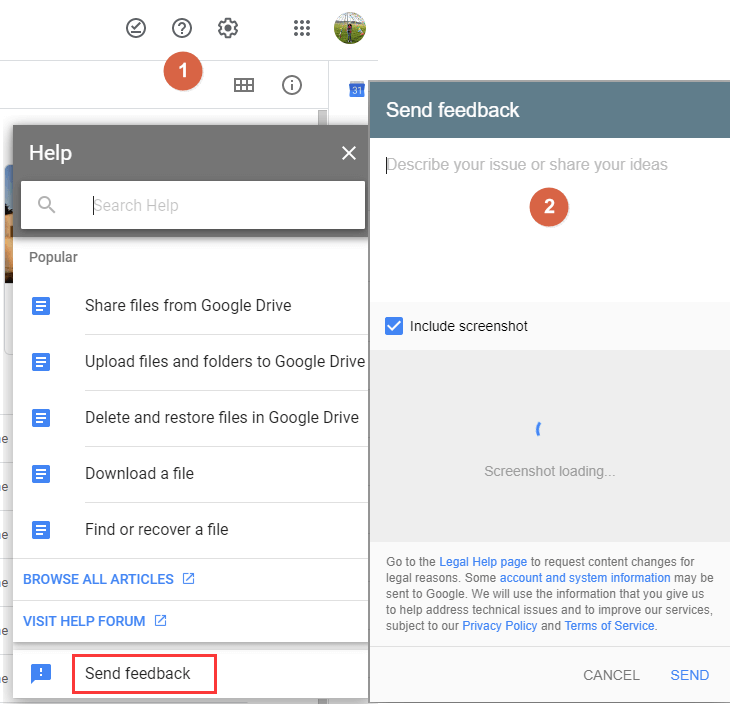
Step 1. To access the Google Drive help page, go to drive.google.com, click the question mark icon in a circle at the top right corner, and select "Help" from the dropdown menu.
Step 2. From the drop-down list, click "Send Feedback".
Step 3. My computer's speakers are not working properly, and I've tried restarting the computer and checking the connections, but nothing seems to work.
If you delete a Google Docs file, you can recover it within 30 days, but if it's older than that or was permanently deleted from the trash, recovery isn't possible.
Photos older than 60 days or permanently deleted from trash can't be recovered, but can be restored from a Google Photos backup. OneDrive users can recover permanently deleted files by following Microsoft's process, which may differ from Google's.
How to Recover Deleted Files on Mac (100% Working)
As a Mac user, you can recover deleted files, just like on Windows. Files you remove on a Mac go to the Trash Bin, where they stay for a period of time. To recover files, first check the Mac Trash, as the file might still be there if it was unintentionally deleted. If you've permanently deleted a file, there are still options for recovery, although the process may be more complex.
1. Use Time Machine
Time Machine is a built-On Mac, the backup feature, also known as Time Machine, automatically keeps backups of your files for a certain period, allowing you to recover deleted files from a previous backup.
2. Run Mac Data Recovery Software
Mac data recovery tools can scan your hard drive for deleted files and attempt to recover them.
3. Retrieve Deleted Files on Mac Through Terminal
You can also recover deleted files on a Mac using Terminal, a feature that allows you to recover deleted files on your device.
How to Recover Deleted Files on iPhone and Android
On mobile devices, deleting files is a common practice to clean up memory due to limited storage space. When files are deleted on iPhones and Android phones, they initially go to the Recently Deleted folder. After 30 days, they are permanently deleted. However, if you need to recover deleted files, you can follow the guides provided to retrieve them.
Tips for Windows 10 File/Data Prevention
Data protection is crucial in today's digital world, where information is a valuable asset that needs to be safeguarded. Protecting personal, financial, and confidential business data is essential, making data protection a top priority. Fortunately, compared to data recovery, data protection is a relatively easier and more effective approach to avoid data loss, with many methods available to secure your data.
- Keep backups of your data in multiple locations.
- Don't open suspicious emails or attachments.
- Keep your anti-virus software up to date.
- Don't delete files you don't know, especially system files.
- If your PC is overheating, take it apart and clean it to prevent damage.
By following these tips and suggestions, you can ensure that your data is safe and secure.
Conclusion
Recovering deleted files can be a difficult and time-consuming process, but with the right tools and patience, it's usually possible to retrieve lost data, and having a backup plan is always the best option for mission-critical data.
Recover Deleted Files FAQs
If you're struggling to recover deleted files, consider reaching out to a professional data recovery service or trying a reliable file recovery software. For more guidance, check out the FAQs below.
1. How to recover deleted files on Windows 11?
Steps to recover deleted files on Windows 11:
- Download, install and launch Qiling data recovery software.
- Select the disk or partition that contained the lost files on Windows 11.
- To initiate a scan for deleted files on your computer, click the "Scan" button.
- Choose the deleted files you want and preview these files.
- To recover deleted files on Windows 11, click the "Recover" button.
2. How do I recover deleted files not in Recycle Bin?
To retrieve deleted files not in Recycle Bin:
- To proceed, select the exact file location and click the "Scan" button.
- After the process, you can use the "Filter" feature or click the "Search files or folders" button to locate the deleted files.
- After clicking the "Recover" button, save the restored files, making sure they are distinct from the original ones.
3. How do I recover permanently deleted files?
There are at least three ways to recover permanently deleted files, with various solutions mentioned in this post. Depending on your specific data loss situation, you can choose the most suitable approach to recover your lost files.
Qiling data recovery software is highly efficient in restoring data from various storage devices, including hard drives, SSDs, USB flash drives, SD cards, memory cards, and more.
4. How can I recover permanently deleted files without backup?
Steps to recover deleted files without backup:
- Download, install and launch Deep Data Recovery.
- Choose the file location and then click the "Scan" button.
- After the process, you can use the "Filter" feature to locate the deleted files.
- Click the "Recover" button and save the restored files.
5. Where do files go when deleted on Windows 10?
When you delete a file or folder on Windows 10, it typically gets moved to the Recovery Bin, where it stays until you manually empty it or restore the deleted item, giving you the opportunity to recover something you deleted even after a long time.
If you've emptied the Recycle Bin, deleted files are stored on the hard drive and can be recovered using hard drive data recovery software.
6. Are deleted files gone forever?
When you delete files, they go to the Recycle Bin instead of being deleted permanently, allowing you to recover them if needed.
7. Does Windows 10 restore deleted files?
Windows 10 has an automatic backup feature called File History that allows you to recover deleted files. You can access this feature by going to Settings > Update & Security > Backup. From there, you can view and restore your backed-up files. Additionally, you can also use the built-in Windows Search feature to search for deleted files and recover them.
- Open Windows Explorer and right-click the folder where the deleted file is located. From the context menu, select 'Restore previous versions'.
- Select "Restore previous versions".
- Select the most appropriate File History backup and click "Open" to preview its content.
- Select the file you want to recover and click "Restore...".
8. How to recover deleted files on OneDrive?
To retrieve deleted OneDrive files, you can go to the OneDrive website, click on the "Recycle Bin" icon, select the files you want to restore, and click "Restore" to bring them back to their original location. Alternatively, you can also use the OneDrive mobile app to access the Trash and restore deleted files. If you're using OneDrive for Business, you can also use the "Recycle Bin" feature in the OneDrive web app to retrieve deleted files.
- To access your OneDrive, go to the OneDrive website or open the OneDrive icon on your device.
- Log in with your username and password.
- Select "Recycle Bin" in the navigation pane.
- Select the files you want to recover.
- Click "Restore" to recover lost OneDrive files.
Related Articles
- Flash Drive Data Recovery Software: Recover Files from a USB or Pen Drive
- Data Recovery Software for Windows 10/Mac/iPhone/Android
- Windows Repair Tools and Services [Windows 10/11]
- Everything You Need to Know About Shortcut Virus
- The Add-In Template Is Not Valid in Word? 4 Fixes Here!
The “The add-in template is not valid” error message in Word can be frustrating, but it's usually caused by a corrupted or incompatible add-in template. This issue can occur when you try to open a file, and it's not a problem with the file itself, but rather with the template that's - How to Fix 'The semaphore timeout period has expired'
People get the error “The semaphore timeout period has expired” on two occasions: when the location is not accessible and when the semaphore timeout period has expired. To resolve these issues in Windows 10/8.1/8/7, this guide will provide a solution without requiring much effort.
Products
Articles & Tutorials
- Data Recovery
- Data Backup
- File Recovery
- File Backup
- System Backup and Restore
- Disk and Partition Clone
- Technical articles
- Mobile articles
- Disk Master Help
- Windows Data Recovery Tutorials
- Windows Secure Delete Tutorials
- Windows Partition Management Tutorials
- Windows File Backup and Restore Tutorials
- Windows System Backup and Restore Tutorials
- Windows Disk Backup and Restore Tutorials
- Windows Clone Tutorials