How to Speed Up an Old Laptop with a Disk Cache
An old laptop usually has a perfectly adequate processor for browsing, email, and documents. What makes it feel tired is the 5400 rpm hard drive it shipped with, because every program launch, window switch, and file open waits on a spinning platter.
This guide explains how to tell whether storage is really your bottleneck, what a disk cache can and cannot fix on a low-spec machine, how to size a cache when RAM is scarce, and when you should stop tuning and upgrade instead.
PAGE CONTENT
- Why Old Laptops Feel Slow
- What a Disk Cache Can and Cannot Fix
- Choose the Right Cache for a Low-Spec Machine
- How to Set It Up in Qiling Fast Cache
- When Caching Is Not Enough
- FAQs About Caching on an Old Laptop
- Back Up Windows Before You Change Settings
Why Old Laptops Feel Slow
Before you change anything, identify what is actually holding the machine back. On aging laptops it is usually one of four things:
- A mechanical hard drive. The most common cause by a wide margin. A 2.5-inch 5400 rpm drive serves scattered reads slowly, and Windows, browsers, and document editors are almost entirely scattered reads.
- Not enough memory. When RAM runs out, Windows swaps pages to disk, which turns a memory shortage into a disk problem - and on a slow disk the slowdown is dramatic.
- An older processor. Usually the least important factor until you do heavy work such as video export or modern gaming.
- Heat and dust. A clogged fan or dried thermal paste makes the CPU throttle, so the machine slows down the longer you use it.
A quick test: open Task Manager and watch the Performance tab while you open a few programs. If the disk stays at or near 100% while the CPU sits low, storage is your bottleneck and a cache can help. If memory is pinned near its limit, fix that first.
What a Disk Cache Can and Cannot Fix
A disk cache keeps copies of frequently read data on RAM or an SSD, so repeated reads stop touching the hard drive.
It helps with:
- Booting Windows and starting the same programs every day.
- Opening documents, projects, and folders you return to often.
- Browser startup and repeated page loads served from local caches.
- Anything repetitive, because the cache learns the pattern over a few sessions.
It cannot fix:
- A memory shortage. Taking RAM for the cache on a machine that already swaps makes things worse, not better.
- CPU-bound work. Exporting video, compiling large projects, and modern games will not improve.
- A failing hard drive. If the drive has reallocated sectors, no cache will save it - back up first.
- Thermal throttling. A hot laptop slows down regardless of its storage.
The rule of thumb: a cache accelerates what you do repeatedly, and does nothing for what you do once.
Choose the Right Cache for a Low-Spec Machine
Memory is the constraint that decides your setup:
- 4 GB of RAM - use an SSD cache only, and keep any RAM tier to a few hundred megabytes or skip it entirely. Taking a gigabyte from a 4 GB machine pushes Windows deeper into swapping, which costs more than the cache gains.
- 8 GB of RAM - a small RAM tier of 1-2 GB plus an SSD tier works well. The RAM tier serves the hottest blocks, and the SSD tier keeps the wider working set after a restart.
- 16 GB or more - give the RAM tier 2-4 GB and let the SSD tier hold the rest. See how to use extra RAM before you decide how much to reserve.
Just as important is where the cache lives:
- It must sit on a different physical device from the drive you are accelerating. A partition on the same hard drive shares the same heads and platters, so it gains nothing.
- Realistic options on a laptop: a spare M.2 slot, a free 2.5-inch bay, or a USB 3.0 external SSD. An external SSD works but adds latency, and unplugging it disables the cache.
- If the laptop has a single drive bay and no spare slot, a cache is the wrong tool. Replacing the hard drive with an SSD is both simpler and faster.
How to Set It Up in Qiling Fast Cache
Qiling Fast Cache creates a cache task on the drive that feels slow, using RAM, an SSD, or both.
Step 1. Download, install, and open Qiling Fast Cache. On first run the task list is empty.
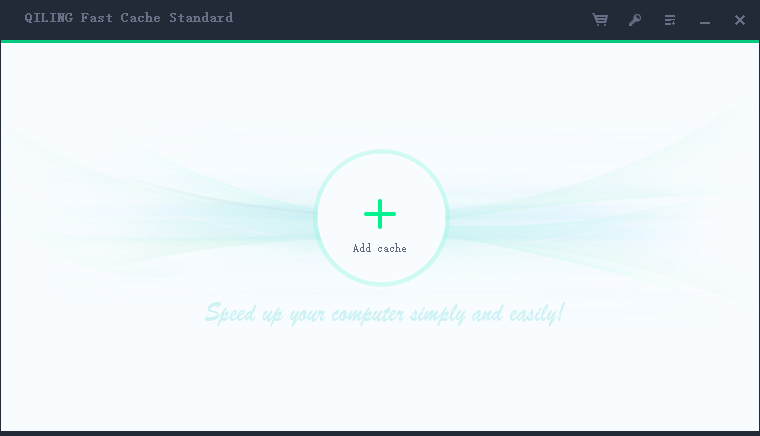
Step 2. Click the "+" button to create a cache task, then select the slow hard drive you want to accelerate.
Step 3. Choose the cache medium and size. On a low-RAM laptop, keep the RAM tier small or off and give the SSD tier most of the space; leave at least 10-20% of the SSD free.
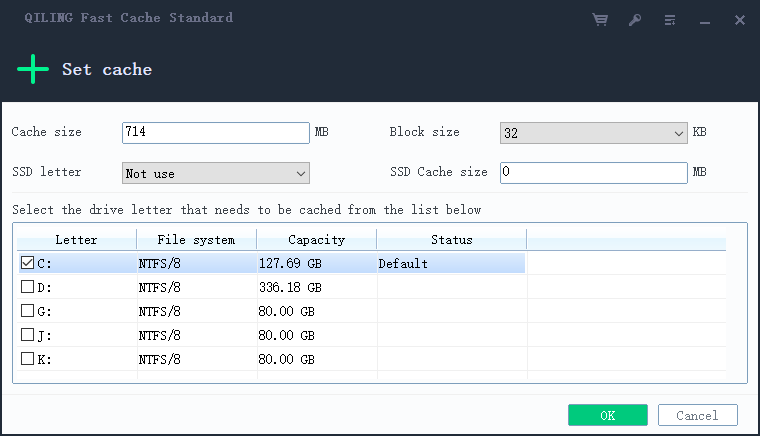
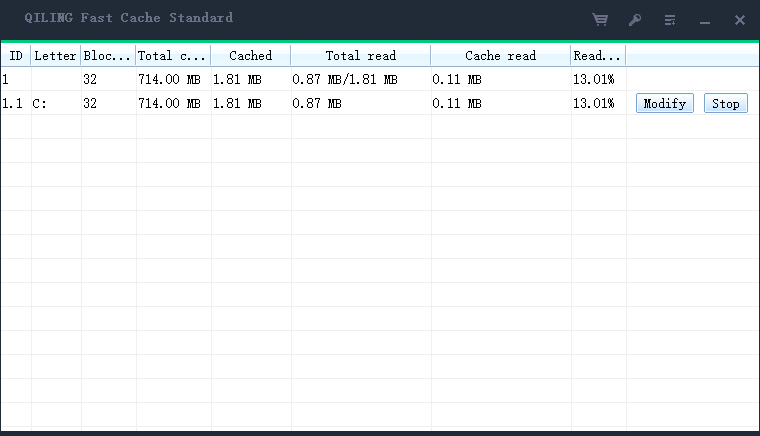
Step 4. Create the task, then use the machine normally for a few days. The hit rate climbs as the cache learns which files you open repeatedly.
When Caching Is Not Enough
- The machine swaps constantly. Add memory if the laptop has a free slot. Caching cannot compensate for a memory shortage.
- You need speed for one-off heavy work. Video export and compilation are CPU-bound, so nothing on the storage side will move them much.
- The drive shows warning signs. Check drive health for reallocated sectors or SMART warnings. A failing disk needs replacement, not caching.
- The laptop slows down the longer it runs. That is thermal throttling. Clean the fan and vents, and consider replacing the thermal paste.
- You want the biggest single improvement. Replacing the hard drive with an SSD is still the largest gain per dollar on an old laptop; compare the options in cache a slow drive or buy a bigger SSD.
FAQs About Caching on an Old Laptop
Will a cache make an old laptop as fast as an SSD?
No, but it can close much of the gap for repetitive tasks. Boot time, program launch, and files you open daily improve noticeably; the first read of new data still waits on the hard drive.
Should I use a RAM cache on a 4 GB laptop?
Keep it very small or skip it. Reserving a gigabyte of 4 GB pushes Windows into swapping, and the swap itself lands on the same slow drive, so the machine can end up slower.
Can I cache a drive using free space on the same hard drive?
No. A cache must sit on a different physical device. A partition on the same drive shares its heads and platters, so it cannot serve a read any faster.
How much does an SSD cache help on an old laptop?
It depends on the task. Boot, application launch, and repeated file access improve noticeably, while one-off CPU-heavy work does not change.
Is it worth caching a laptop that also needs more RAM?
Fix the memory shortage first if the machine swaps constantly, then cache the drive. Caching cannot compensate for memory pressure, and the two problems interact.
Back Up Windows Before You Change Settings
An old laptop is exactly the kind of machine where a backup pays off. Qiling Disk Master creates a full Windows image you can restore from if the drive fails or a change goes wrong.
Part 1: Create a Full System Backup
Step 1. Install and open Qiling Disk Master. On the home screen, open "Backup and Recovery" and choose "System Backup". This option automatically includes Windows and the hidden boot partitions, so you do not have to select them one by one.
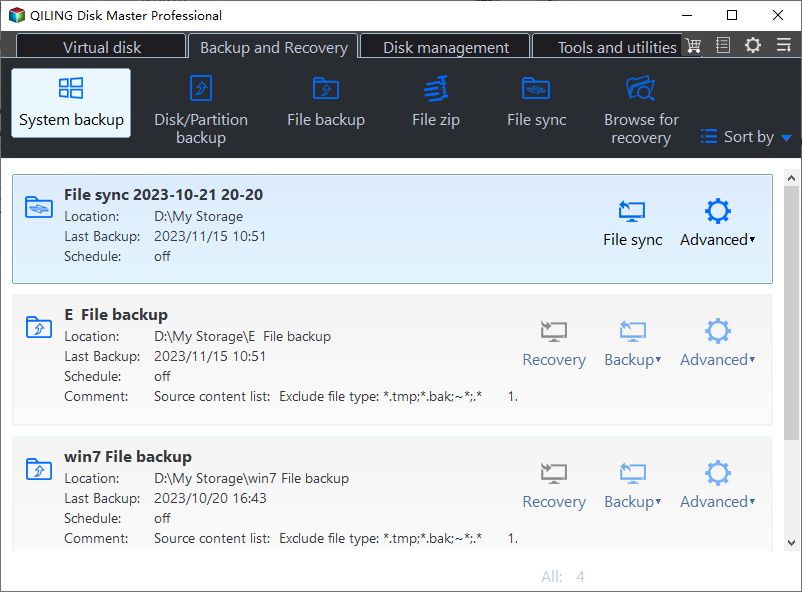
Step 2. Check the source. The disk where Windows is installed and its system partitions are already ticked for you. If you only need your personal documents, run a separate "File Backup" task instead.

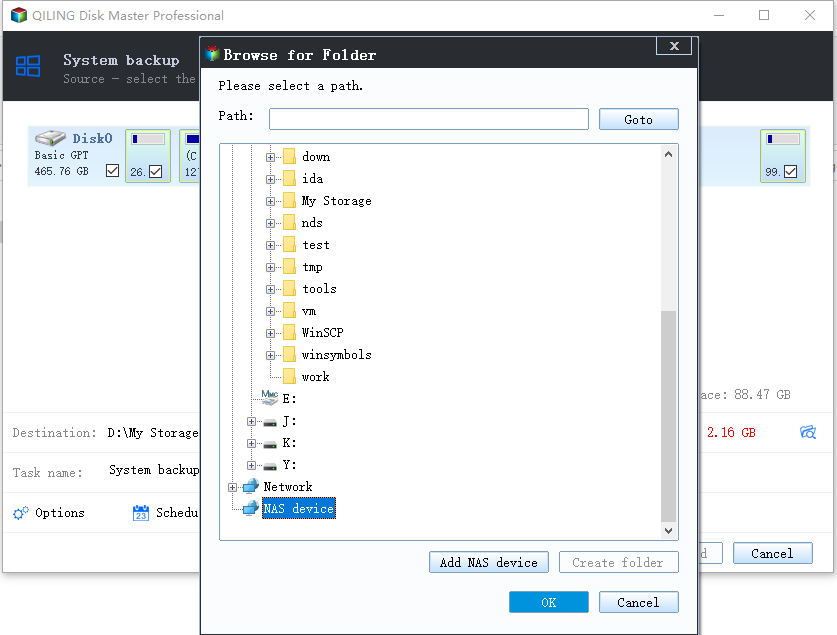
Step 3. Click the destination box and choose where the image should be saved. Use an external HDD or SSD, a NAS, or any drive other than the one Windows is installed on, and make sure it has enough free space.
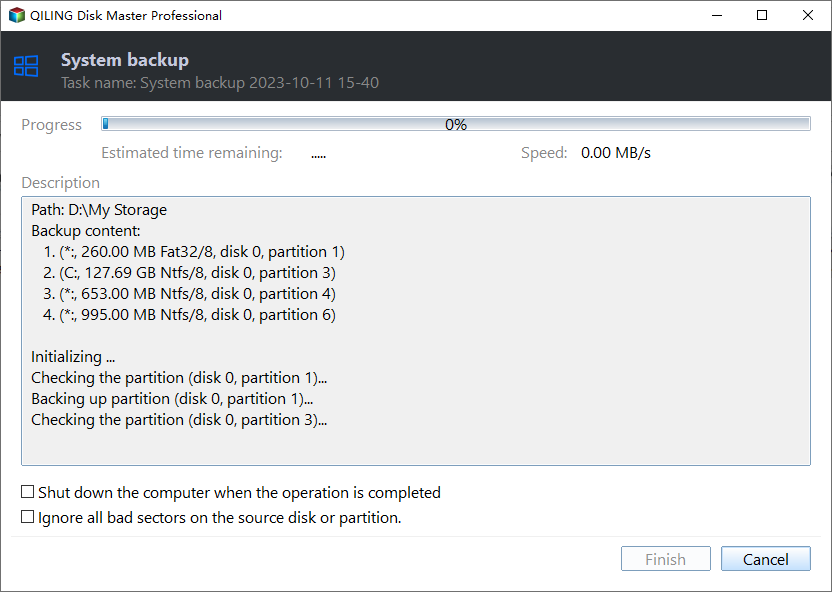
Step 4. Review the task summary and click "Proceed". Wait until the progress bar reaches 100%. Do not unplug the drive or turn off the PC while the backup is running.
Part 2: Restore Windows from the Backup
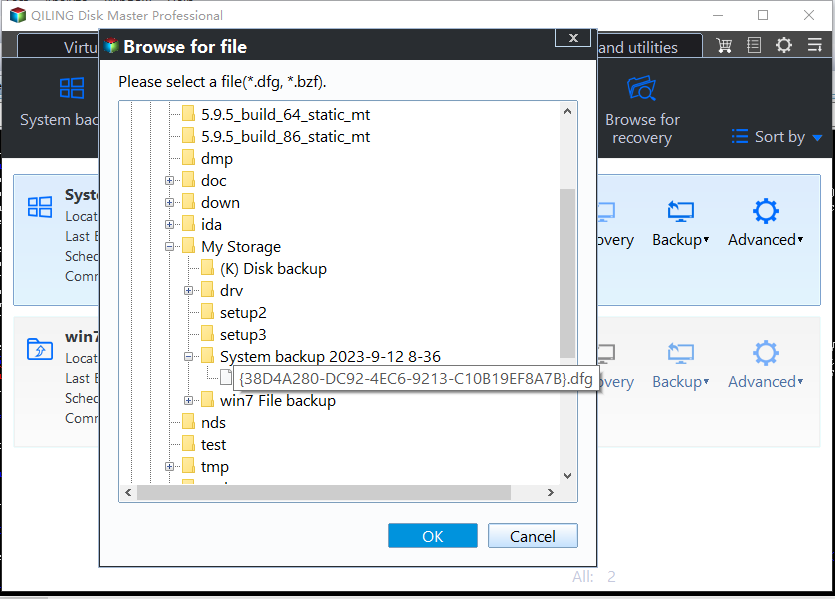
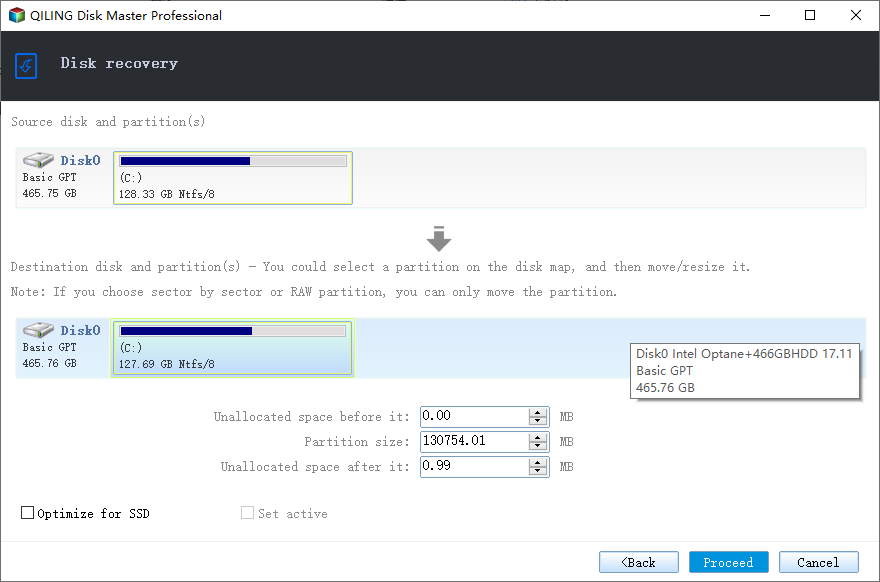
Step 1. Open Qiling Disk Master again, go to "Backup and Recovery", and select the recovery option. Your backup images are listed, so pick the one you created before the changes began.
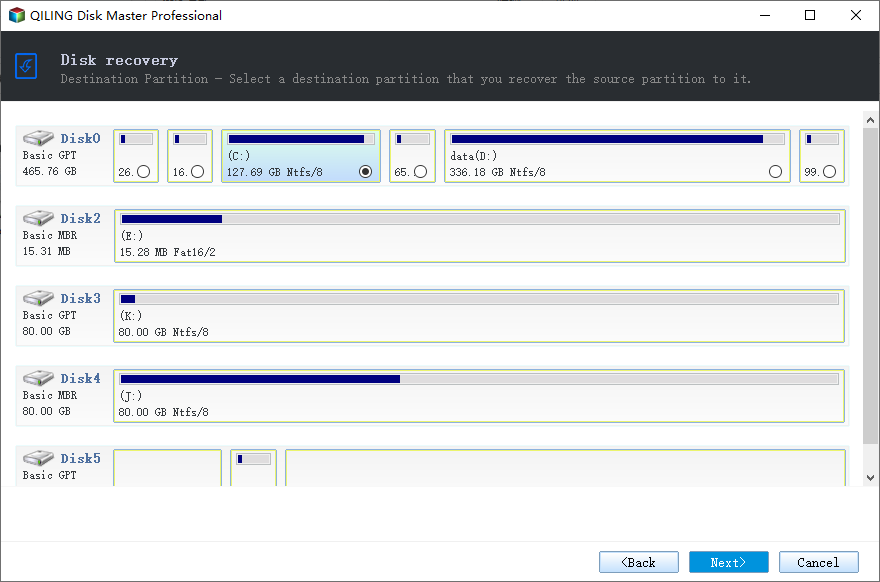
Step 2. Choose the target disk or partition. Normally you restore to the original system disk. If the drive was replaced, select the new disk instead, and the restore rebuilds Windows together with its boot partitions.
Step 3. Preview the restore plan, click "Proceed", and confirm the warning. The PC restarts to finish the job, and Windows comes back exactly as it was on the day the image was created, with your files and programs intact.
- Note
- Keep the backup image on a separate drive, and refresh it before changing storage cache settings.
Conclusion
On an old laptop the slow part is nearly always the hard drive, and a disk cache is the cheapest way to fix that without opening the machine. It works best for repetitive tasks - boot, program launch, and files you open every day - and it needs a second device to store the cache, so a partition on the same hard drive is useless. Size it carefully on a low-RAM machine, keep the RAM tier small when memory is tight, and measure the result. If the laptop still feels slow after the cache has warmed, an SSD upgrade and more memory will do more than any tuning.
Protect your PC with Qiling Backup—create a system image before your next round of settings changes.
For more Windows 11 performance guides, see How to Use Extra RAM to Speed Up Your PC, Cache a Slow Drive or Buy a Bigger SSD?, Is a RAM Disk Worth It?, What to Do with a Spare SSD, and How to Reduce Windows 11 Boot Time with an SSD Cache.
Related Articles
- ReadyBoost vs RAM Disk vs SSD Cache: Which to Use in Windows 11
Which option suits a low-spec machine, and why RAM disk is the wrong pick when memory is already short. - How to Extend SSD Lifespan by Reducing Writes
- The Power of Fast Cache: Boost Your PC's Performance
- Best RAM Disk Software for Windows 11 in 2026
- Windows 11 Fast Cache: Speed Up HDD with RAM and SSD Cache
- Does Disk Caching Affect Laptop Battery Life?
Products
Articles & Tutorials
- Data Recovery
- Data Backup
- File Recovery
- File Backup
- System Backup and Restore
- Disk and Partition Clone
- Technical articles
- Mobile articles
- Disk Master Help
- Windows Data Recovery Tutorials
- Windows Secure Delete Tutorials
- Windows Partition Management Tutorials
- Windows File Backup and Restore Tutorials
- Windows System Backup and Restore Tutorials
- Windows Disk Backup and Restore Tutorials
- Windows Clone Tutorials