[2 Easy Ways] How to Back Up Chrome Bookmarks and Passwords
To protect yourself from data loss, it's essential to regularly back up your Google Chrome data, including bookmarks and passwords, which contain critical information concerning your privacy. This tutorial will guide you through two easy ways to back up your Chrome data with detailed steps, ensuring your valuable information is safely stored.
The Benefits of Backup Chrome Bookmarks and Passwords
Backing up your Chrome bookmarks and passwords is crucial for protecting your privacy and security. It allows you to access your bookmarks even if your browser crashes or is lost, stolen, or corrupted, and also helps you quickly recover your Chrome bookmarks, histories, or favorites without manually re-entering them.
2 Easy Ways to Backup Chrome Bookmarks and Passwords with Steps
Many people use Google Sync to save data across devices, but some users have reported issues with partial data loss or the sync feature pausing.
To ensure the security of your backup, we won't cover the method of backing up Google Chrome bookmarks and passwords in this article. Instead, we'll provide two safer solutions.
You can manually export Google Chrome bookmarks and passwords to HTML or CSV files, or use a professional backup tool to save copies automatically, choosing the method that best suits your needs.
To create a new Google Workspace account, go to the Google Workspace website and click on the "Get Started" button. Then, click on the "Create a new domain" button and enter your domain name.
Method 1. Manually Export Chrome Bookmarks and Passwords to HTML or CSV File
Google Chrome allows users to easily back up and restore their bookmarks and passwords by exporting them to HTML or CSV files, which can then be imported when needed.
- Tip
- Using the traditional method to back up Chrome bookmarks and passwords can be very time-consuming as you need to do it manually each time. However, there's a simpler way with Qiling Backup Home, which allows for automatic backups to internal and external hard drives, NAS, Cloud, or a secure zone.
Now, follow the steps below:
1) Export Bookmarks to HTML file:
Step 1. To access your Google Chrome bookmarks, open the browser on your computer, click the three dots on the top-right corner, select Bookmarks, and then Bookmark Manager. Alternatively, you can press the "Ctrl+Shift+O" keys together to open the Bookmark Manager.
Step 2. To export bookmarks, click the three dots icon on the top-right corner of the browser and select "Export bookmarks".
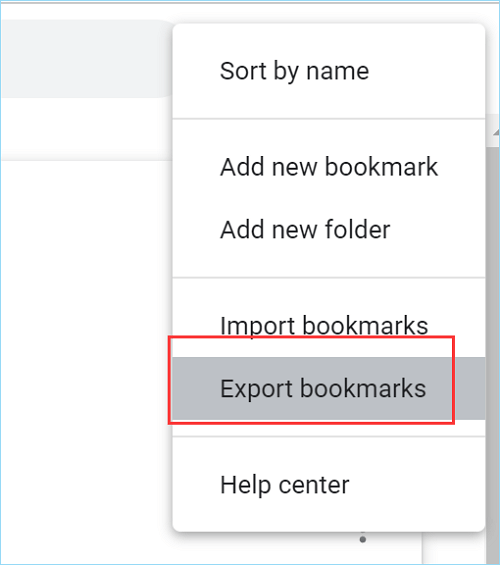
Step 3. To save the HTML file, select a location on your computer where you want to save it, give it a name, and click "Save".
2) Export Passwords to CVS file
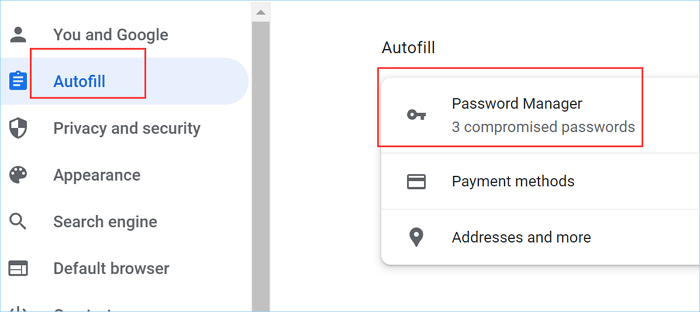
Step 1. To access Google Chrome's Password Manager, open your Google Chrome browser on your computer, click the three dots icon on the top-right corner, go to settings, then select Autofill, and finally, choose Password Manager.
Step 2. To export passwords, click the three dots beside the "Saved Passwords" and select "Export passwords".
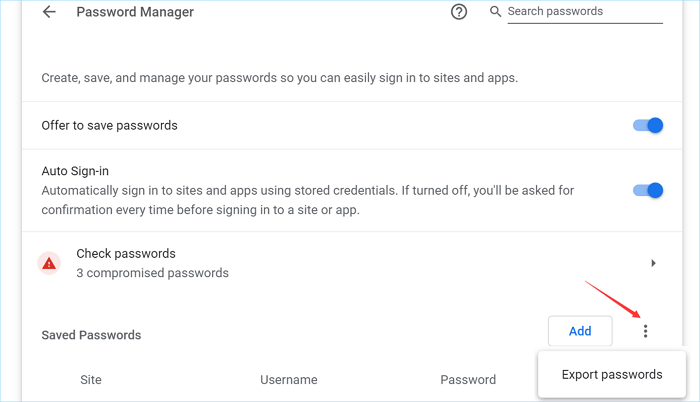
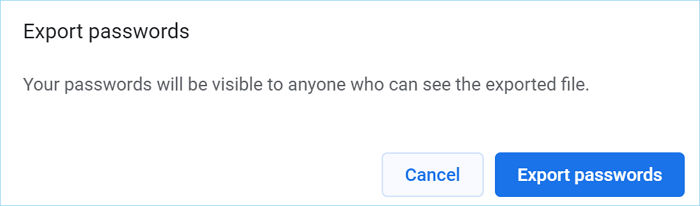
Step 3. A window will pop up to notify you that "Your passwords will be visible to anyone who can see the exported file." Click the "Export passwords" button.
Step 4. Select a folder to save the CSV file, give it a name, and tap Save to finish exporting the data.
Method 2. Automatically Backup Chrome Bookmarks and Passwords with Qiling Backup
Qiling Backup Home is a backup software that allows users to backup and restore files, hard drives, partitions, and systems efficiently. It can also automatically back up Chrome bookmarks and passwords as part of a scheduled backup plan, with the option to save the backup externally or to the Cloud, such as Google Drive, Dropbox, or Qiling Cloud.
With the browser, you don't need to manually save bookmarks and passwords each time, making it convenient for changing browser data.
The software has features like incremental, differential, and compressed backups, which minimize storage space usage, ensuring you don't have to worry about frequent automatic backups taking up too much space.
To start backing up your Google Chrome bookmarks and passwords, you'll need to locate the folder where they're stored and then schedule a backup. Once set, Qiling Disk MasterBackupo Home will automatically find the folder path and perform a backup every time, making it a one-time setup process.
Here are the ways to find where Google Chrome stores Bookmarks and passwords:
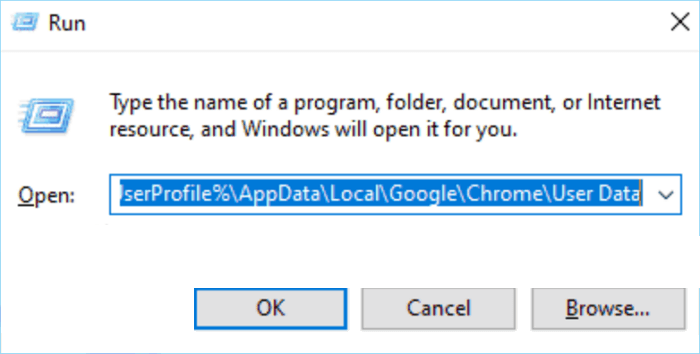
Step 1. To access the Google Chrome User Data folder, press the Windows key + R to open the Run dialog box. Then, type "%UserProfile%\AppData\Local\Google\Chrome\User Data" into the Run box and press OK.
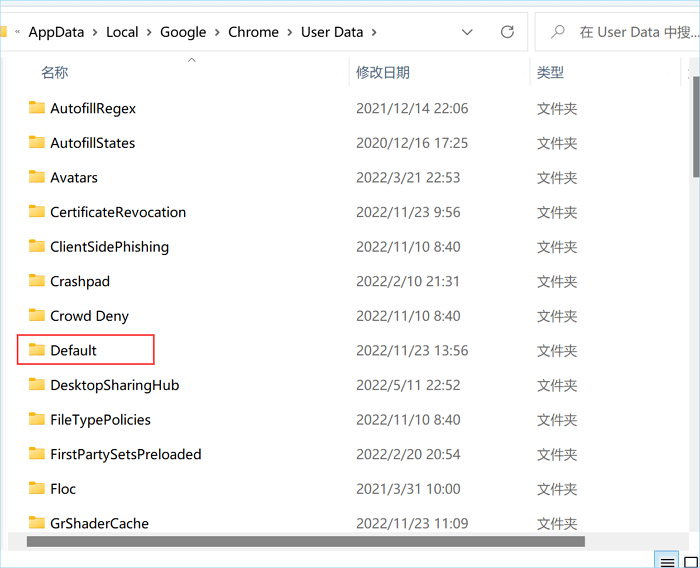
Step 2. To access your Google Chrome bookmarks and passwords, navigate to the "Default" folder, which contains all data settings related to your Google Chrome account. Within this folder, locate the "Bookmarks" and "Passwords" (or "login data") files, which store your saved bookmarks and login credentials respectively.
Now, follow the steps below to set automatic
Step 1. To initiate a backup, click the File backup button.
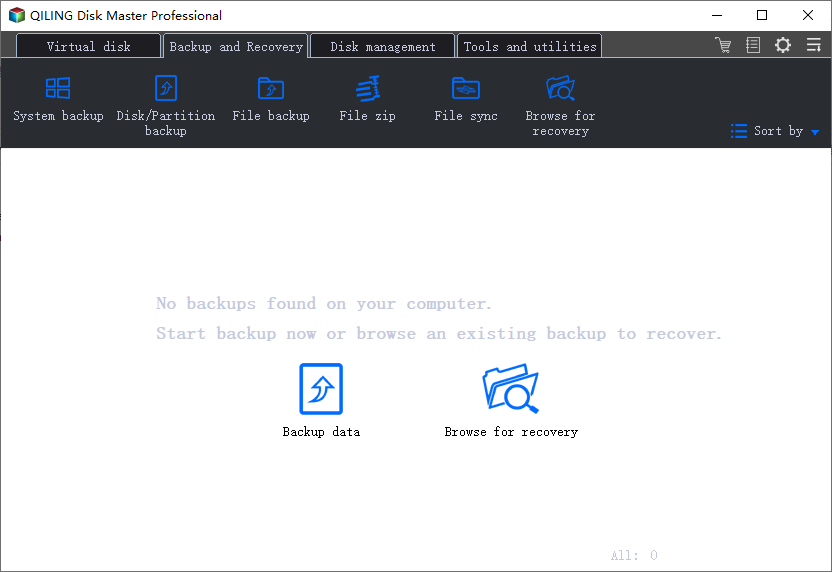
Step 2. On the left, both local and network files will be displayed, allowing you to browse and select the desired backup files.
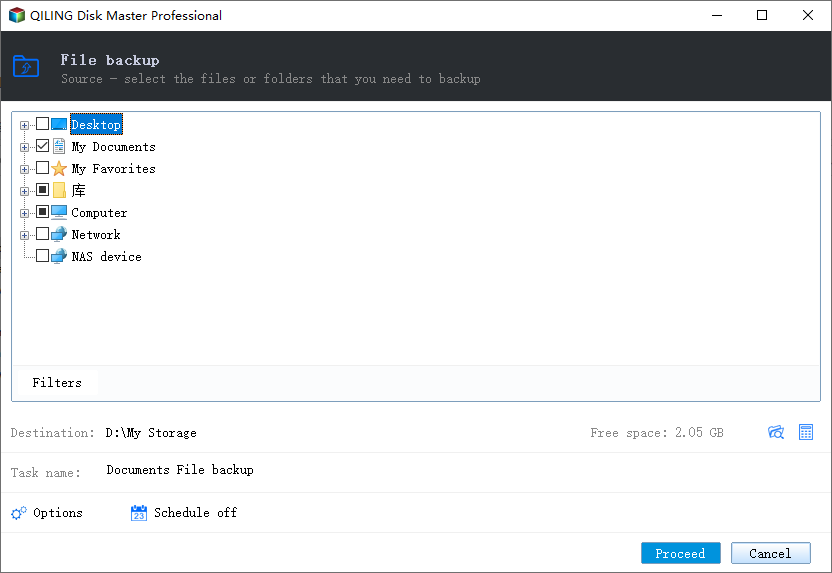
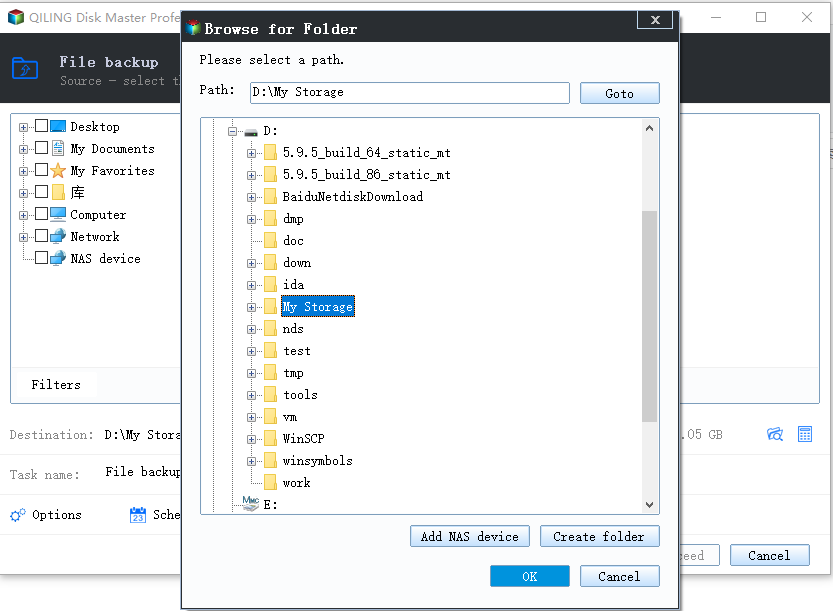
Step 3. The process involves following the on-screen instructions and selecting a location to store the backup, which can be a local drive or an external storage device.
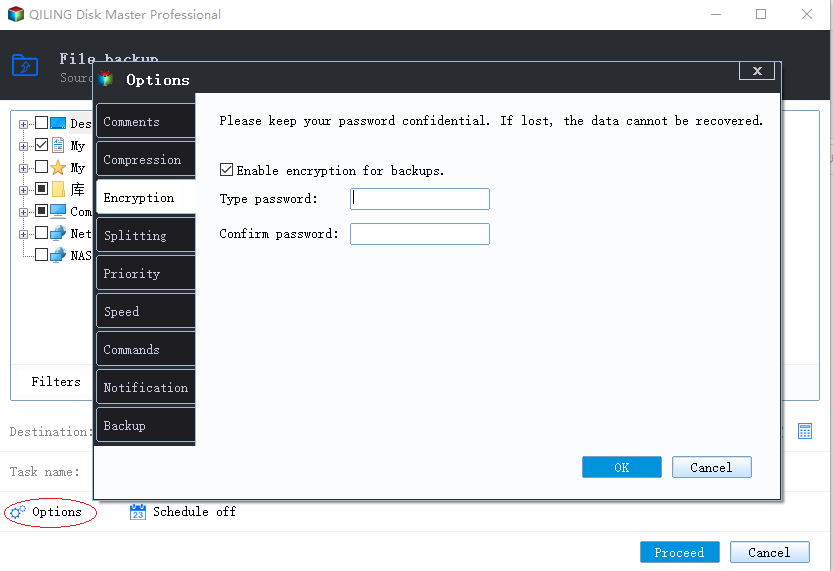
Step 4. To encrypt the backup with a password, click on the "Options" button in the "Backup Options" section, allowing you to choose additional settings that suit your needs.
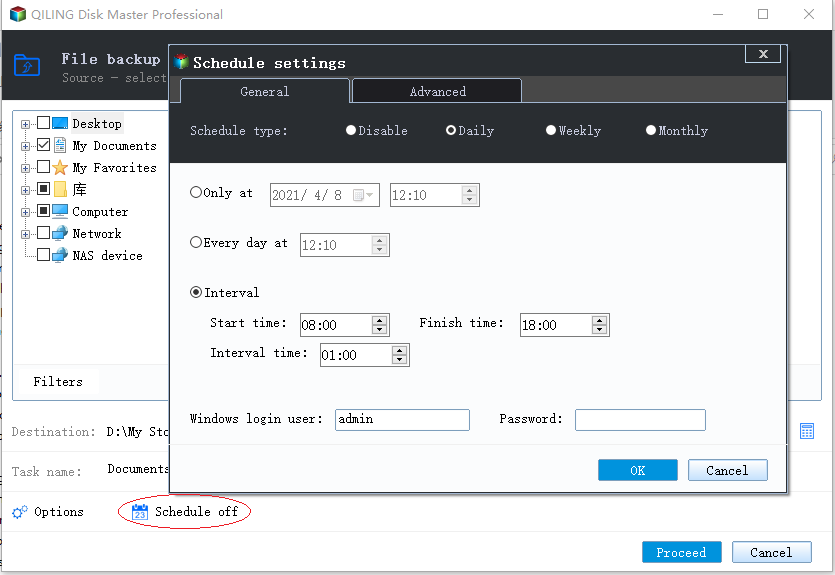
To specify the backup schedule, click Backup Scheme and select the desired backup frequency, such as daily, weekly, or monthly. You can also choose to start the backup at a specific event, like a system restart or a specific time of day.
Step 5. The backup may be stored on a local disk, Qiling's online service, or NAS.
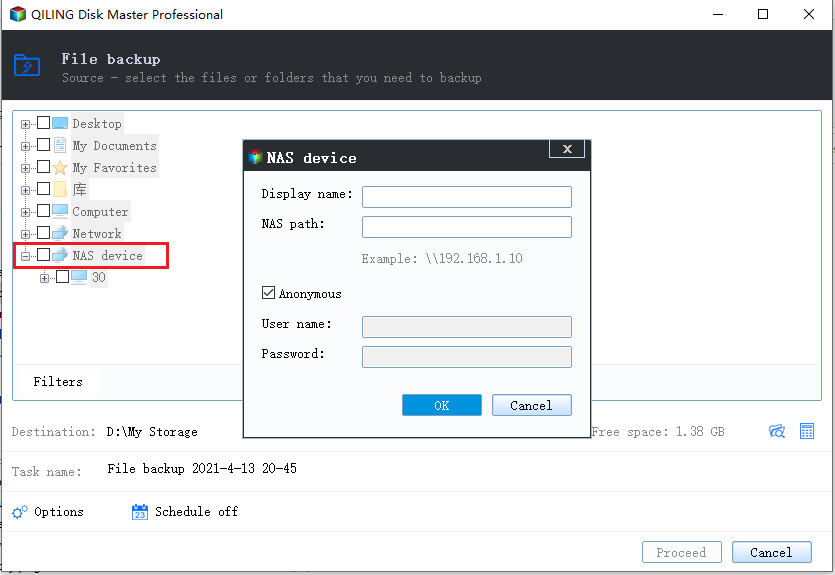
Step 6. Qiling Backup allows customers to back up data to both a third-party cloud drive and its own cloud drive.
To back up data to a cloud drive provided by a third party, select Local Drive, scroll down to add Cloud Device, and then add and log in to your account.
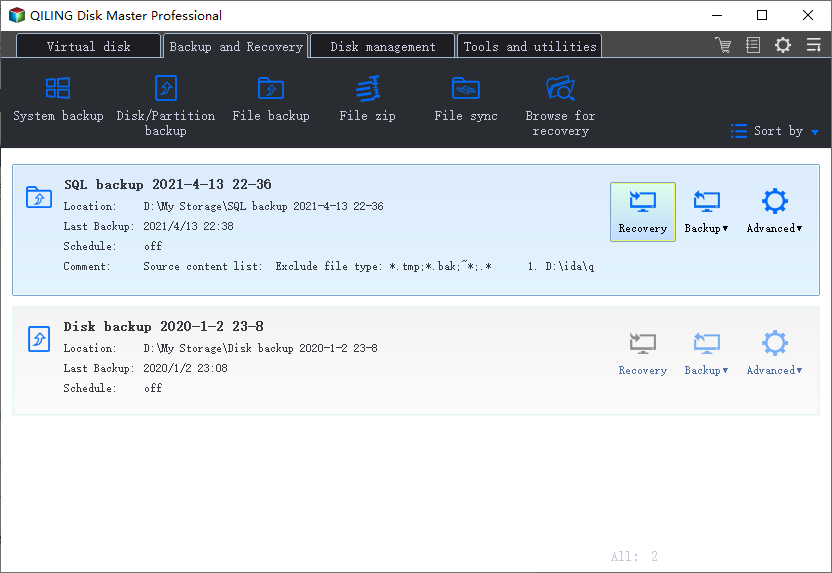
Step 7. Click Proceed to start the backup process. Once finished, the backup job will be displayed as a card on the left side of the panel, allowing you to manage it further.
The Bottom Line
Backup Chrome bookmarks and passwords Backing up your Google Chrome data is crucial to prevent loss of information, regardless of changes made. You can manually export files to HTML or CVS, or use Qiling Backup Home for automatic backup, saving time and keeping your data up-to-date. Choose one of these methods to safeguard your Chrome data now.
FAQ on Backup Chrome Bookmarks and Passwords
1. How do I back up my whole Chrome bookmarks and passwords?
You can back up your Chrome bookmarks by exporting them to an HTML file, and also export your passwords to a CSV file for safekeeping.
2. How do I transfer my Chrome bookmarks and passwords to another computer?
To transfer Chrome bookmarks and passwords to another computer, back them up either way, and then restore them to the new PC.
Related Articles
- How to Make External Hard Drive Bootable in Windows 10/Windows 11
- Disk Clone vs System Clone: What's The Difference?
- 5 Best Win32 Disk Imager Alternatives in 2022 (Free)
- (1+1>2 Solution) How to Use/Set up SSD as Boot Drive and HDD Storage
- How to Transfer Files from Dropbox to Google Photos [2022 New Guide]
You can transfer files from Dropbox to Google Photos by either downloading or syncing files between the two services to access more storage space. - How to Transfer Files from Flash Drive to Computer Windows 10
Transferring files between computers and smartphones is a breeze with USB devices, requiring only a simple drag and drop. However, as file sizes and numbers increase, this process can become more challenging.
Products
Articles & Tutorials
- Data Recovery
- Data Backup
- File Recovery
- File Backup
- System Backup and Restore
- Disk and Partition Clone
- Technical articles
- Mobile articles
- Disk Master Help
- Windows Data Recovery Tutorials
- Windows Secure Delete Tutorials
- Windows Partition Management Tutorials
- Windows File Backup and Restore Tutorials
- Windows System Backup and Restore Tutorials
- Windows Disk Backup and Restore Tutorials
- Windows Clone Tutorials