How to Burn ISO to External Hard Drive Windows 10 [Fast & Detailed]
An ISO file is an archive that contains a complete copy of a CD or DVD, including all its contents. Burning an ISO file to an external hard drive on Windows 10 can be complex, but using a professional ISO burning tool can make the process easier and more successful. Two easy and seamless ISO to external hard drive burning software options are available to help you complete the task successfully.
How to Burn ISO to External Hard Drive Windows 10 - 2 Methods
To burn an ISO to an external hard drive on Windows 10, there are two solid ways to consider. A comparison table provides basic information to help choose a suitable method, but the two main approaches are not specified in the table. However, the table can be used as a starting point to explore the options.
| Comparison | 🏆Qiling Disk Master | 🏅Windows To Go |
|---|---|---|
| ⏰Duration | 15 Minutes | 20 Minutes |
| 💻Operating System | All Windows versions | only available in Windows 10/8.1/8 Enterprise |
| 👨🔧Difficulty Level | Low | High |
| 🐾Total Steps | 2 steps | 5 steps |
Qiling Disk Master is more operable with fewer limitations and requirements than Windows To Go, saving time with its simple two-step process. However, its compatibility is limited to earlier Windows 10 versions due to the removal of Windows To Go in later versions.
Prerequisites for Burning ISO to an External Hard Drive Windows 10
Before burning an ISO to an external hard drive, ensure you've completed the necessary preparations, such as verifying the ISO file is correct and the external drive is properly formatted and connected to your computer.
✅Prepare an external hard drive.
- To use USB, you'll need a USB 3.0 drive and a computer with a compatible port.
- To ensure that the USB's BIOS boot mode is the same as your target computer's, you need to check the BIOS settings of both the USB drive and the target computer. The target computer's BIOS settings can usually be accessed by pressing a specific key (such as F2, F12, or Del) during boot-up.
✅Users need to format the USB to FAT32 in order to burn ISO files.
✅Download the ISO file from Microsoft and save it to your PC.
✅Install and launch Qiling Disk Master on your computer.
✅Make Windows To Go ready.
To burn an ISO to an external hard drive on Windows 10, use the built-in tool Windows To Go, but only if your external drive is 64 GB or larger. If your drive is smaller, you can use the built-in tool Disk Management to create a bootable USB drive from the ISO, but you'll need to use a third-party tool like Rufus to make the external drive bootable. Alternatively, you can use a third-party tool like PowerISO or UltraISO to create a bootable external drive from the ISO.
Way 1. Burn ISO to External Hard Drive via Qiling Disk Master
Qiling Disk Master is a reliable third-party ISO burning tool that allows you to burn ISO to an external hard drive in Windows 10 with just a few clicks. Compatible with all Windows versions, it eliminates the need to purchase Windows 10 or 8.1/8 Enterprise Edition. The software also features a user-friendly interface and other excellent functions.
To use Qiling Disk Master, download it through the official download button and follow these steps:
Step 1. Launch Qiling Disk Master, go to Bootable Media, click Burn ISO, and then click Next.
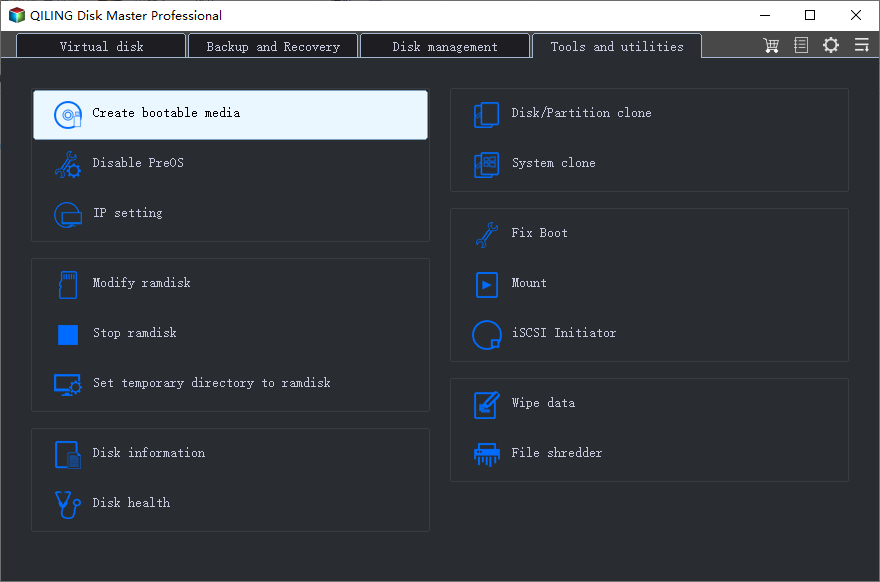
Step 2. Select the ISO image that you have downloaded on your PC, and click "Open" to proceed with the installation.
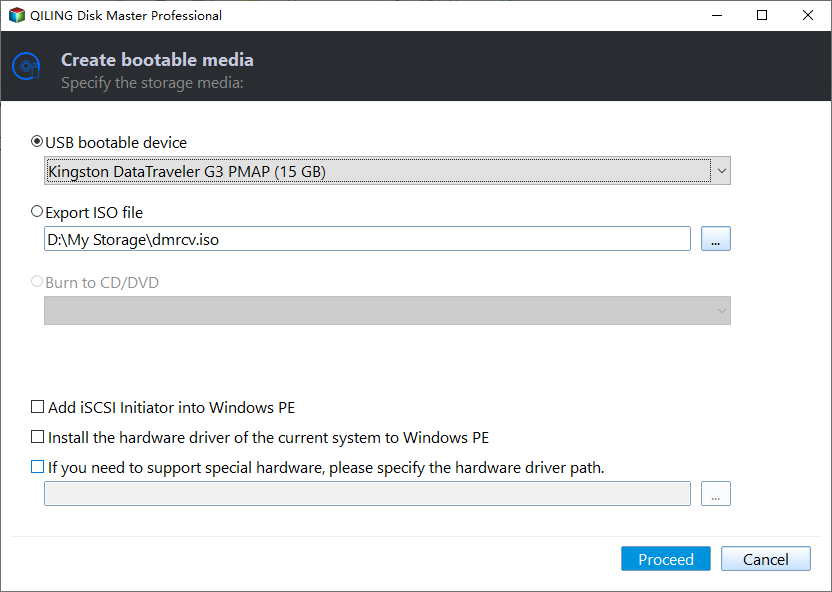
Step 3. Click "Next" and select the target USB as the destination. Click "Burn" to execute the operation.
Feature Overview of Qiling Disk Master
Users can utilize this tool to achieve various purposes, including burning ISO files to an external hard drive, among other tasks.
- Fix can't burn ISO file to USB
- Burn ISO to USB on Windows 10
- Burn Windows 7 ISO to USB
- Burn ISO to USB
To avail of its unique features, download it today!
Way 2. Use Windows To Go to Burn ISO to External Hard Drive
To burn Windows 10 ISO to an external hard drive, you'll need to purchase the Windows 10 Enterprise version if you're not already using it. If you have the Enterprise Edition, you can use Windows To Go to create a bootable USB drive or external hard drive with Windows 10. This process can be complex, so follow the step-by-step guide carefully to ensure success.
Step 1. To create a Windows To Go workspace, open the Control Panel, type "Windows To Go" in the search box, and click on the "Windows To Go" option.
Step 2. Once the external hard drive is inserted, it will be detected. Select the target drive and click "Next" to proceed.
Step 3. To search for the ISO file, click on the "Add Search Location" button and select the mounted ISO file.
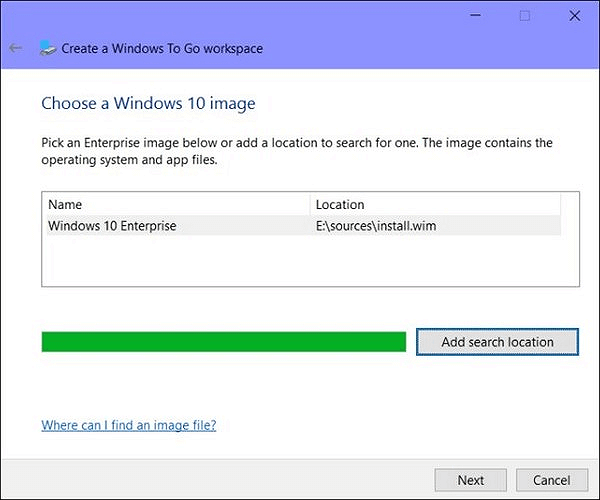
Step 4. To protect your data on a Windows To Go drive, you can enable BitLocker Drive Encryption.
Step 5. Windows To Go will move the ISO file to the target external hard drive.
If the above-To burn an ISO file to an external hard drive in Windows 10, you can use the built-in Windows tool, Microsoft's Media Creation Tool, or a third-party software like Rufus. You can also use the Disk Management tool to create a bootable USB drive or external hard drive from an ISO file.
Why Should We Burn ISO to External Hard Drive Windows 10
Burning an ISO file to an external hard drive on Windows 10 has several benefits. With an ISO file, you can create a bootable copy of an operating system, a utility program, or a software package, allowing you to install or run it on a computer without needing the original installation media. By burning the ISO to an external hard drive, you can create a portable and self-contained version of the software, making it easy to transfer and use on different computers. This can be particularly useful for system administrators, IT professionals, and individuals who need to deploy software or operating systems on multiple machines. Additionally, burning an ISO to an external hard drive can also serve as a backup and recovery solution, allowing you to restore a system or software in case of a disaster or data loss.
Create a copy to backup: Users can burn an ISO file to an external hard drive to create a digital copy of an optical disc, allowing them to store the file on their hard drive and easily recreate the original disc if needed.
Apply as a virtual drive: You can download Windows 8, 8.1, and 10 as an ISO image and mount it as a virtual disk to ensure proper computer function for everyday work.
Store large files or programs: ISO files are single files that contain large amounts of data, making them ideal for distributing programs or operating systems.
Final Verdict
Burning an ISO to an external hard drive can make a complete copy of your data, store large files, and be used as a virtual drive. Two reliable tools, Qiling Disk Master and Windows To Go, can help users achieve this in Windows 10, with Qiling Disk Master being the easier option.
FAQs About Burn ISO to External Hard Drive Windows 10
To burn an ISO file to an external hard drive on Windows 10, you can use the built-in tool, Windows Explorer, or a third-party software like PowerISO. Simply right-click on the ISO file, select "Burn to disc" (or "Burn to DVD" if you have a DVD drive), and choose the external hard drive as the destination. Alternatively, you can use a software like PowerISO to create a bootable USB drive from the ISO file. If you encounter any issues, you can try formatting the external hard drive as FAT32, which is a more compatible file system for burning ISO files.
1. How to burn an ISO file to a USB drive?
To burn an ISO file to a USB and format it as FAT32, you need to follow these steps: First, download a USB burning software, such as Rufus or Etcher, and use it to write the ISO file to a USB drive. Then, use the built-in Disk Management tool in Windows to format the USB drive as FAT32. Alternatively, you can use a third-party tool like Qiling Disk Master to format the USB drive.
Step 1. Connect the USB to the PC and open Qiling Disk Master. In the Bootable Media section, click "Burn ISO" and proceed to the next step.
Step 2. Select the target ISO image and click "Open."
Step 3. To apply the ISO file to the USB drive, select "Next," choose the target USB drive as the destination, and click "Burn" to apply.
2. How do you run an ISO file without burning it?
To open and view an ISO file, you can use the free tool WinRAR. Simply right-click on the ISO file, select "Open with" and choose WinRAR.
Step 1. To install WinRAR's latest version on your PC and save the ISO file, first, download the latest version of WinRAR from the official website. Once downloaded, run the installer and follow the prompts to complete the installation. After installation, save the downloaded ISO file to a safe location on your PC, such as the desktop or a designated downloads folder.
Step 2. Right-click the target ISO file and select "Open with" from the drop-down menu.
Step 3. Click "WinRAR archive" and wait for it to extract the ISO file.
3. Can burning an ISO make it bootable?
Once the ISO file is burned onto a CD, it becomes bootable, allowing it to install an operating system and various applications.
Related Articles
- How to Upgrade Xbox One X to SSD - Guide with Pictures
- How to Reset Windows Password When Locked Out🔥
- How to Use SD Card as Internal Storage in Windows 11/10?
- Extend Volume Is Greyed Out in Windows 10 – Fix it Effectively
Extend Volume is greyed out and can't extend partition even with unallocated space? Refer to this post to get know why the issue occurs and how to fix it. - How to Change MBR to GPT in BIOS Windows 11
Changing the Master Boot Record (MBR) to GUID Partition Table (GPT) is usually not necessary, but it may be helpful in specific situations, particularly for Windows 11 users. If you need to make this conversion, you can learn how to do it in the BIOS settings. - How to Check/View Disk Storage/Usage on Windows 10/11
How to check or view disk space on a computer or laptop? Learn the easiest methods to view disk usage on your Windows PC and Mac.
Products
Articles & Tutorials
- Data Recovery
- Data Backup
- File Recovery
- File Backup
- System Backup and Restore
- Disk and Partition Clone
- Technical articles
- Mobile articles
- Disk Master Help
- Windows Data Recovery Tutorials
- Windows Secure Delete Tutorials
- Windows Partition Management Tutorials
- Windows File Backup and Restore Tutorials
- Windows System Backup and Restore Tutorials
- Windows Disk Backup and Restore Tutorials
- Windows Clone Tutorials