Full Guide: Check SSD Health in Windows 8 [Free & Efficient]
This guide provides an overview of checking SSD health in Windows 8, highlighting the top three solutions and offering tips to enhance SSD health.
This table provides a quick comparison of various tools, allowing you to easily weigh the pros and cons of each and make an informed decision about which one is best suited for your needs.
| 🆚Comparison | Qiling Disk Master🏆🏅 | CMD | Error Checking |
| 💰Price | Free | Free | Free |
| 🔎Check Factors | SSD status, SSD temperature, S. M. A. R. T data | SSD Status | File system, soft bad sectors |
| 👩🏻💻Who Needs It | Beginners | Advanced users | Beginners |
Overview of Checking SSD Health in Windows 8
Checking SSD health is important to ensure its proper functioning, identify potential issues early, and take corrective action to prevent data loss or system failure. SSD health refers to the working condition of a solid-state drive, including metrics like lifespan, temperature, read/write speed, and wear leveling count. Poor SSD health can lead to several problems in your Windows computer, including issues that can be caused by a failing drive.
- The system takes too long to boot up and shutdown
- Softwares taking longer to open or crashing
- The system freezes or crashes
- Blue screen errors
- Data loss or corruption
To check the health of your SSD in Windows 8, follow these steps:
How to Check SSD Health in Windows 8 [3 Ways]
There are three tools that can be used to check the health of an SSD in Windows 8: CrystalDiskInfo, HDTune, and SSD Life. These tools provide detailed information about the SSD's health, including its temperature, usage, and performance.
For beginners, Qiling Disk Master is the easiest SSD benchmark tool that you can't miss for checking the SSD performance and health state in Windows 8, making it easy to test your SSD health with ease.
Guide 1. Check SSD Health with Qiling Disk Master
Qiling Disk Master is a user-friendly tool that allows users to check the health of their SSD, HDD, and external storage disks on Windows computers, providing an easy and comprehensive solution for disk health checks.
Checking SSD health with a third-party disk health tool is the easiest method. We recommend using Qiling Disk Master, a free and lightweight tool that provides detailed information on temperature, health status, read/write status, and more.
Benefits and Pros: Why Use Qiling Disk Master in Checking SSD Health in Windows 8
| Benefits & Features | Pros |
|---|---|
|
|
Download the free version of Qiling Disk Master, and follow the given steps to check your SSD's health.
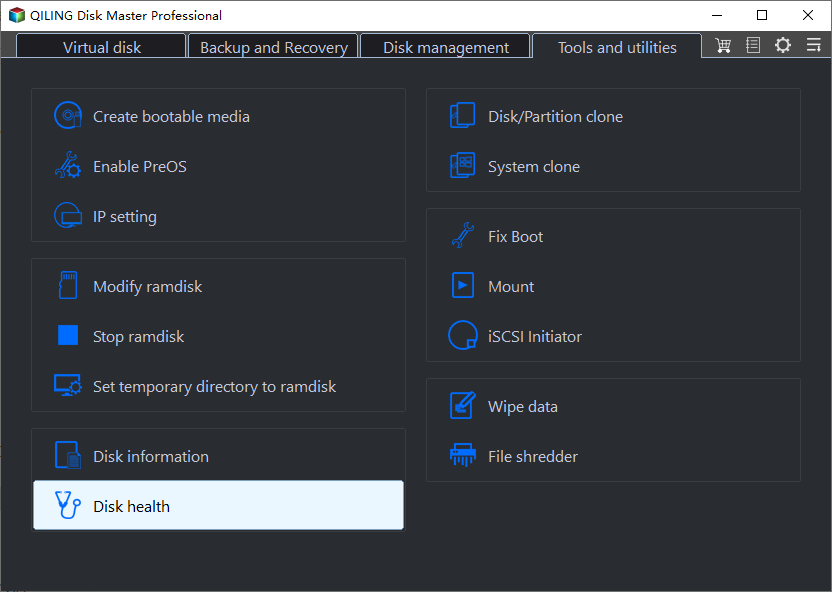
Step 1. Launch Qiling Disk Master and click the blue arrow to activate the "Disk Health" feature under the "Tools and utilities" tab page.
Step 2. To check the health condition of your disk, select the target disk and click the "Refresh" button. This will display the health status of your disk.
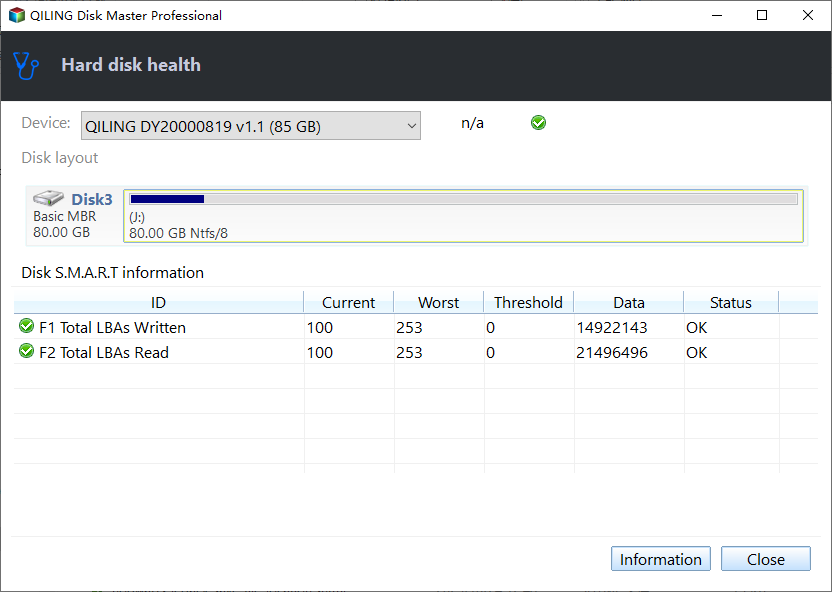
After learning about your SSD health report, you can export and save the parameter data on your PC to have a better understanding of it. If you encounter any issues, you can refer to the provided tutorials for assistance.
You can test the health state of your SSD and hard disk drive online by using a tool like CrystalDiskInfo, which provides detailed information about your disk's health, temperature, and usage. Simply download and install the tool, and it will scan your disk and provide a report on its health, including any potential issues or errors.
Guide 2. Check SSD Health in Windows 8 Using CMD
To check SSD health via Command Prompt, you can run a WMIC script that streamlines the computer management system and provides simple results, such as OK, Pred Fail, etc. This basic CMD command utilizes the S. M. A. R. T feature to offer quick information on SSD health.
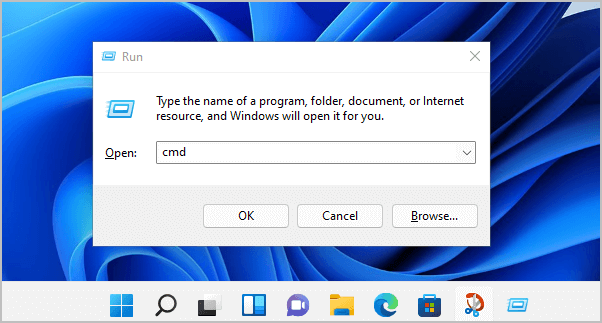
Step 1: Pressing the Windows key + R keys on your keyboard will open the Run dialog box, a small window that allows you to quickly open various system tools, utilities, and applications.
Step 2: Type "cmd" and click OK.
Step 3: Type "wmic" and press "Enter."
Step 4: To check if the WMI interface is ready, look for "wmic:root\cli>" on your Command Prompt screen. If you see this, it means the WMI interface is ready to proceed.
Step 5: Now, simply type or paste the following command, and hit "Enter" to execute.
diskdrive get status
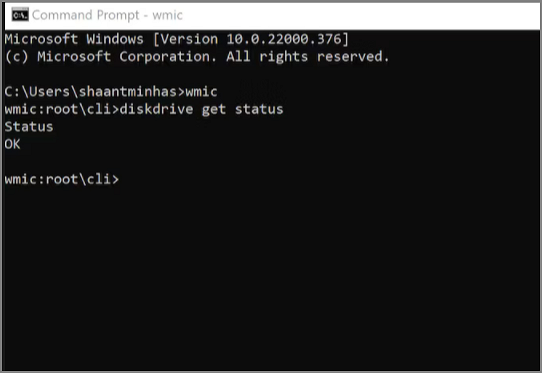
The Command Prompt will display the drive status, showing "Ok" for a healthy SSD and "Pred" for a drive with severe issues.
- Notice:
- To get detailed health status of your SSD, you can use complex CMD commands, but this may be less accessible if you're not familiar with computing. Alternatively, we recommend using the first method, which is more suitable for beginners.
Guide 3. Check SSD File System Health Using Error Checking
Error checking, also known as "check disk", is a Windows utility that scans and repairs file system errors, available in all Windows versions. It integrates file information to ensure compatibility with the data on your SSD and scans the disk for corrupted areas that can impact data, allowing you to check disk health using a detailed process in Windows 8.
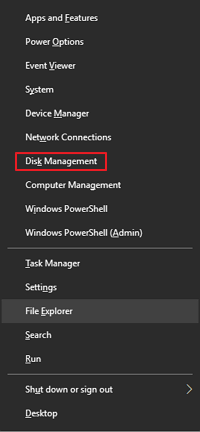
Step 1: Press the Windows key + X, then select "Disk Management" from the list.
Step 2: To access the Disk Partition Windows, navigate to the partition box containing the disk name, and right-click on the box you want to check.
Step 3: Select "Properties" to explore more options.
Step 4: Select "Tools" from the Properties menu.
Step 5: Click the "Check Now" button.
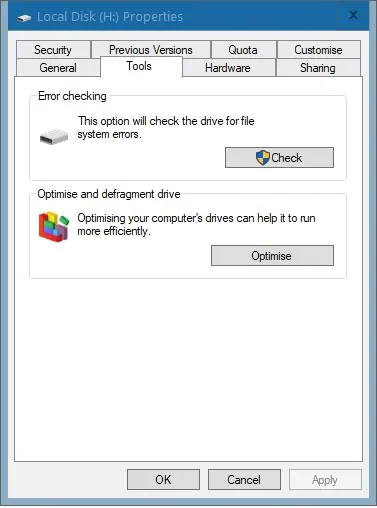
Note: The process duration can range from seconds to minutes, contingent upon the disk's condition.
You can share this tutorial guide with your friends online to help them check their SSD health status for free. The guide is designed to be easy to follow and understand, making it accessible to a wide range of users.
How Do I Improve the SSD Health in Windows 8
Improving SSD health in your Windows 8 computer can be achieved through various methods. By implementing these techniques, you can help extend the lifespan of your solid-state drive and ensure it operates at its full potential.
- Enable Trim on SSD
SSD TRIM helps extend the lifespan of an SSD by reducing the number of erase cycles, which in turn improves performance by minimizing data movement during garbage collection.
To enable Trim on an SSD, you can follow the steps provided in the link. This will help improve the performance and extend the lifespan of your solid-state drive.
- Don't erase SSD too often
SSDs have a limited lifespan due to a limited number of write cycles, and frequent data erasure can shorten their lifespan.
- Set correct disk format to SSD - NTFS for internal SSD, exFAT for external SSD
Using NTFS for internal SSDs and exFAT for external SSDs can improve SSD health by providing faster transfer rates, increased reliability, and compatibility with larger file sizes.
- Update SSD Firmware?
Updating SSD firmware is crucial and can be done by manually downloading and installing the latest version from the manufacturer's website, which can improve the SSD's performance and health.
Conclusion
SSDs have become the go-to choice for modern Windows 8 users, replacing traditional drives, but they have a limited lifespan and degrade over time, which can cause computers to run slower than usual.
It's a good idea to regularly check your SSD's health using Qiling Disk Master to ensure it's running smoothly and efficiently. This helps maintain its optimal condition.
FAQs About Check SSD Windows 8
Understanding your SSD's health is crucial to ensure it lasts for a long time. If you have doubts about your SSD's condition, follow the questions below and find answers here.
1. Can I check SSD health for free?
You can check the health and performance of your SSD for free using several free tools, including third-party software like Qiling Disk Master Free Edition or the Command Prompt.
2. What is the best SSD health check tool?
To check the health of your SSD, you can use one of the best SSD health check software, including CrystalDiskInfo, HD Tune, AIDA64, CrystalDiskMark, and HDTune. These tools provide detailed information about your SSD's condition, such as its temperature, wear level, and health status, helping you identify any potential issues and take corrective action.
- Qiling Disk Master
- Crystal Disk Info
- Hard Disk Sentinel
- Kingston SSD Manager
- Samsung Magician
- SSD Life
Qiling Disk Master is the best free tool available on the internet, providing detailed results about a drive's current health, including read/write speed, lifespan, and the number of corrupt sectors.
3. How to check SSD health in Windows 10?
Follow these steps to check SSD health in Windows 10 using Windows settings:
Step 1: Press Windows + I to explore Windows settings.
Step 2: To access the Storage settings, navigate to Storage, then select Advanced Storage settings. From there, choose Disks & Volumes and click on the Properties option.
The tool displays the remaining life, fee/used space, and temperature in Windows 10.
Related Articles
- Clone Seagate HDD to SSD with Seagate Disk Clone Software
- 12 Ways to Fix Low Disk Space Error on Windows 11/10/8/7 [2023 New]
- ASUS Laptop Won't Turn On: 6 Easy Fixes with Guide🔥
- Top 5 Best SSD Speed Test Software Recommend and Free Download [Pros & Cons]
- How to Check Hard Drive for Bad Sectors - 3 Easy Ways 💡
Bad sectors on a hard drive can be caused by incorrect shutdown, dust pollution, and virus attacks. To identify them, you can use Partition Properties, Command Prompts, or third-party software. This article will guide you through the top 3 ways to check your hard drive for bad sectors. - How to Check If Disk Is Healthy on Windows [Step-by-Step Guide]
You can check if a disk is healthy using various methods, including built-in Windows features or third-party software, with five effective ways outlined in this article.
Products
Articles & Tutorials
- Data Recovery
- Data Backup
- File Recovery
- File Backup
- System Backup and Restore
- Disk and Partition Clone
- Technical articles
- Mobile articles
- Disk Master Help
- Windows Data Recovery Tutorials
- Windows Secure Delete Tutorials
- Windows Partition Management Tutorials
- Windows File Backup and Restore Tutorials
- Windows System Backup and Restore Tutorials
- Windows Disk Backup and Restore Tutorials
- Windows Clone Tutorials