Computer Is Running Slow? Causes and Fixes Are Found! [Your Ultimate Guide]
Stay calm when your computer suddenly runs slow for no reason. This page will guide you to figure out the reasons why your computer is running slow and provide practical solutions to speed up your PC.
If your computer is running extremely slow, there are several solutions to fix the issue. To completely get rid of the PC running slow problem, you can try troubleshooting from various angles, including checking for malware and viruses, disabling unnecessary startup programs, running a disk cleanup and disk defragmentation, updating your operating system and software, and upgrading your RAM or hard drive if necessary. By addressing these potential causes, you can significantly improve your computer's performance and get it running smoothly again.
In this article, you'll learn:
- #1. Fix Computer Running Slow from Startup
- #2. Fix Computer Running Slow After Startup
- #3. Fix Computer Running Slow After Windows Update
- #4. Fix Computer Running Slow While Playing Games
- #5. Fix Computer Running Slow While Transferring Files
- #6. Fix Computer Running Slow While Shutting Down
What Caused Your Computer Running Slow
Whether your computer is slow or fast is irrelevant, as there are clear symptoms to look out for. You can follow this list to check and determine if your computer speed is a concern.
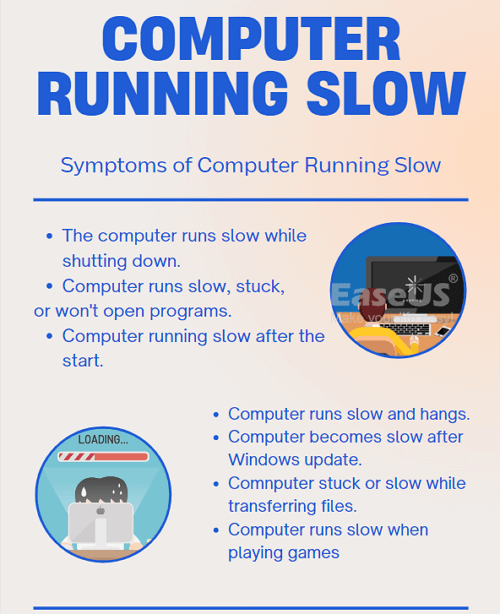
Symptoms of Computer/PC Running Slow:
If your computer is experiencing only 1 or 2 symptoms, such as running slow, it's likely that the issue can be resolved with a simple solution.
- Computer is running slow while shutting down.
- Computer is running slow, stuck, or won't open programs.
- Computer is running slow and freezing.
- Computer runs slow after the restart.
- Laptop is very slow and hangs.
- Computer becomes slow after Windows 11 update.
- Computer is slow, hanging, or stuck while transferring files.
- Computer is running slow and dropped frames while playing games.
How to Check What Causes Your Computer Running Slow
To identify what's slowing down your computer, follow these steps: Run a full system scan with your antivirus software to detect and remove malware. Check for and uninstall any unnecessary or outdated programs. Run a disk cleanup and disk defragmentation to free up space and improve disk performance.
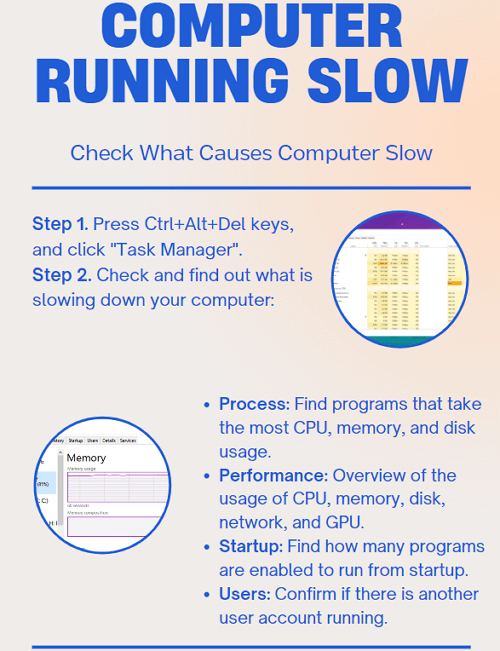
Step 1. Press Ctrl + Alt + Delete keys simultaneously, and click "Task Manager" from the popup window.
Step 2. Go to check the following tabs, and find out what is slowing down your computer:
- ProcessTask Manager helps you identify which programs are consuming the most resources on your computer, including CPU, Memory, Disk, Network, and GPU usage.
- PerformanceThe system monitor helps you keep track of your computer's CPU, Memory, Disk, Network, and GPU usage. If any of these components become heavily used or run out of space, it's essential to find a solution to prevent potential issues.
- StartupThe Startup folder can be used to determine if there are too many applications enabled to run from startup, which can cause the computer to slow down during booting.
- Users This tool helps identify if there are multiple admin users accessing and using data on a computer, indicating potential misuse or unauthorized access.
Your computer running slow could be due to a variety of reasons, including a cluttered hard drive with too many programs and files taking up space, outdated software or drivers that need to be updated, a malfunctioning cooling system or overheating processor, a virus or malware infection, a resource-intensive program or background process running in the background, a slow internet connection, a full or nearly full hard drive, a faulty or failing hard drive, or a hardware issue such as a failing RAM or graphics card.
- RAM is running out of memory (Low Random Access Memory).
- Your hard drive is running out of storage space, resulting in a low disk space error. This can be resolved by deleting unnecessary files, uninstalling unused programs, and freeing up space on your hard drive.
- Hard drive is getting old or contains too many fragments.
- Windows driver is not updated after Windows update.
- Too many background programs are running.
- Too many programs are enabled from the startup.
- Malware or virus infection.
- Special effects and visual features.
If your computer is running slow, you can identify the issue based on when the problem occurs. If it happens from the start, after startup, while playing games, during file transfers, or when shutting down, you can follow specific solutions to effectively resolve the issue.
#1. Fix Computer Running Slow from Startup
Here are the possible reasons why your computer may be running slow while booting up Windows:
- Too many programs are enabled to run from startup.
- Fast Startup is enabled by default on Windows 10, which can take a long time to load, but it quickly boots up the operating system from a hibernation state, rather than fully shutting down.
To get rid of this error, you'll need to:
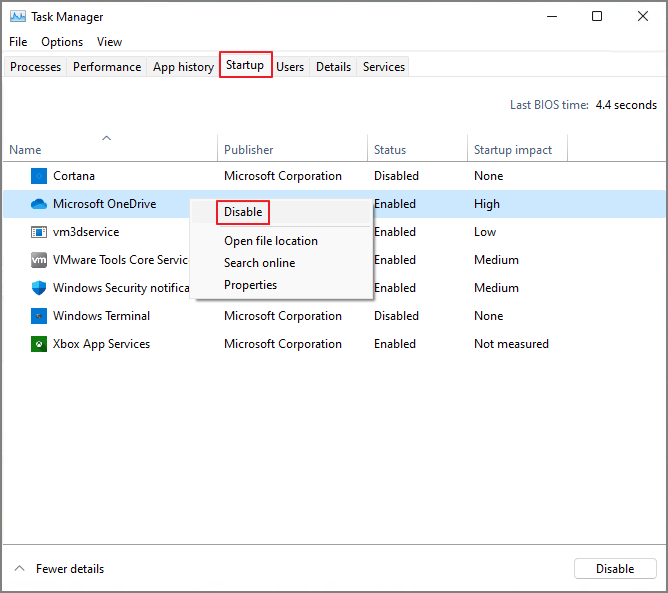
First, Disable Startup Programs
Step 1. To open Task Manager, press the keys Ctrl + Alt + Delete or Ctrl + Shift + Esc.
Step 2. To check the applications and services that are enabled to boot up with Windows, go to the Startup tab in the Task Manager. This allows you to see and manage which programs and services are set to run automatically when Windows starts.
Step 3. Select unwanted programs and click "Disable".
Repeat the process until you've disabled most useless programs.
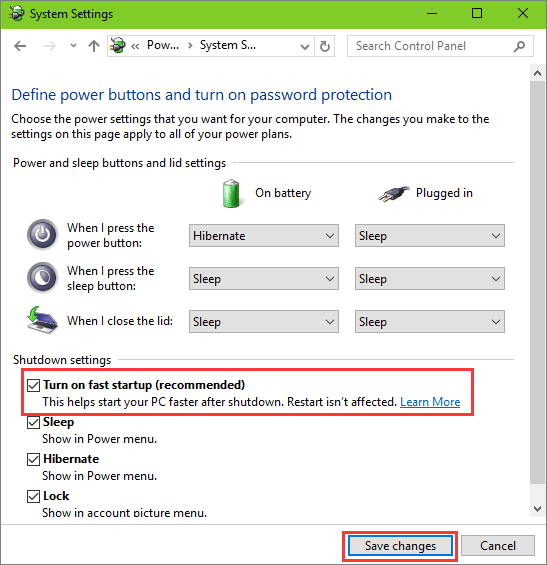
Next, Turn Off Fast Startup
Step 1. Type power option in the Search box from the start, and click "Power & Sleep settings".
Step 2. Click "Choose what the power buttons do" and click "Change settings that are currently unavailable".
Step 3. Untick "Turn on fast startup (recommended)", and click "Save Changes".
After you've disabled any unnecessary startup programs, you can restart the computer to see if the slow startup issue is resolved or not. This will help you determine if the issue was caused by a specific program or a deeper problem with your computer's startup process.
BONUS TIP
If the computer is still slow to boot up after trying the two fixes, it could be system trash or low disk space that caused the problem, and for more fixes, you can refer to. HP Laptop Taking Forever to Restart for help.
#2. Fix Computer Running Slow After Startup
Many Windows users experience a sudden slowdown in their computer's startup time, despite it initially booting up quickly. The causes of this issue are varied, but some possible reasons include.
- The system C drive is running out of space, which is causing a low disk space error on the HDD/SSD. This can be due to various reasons such as a large number of installed programs, a large amount of temporary files, or a full recycle bin.
- Too many background programs running.
- High Disk usage.
- High RAM usage.
To resolve the issues on your computer, please follow the tutorial guidelines step by step. This will help eliminate any problems and get your computer running smoothly again.
- Guide 1. Fix Low Disk Space Error on OS Drive
- Guide 2. End Task of Background Running Programs
- Guide 3. Fix 100% High Disk Usage that Slows PC
- Guide 4. Fix High (RAM) Memory Usage
Guide 1. Fix Low Disk Space Error on OS Drive
When a Windows computer displays a low disk space warning message, it can be due to insufficient space on the system C drive or the OS disk. To resolve these issues, you can use a reliable partition manager software like Qiling Partition Master for assistance.
1. Extend System C Drive
Option 1. Extend System C drive with unallocated space
- 1. Click on the System C: drive and select "Resize/Move".
- 2. Drag the system partition end into the unallocated space so to add it to the C: drive. To proceed with extending the C drive, click on the "Proceed" button to execute the operations. This will initiate the process of extending the C drive.
Option 2. Extend System C drive without unallocated space
- 1. Click a big partition with enough free space on the system disk, select "Resize/Move".
- 2. To free up space, drag the end of the large partition to the left to shrink it, making room for the unallocated space. Then, click "Proceed" to confirm the changes.
- 3. Select the system drive at the Disk management page, and select "Resize/Move".
- 4. To extend the System C drive, drag the end of the C drive into the unallocated space and click "Proceed" to save the changes and extend the drive.
2. Upgrade OS Disk - Migrate OS to Bigger HDD/SSD
Steps to migrate OS to HDD/SSD:
- Run Qiling Partition Master, select Migrate OS from the top menu.
- Select the desired drive (SSD or HDD) as the destination disk and click "Next" to proceed.
- Be aware that the process will erase all data and partitions on the target disk, so it's crucial to back up any important data beforehand to avoid losing it. If you haven't backed up your data yet, do it now to ensure your files are safe.
- Then click Continue.
- Preview the layout of your target disk, then click Proceed to start migrating your OS to a new disk.
Note: When migrating your operating system to a new SSD or HDD, be aware that the process will erase all existing partitions and data on the target disk if there's not enough unallocated space available. To avoid losing important data, back up any saved files to an external drive before proceeding.
Guide 2. End Task of Background Running Programs
Closing unnecessary programs via Task Manager can help resolve the issue of a computer slowing down due to too many programs running in the background.
Step 1. To open the Task Manager, press the Ctrl + Alt + Delete keys on your keyboard and click on "Task Manager".
Step 2. At the Processes tab, identify and end running programs that are consuming excessive memory, CPU, or disk resources, by clicking "End" task.
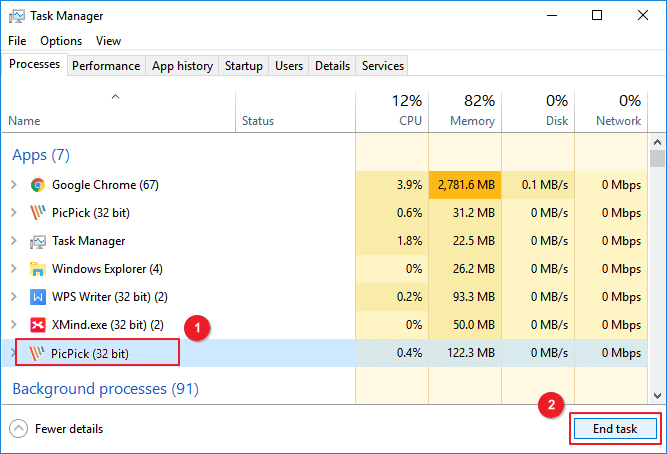
Repeat the process until you end all useless running programs.
You May Also Like:
In addition to using Task Manager, you can also apply privacy settings in Windows 10 or apps and features in Windows 11 to prevent programs from running in the background, or refer to the provided link for more detailed instructions.
Guide 3. Fix 100% High Disk Usage that Slows PC
To fix the issue of high memory usage, end the task of high programs that are taking high memory or CPU usage on your computer, as shown in Guide 2 Fix 2.
Aside from a clogged registry, computer slowdowns can be caused by a virus or malware infection and issues with the Antimalware Service. To address these problems, you can take steps to remove any malware or viruses that may be slowing down your computer, and also ensure that the Antimalware Service is functioning properly.
First, Check and Remove Viruses from the Computer
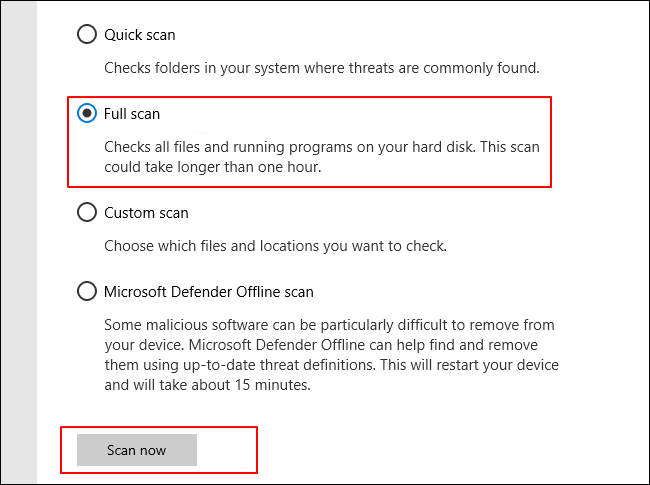
Step 1. Detect and Scan Viruses or Malware on PC
- To check Windows Defender, go to Settings, click on "Update & Security", then select "Windows Security" and choose "Virus & threat protection".
- Click "Scan options" and tick "Full scan", click "Scan now".
Step 2. Remove Found Virus and Malware that slows down your PC.
- Run antivirus software and select to scan the entire computer.
- Confirm to clear all found viruses and malware.
BONUS TIPS:
Malware, including viruses, ransomware, spyware, adware, and keyloggers, cannot only cause harm but also slow down your computer. While antivirus software can remove most malware, some specific solutions may be needed to get rid of certain types. For a detailed guide, follow the provided link. Remove a Virus that Slows Down the Computer on your own.
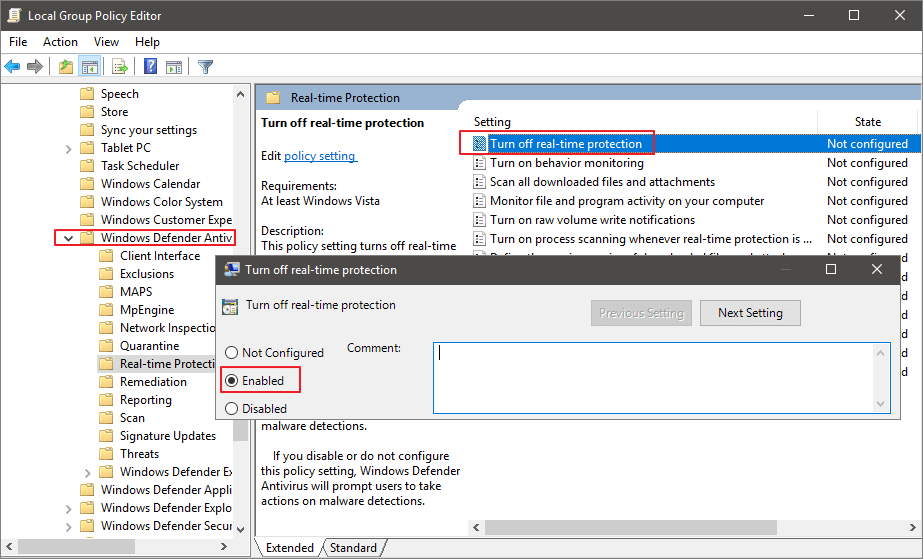
Next, Disable Real-Time Protection in Windows Defender
Step 1. In the Windows settings, go to the "Update & security" section, and then select the "Windows security" option.
Step 2. Click "Virus & threat protection", and click "Manage settings".
Step 3. To disable real-time protection, go to the Windows Defender settings, click on "Real-time Protection", and then click on "Turn off real-time protection". This will allow you to check the "Enabled" box. The real-time protection will be disabled.
Aside from viruses and Antimalware service, you may also experience computer running slow issues with other Windows high disk usage errors, which can be addressed through the provided links for assistance.
Guide 4. Fix High (RAM) Memory Usage
To resolve high memory usage on your computer, start by following guides 2 and 3 to see if the issue is resolved. If not, consider other potential causes and solutions.
If the error still exists, you can try these practical solutions here:
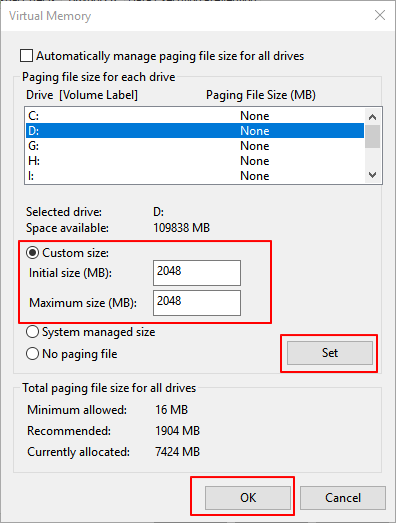
1. Increase Virtual Memory
- Right-click This PC, select "Properties", and click "Advanced".
- Click "Settings" under the Performance settings.
- Click "Change" at the Advanced tab on the Performance Options.
- To change the settings for the page file, go to the Performance Options window, uncheck the box that says "Automatically manage paging file size for all drives", select the C drive, check the box that says "No page file", and then click "Set".
- Click "Yes", select a non-The system partition should be set to a custom size, with the same value in both Initial Size and Maximum Size.
- Click "Set" and "OK" to confirm.
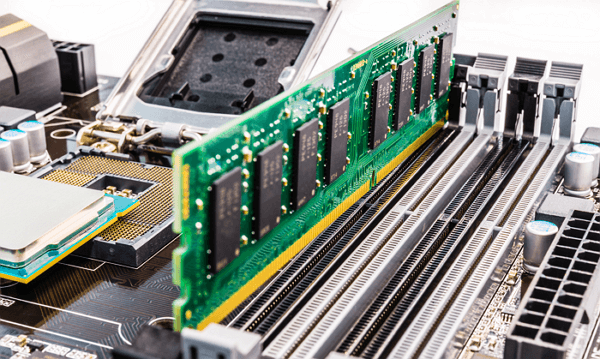
2. Increase Physical (RAM) Memory
- Open Task Manager, navigate to the Performance tab, and click on "Memory".
- Check the size of your memory stick and its speed.
- To upgrade your computer's RAM, you would need to purchase a new RAM memory card that has the same or larger storage capacity as your current one. This will allow you to add more memory to your PC, which can improve its performance and speed.
Further Tips:
High memory usage issues can arise from various causes, and as such, their fixes can also be diverse. If you're experiencing this problem, you may want to check out this link for a comprehensive guide on how to troubleshoot and resolve it. 10 Fixes for High RAM Memory Usage Issue in Windows 11/10.
#3. Fix Computer Running Slow After Windows Update
When your computer slows down after a Windows update, it's likely due to a buggy update or corrupted system files.
To fix a slow computer, first close all apps with tips in Guide 2 Fix 2, and try to reboot the PC. If the computer still remains slow after the restart, try the tips provided.
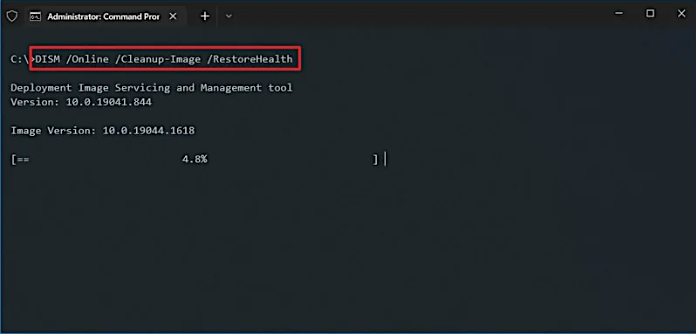
1. Repair Corrupted or Damaged System Files with SFC/DISM
- To open the command prompt as an administrator, press the Windows key + R to open the Run dialog, type 'cmd' in the field, and click "OK". This will open the command prompt with administrator privileges.
- Type: sfc /scannow and hit Enter.
- Type the following command lines one by one and hit Enter each time:
- Dism /Online /Cleanup-Image /CheckHealth
- Dism /Online /Cleanup-Image /ScanHealth
- Dism /Online /Cleanup-Image /RestoreHealth
2. Revert Windows Update to a Previous State
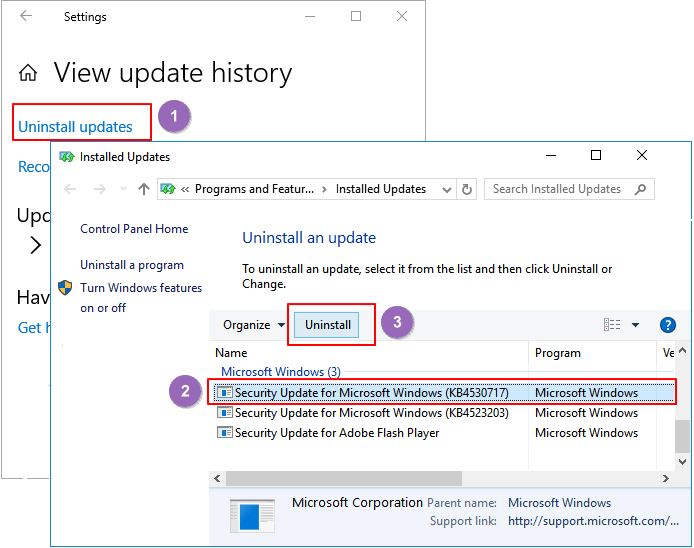
On Windows 10:
- To update Windows, go to the Settings app, click on "Update & security", and then select "Windows Update".
- Click "View update history" and click "Uninstall updates".
- Find and click the latest update, and select "Uninstall".
On Windows 11:
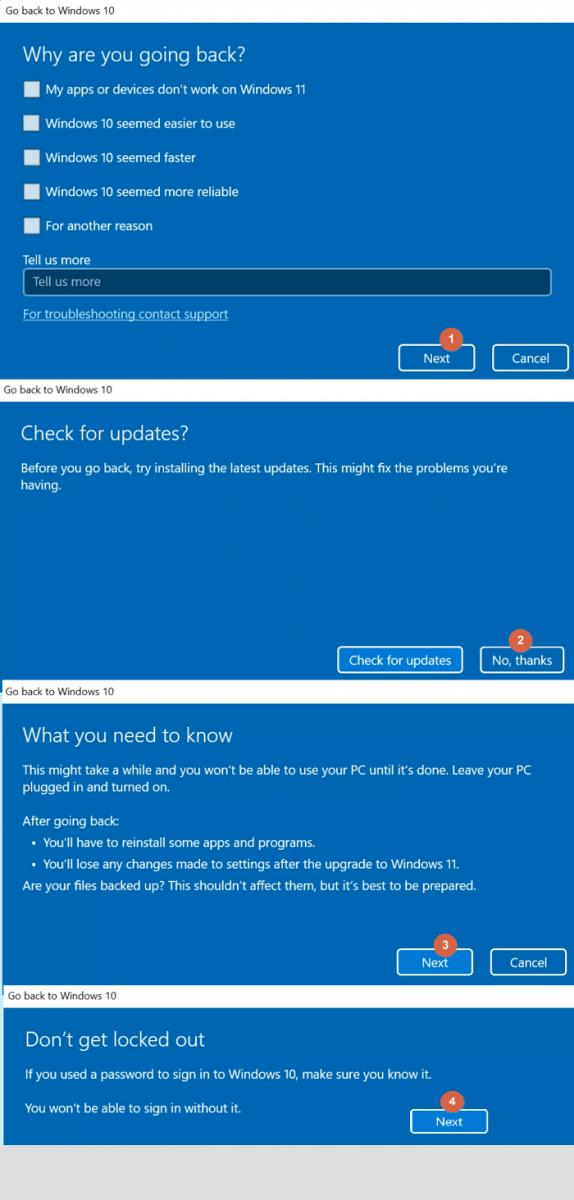
- Go to Windows Settings, click "System" and "Recovery".
- The recovery options are accessed by clicking on the "Recovery" tab in the Windows Settings app. Within this tab, there is a "Go back" option which, when clicked, will take you to the "Go back" sector.
- To revert Windows 11 to a previous state, follow the onscreen questions to complete the process.
BONUS TIP
To fix a computer running slow due to Windows update, you can extend the system C drive, clear the Windows update cache, and install the latest Windows update. This can be done by following the steps outlined in the provided link. step-by-step guide .
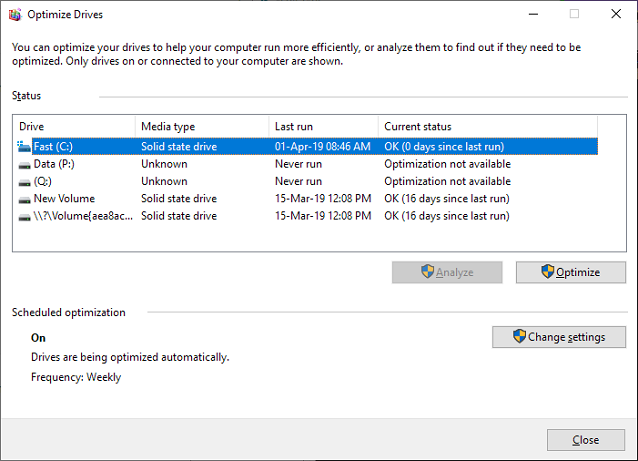
3. Defragment Hard Drive to Optimize Computer Performance
- Open File Explorer, right-To access the properties of the hard drive partition with the Windows OS, click on the partition and select "Properties" from the context menu that appears.
- Go to the Tools tab, and click "Optimize".
- Select the drive you need to clear existing fragments and click "Optimize" to resolve the issue.
#4. Fix Computer Running Slow While Playing Games Update
If you've noticed your computer slowing down while playing games, it's likely due to one of two main reasons. Your computer's hardware may not be powerful enough to handle the demands of the game, or the game itself may be poorly optimized, causing it to consume too many system resources.
1. The system is experiencing two main issues: the C drive is running low on space, and the graphics card is too small.
To resolve the issue, you can use Qiling Partition Master to either extend the system C drive or upgrade the OS drive to a solid-state drive (SSD) disk, following the steps outlined in the "Guide 1 Fix 2" tutorial.
Upgrading your computer's graphics card is a relatively straightforward process that can significantly improve your gaming and graphics experience. To do this, you'll need to purchase a new graphics card that is compatible with your computer's specifications, and then physically replace the old one with the new one.
- Shut down the PC and unplug all cables.
- To access the graphics card, start by locating it in your system. Once found, unplug the power cable that connects to the graphics card.
- Replace the old graphics card with a new one, fasten it with screws, and securely plug in all necessary cables to ensure a stable connection.
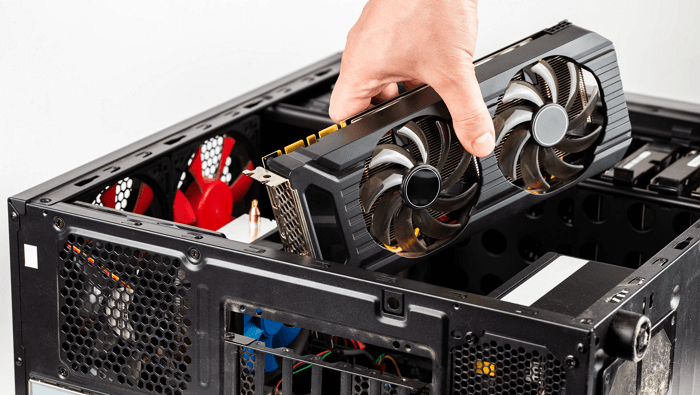
- Reboot the computer.
You May Also Like:
If your gaming computer is becoming slow, you can upgrade the CPU, RAM memory, and upgrade the hard drive to an SSD (solid-state drive) to improve its performance. For a step-by-step guide, follow the detailed instructions to learn how to do it. How Do I Upgrade a Gaming PC .
#5. Fix Computer Running Slow While Transferring Files
If your computer slows down while transferring files to another drive, it may be due to the target drive's file system format being optimized for large files, or the source drive being faulty or failing, causing a slowdown in the transfer process.
Here is how to fix this issue:
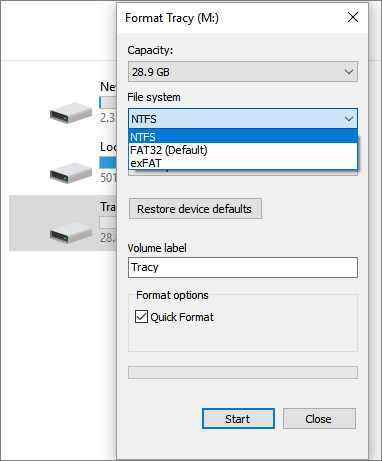
1. Change File System of Target Drive to NTFS/exFAT
Before proceeding, ensure that all essential files on the target partition drive are backed up. Next, open File Explorer and follow the necessary steps.
- Open File Explorer, right-To format a drive, click on the target drive where you typically transfer large files, and select the "Format" option.
- Set the file system to NTFS for internal drives and exFAT for external drives 64GB or larger.
2. Replace the Old/Dying Target Drive with a New Hard Drive
If your target drive is too old and nearly full, it's recommended to replace the old hard drive with a new one to maintain optimal performance and prevent slowdowns.
To replace a faulty drive, you can follow these steps:
- Back up or clone the existing data to another safe location.
- Remove the old drive from the computer.
- Connect the new hard drive to your PC.
- Initialize the disk and create a new partition on it.
- Save all the essential files back to the new drive.
If your hard drive is failing or dying, don't panic! There are steps you can take to rescue your data. For a more detailed guide, you can visit the link provided for help: What Do Do with a Dying/Failing Hard Drive.
#6. Fix Computer Running Slow While Shutting Down
When your computer takes a long time to shut down, it's often due to external storage devices, power settings, and background running programs that are prolonging the process.
The solutions to this issue are easy to follow:
1. Close all running programs.
Save and close any open documents, then use Task Manager to close all running programs.
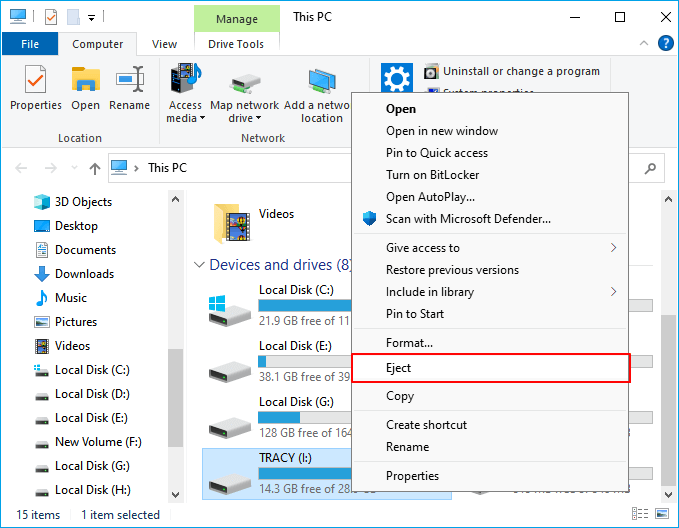
2. Eject all connected external storage devices
- Open Windows File Explorer
- Locate and right-click the connected external drives, and select "Eject".
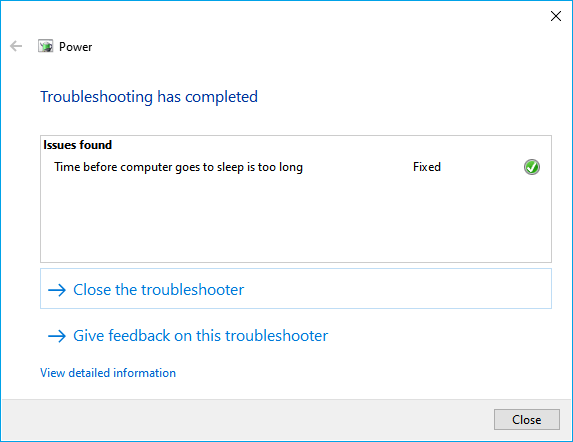
3. Run Power Troubleshooter
Windows built-To fix power problems that slow down your computer from shutting down using Power Troubleshooter, follow these steps:
- Go to Windows Settings, and click "Update & security".
- Click "Troubleshoot" and then click "Run the troubleshooter" next to the Power section in the Troubleshooter window.
- The Troubleshooter will scan and fix the problem that causes the computer to take a long time to sleep or shut down, and then you can close the window.
If you're unable to shut down your PC, try pressing the power button for 10 seconds to discharge any residual power. Then, press the power button again to turn it back on. This should help the computer to restart and allow you to shut it down properly.
Conclusion
Windows computers often experience slowdowns due to various normal symptoms, including system freezes, crashes, and unresponsiveness. These issues can be caused by a range of factors, such as outdated software, fragmented hard drives, and excessive background programs.
Your PC may be running slow due to various reasons such as virus or malware infection, high RAM, CPU, or disk usage, excessive background processes, low disk space, a corrupted file system, or buggy Windows updates.
To speed up your PC, first determine when it becomes slow, whether it's during startup, after booting up, playing games, transferring files, or shutting down. Once you've identified the issue, you can refer to the specific solutions provided above to fix the problem and get your computer running smoothly again.
Related Articles
- File System Comparison: NTFS, FAT32, exFAT, and EXT, Which File System Should I Use
- What Does Check Disk Actually Do and How to Run Check Disk (CHKDSK) in Windows [Beginners' Guide]
- One for All Guideline: How to Format/Reformat A Hard Drive
- Partition Magic Software Free Download with How-To Tutorial [Full Guide]
- FIX Error: Rufus Can't Create Bootable USB
Many users have struggled with creating a bootable USB using Rufus, with some even reporting that they cannot use Rufus to create a bootable USB. This issue has been a source of frustration for many, and understanding the reasons behind it can be helpful in resolving the problem. - Rufus vs. Etcher: Which One Is a Better Option to Create Bootable USB Drive
Rufus and Etcher are two free and open-source utility tools that allow you to create a bootable USB drive. But which one is the better option, or should you consider a third alternative? This guide provides a comparison of Rufus and Etcher to help you make an informed decision.
Products
Articles & Tutorials
- Data Recovery
- Data Backup
- File Recovery
- File Backup
- System Backup and Restore
- Disk and Partition Clone
- Technical articles
- Mobile articles
- Disk Master Help
- Windows Data Recovery Tutorials
- Windows Secure Delete Tutorials
- Windows Partition Management Tutorials
- Windows File Backup and Restore Tutorials
- Windows System Backup and Restore Tutorials
- Windows Disk Backup and Restore Tutorials
- Windows Clone Tutorials