Windows Store Apps and Disk Caching Explained
Store apps, also called UWP apps, are the applications installed through the Microsoft Store. Each one keeps its data in a per-app sandbox under %LOCALAPPDATA%\Packages, which behaves differently from the desktop app caches most users are used to.
This guide explains what Store apps store, how their caches behave, and what is worth caching versus what is not.
PAGE CONTENT
- What Store Apps Store on Disk
- How Store App Caches Behave
- How They Interact with a Disk Cache
- Where the Two Conflict
- Configure a Cache for Store Apps
- FAQs About Store Apps and Caching
- Back Up Windows Before You Change Settings
What Store Apps Store on Disk
Each Store app gets its own package folder, and the layout is more regular than desktop apps:
- The install folder. Under
C:\Program Files\WindowsApps, read-only, and managed by the Store itself. - The local app data folder. Under
%LOCALAPPDATA%\Packages\<App>\LocalCache, where each app keeps its working files. - The temp folder. Each app has its own temp area, similar to the system temp folder but sandboxed - see how cloud sync clients use your disk for a comparable sandboxed cache layout.
- The roaming folder. Small settings that follow the user across PCs, usually only a few kilobytes.
- Streaming caches. Media apps like Spotify and Netflix keep their offline content under the same package folder, as described in how Spotify uses a local cache.
How Store App Caches Behave
The access pattern is closer to a desktop app than a service, but with a few important differences:
- Reads dominate on launch. The app binary, assets, and cached UI state are all read at startup, which is a small, repeatable burst.
- Writes are sandboxed. Each app can only write to its own package folder, which keeps caches separate but also means no shared cache directory.
- Apps are suspended, not closed. Windows keeps the app in memory when you switch away, and resumes it without re-reading the binary - see when a disk cache does not help for the limits of caching suspended workloads.
- Updates replace the whole package. A Store update writes a new version folder and deletes the old one, which is closer to a buffer flush than a cache - the distinction is in cache vs buffer.
- Cache cleanup is per-app. Each app manages its own cache size, so there is no central way to clear all Store app caches at once.
How They Interact with a Disk Cache
The two layers stack well because Store app launches are exactly the pattern a disk cache is good at:
- Repeated launches hit the cache. The same app binary and assets are read on every launch, which the RAM tier serves after the first read.
- Streaming caches benefit twice. Media apps read their own cache files repeatedly, and the disk cache serves them from the faster tier.
- Updates invalidate the cache. When the Store replaces the package, the old version's blocks are evicted and the new version warms up from scratch.
- The LocalCache folder is the hot one. That is where per-app working files live, and it is the folder worth pointing a cache at.
- The hit rate is easy to read. A week of normal use produces a clear hit rate, as explained in how to check cache hit rate.
Where the Two Conflict
A few setups work against each other, and they are easy to avoid:
- Caching the WindowsApps folder itself. It is read once at launch and then held in memory, so caching it wastes space that the LocalCache folder could use.
- Clearing LocalCache to save space. Some apps rebuild their cache from scratch on next launch, which is slower than the space saved.
- Installing many large Store games. Game passes and offline downloads can fill the package folder with tens of gigabytes that the cache cannot hold.
- Moving the package folder to a slow drive. Store apps do not tolerate slow launch reads well, and a USB-stick install will stall on every open.
- Disabling the Store update service. That keeps caches stable but leaves apps without security patches, which is a poor trade for the small cache savings.
Quick summary
Store apps are a good candidate for caching. The LocalCache folder is where the wins are, and the WindowsApps folder can be ignored.
Configure a Cache for Store Apps
The cleanest setup is to leave the Store apps where they are, point a disk cache at the volume that holds %LOCALAPPDATA%\Packages, and let the RAM tier hold the LocalCache files. Qiling Fast Cache uses a RAM tier for the hottest blocks and an SSD tier for the rest, and shows the hit rate in the task list.
Step 1. Install Qiling Fast Cache and open the task list. Launch your most-used Store app once before configuring anything.
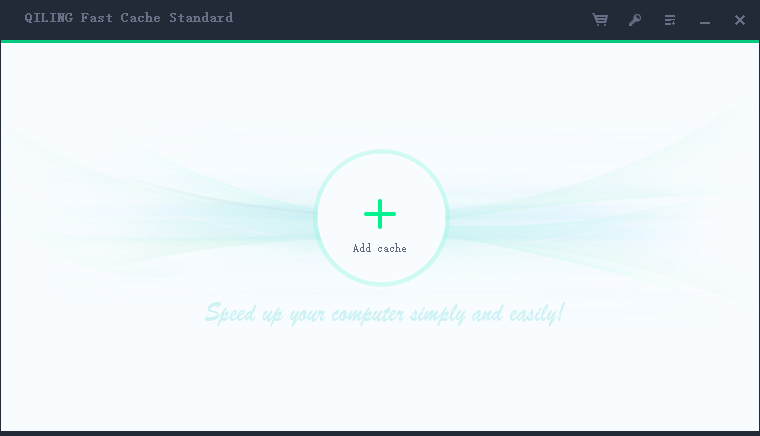
Step 2. Click the "+" button and select the volume that holds the user profile, which is usually the system drive.
Step 3. Size the SSD tier for the LocalCache folders of the apps you use daily, not for the entire WindowsApps folder.
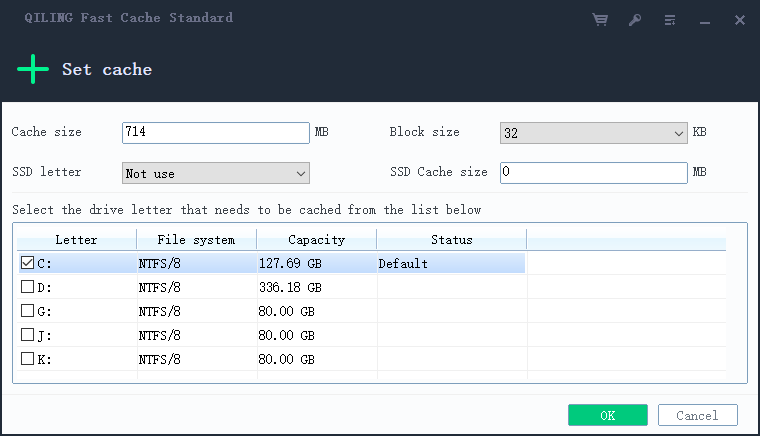
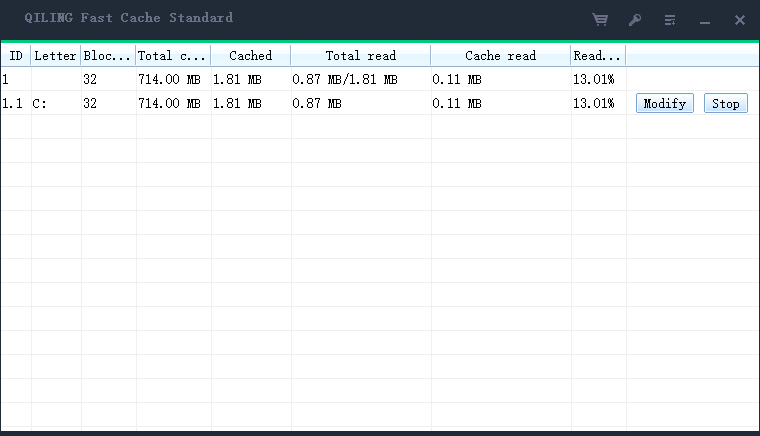
Step 4. Use your Store apps for a week, then read the hit rate - see how to check cache hit rate - and confirm that the LocalCache reads are being served from the faster tier.
FAQs About Store Apps and Caching
Will a disk cache make Store apps launch faster?
Yes, noticeably. The same app binary and LocalCache files are read on every launch, which the RAM tier serves after the first read.
Should I cache the WindowsApps folder?
Little benefit. It is read once at launch and then held in memory, so caching it wastes space that the LocalCache folder could use.
Why do Store app updates reset the cache?
The Store replaces the whole package folder, so the old version's blocks are evicted and the new version warms up from scratch.
Is it safe to clear LocalCache folders?
Only through each app's own settings. Clearing the folder directly can break apps that expect their cache to be intact.
Do Store apps benefit more than desktop apps?
About the same. The pattern that matters is repeated reads, and both kinds of apps produce it.
Back Up Windows Before You Change Settings
Reconfiguring storage and cache settings is easier to undo when you have a recent image. Qiling Disk Master creates a full Windows backup you can restore from.
Part 1: Create a Full System Backup
Step 1. Install and open Qiling Disk Master. On the home screen, open "Backup and Recovery" and choose "System Backup". This option automatically includes Windows and the hidden boot partitions, so you do not have to select them one by one.
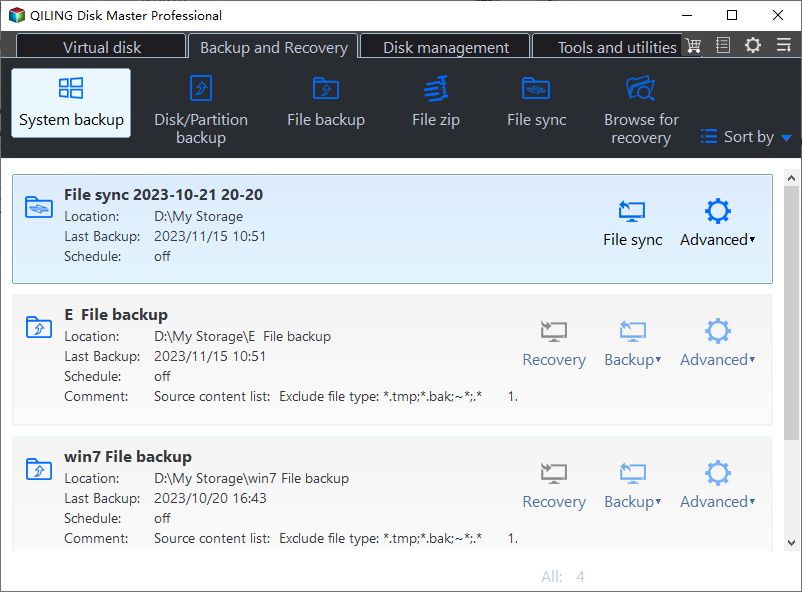
Step 2. Check the source. The disk where Windows is installed and its system partitions are already ticked for you. If you only need your personal documents, run a separate "File Backup" task instead.

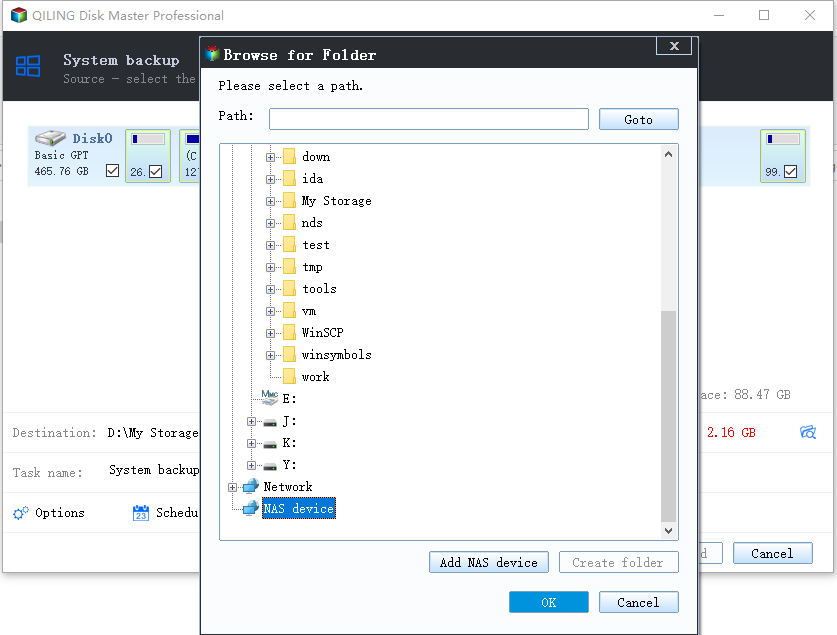
Step 3. Click the destination box and choose where the image should be saved. Use an external HDD or SSD, a NAS, or any drive other than the one Windows is installed on, and make sure it has enough free space.
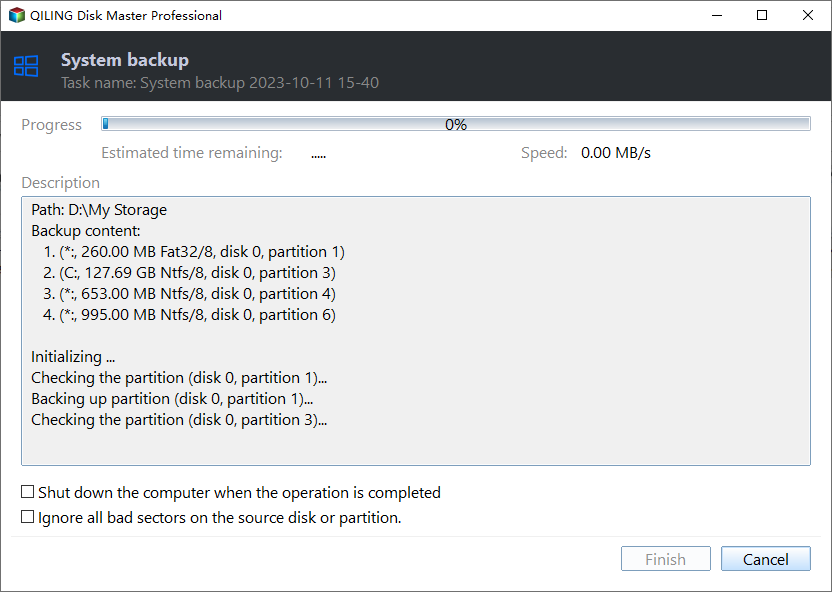
Step 4. Review the task summary and click "Proceed". Wait until the progress bar reaches 100%. Do not unplug the drive or turn off the PC while the backup is running.
Part 2: Restore Windows from the Backup
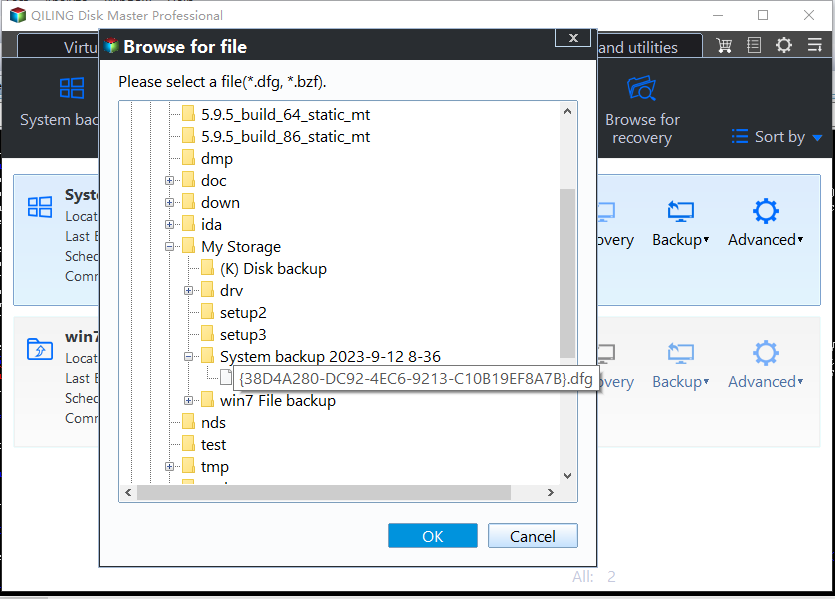
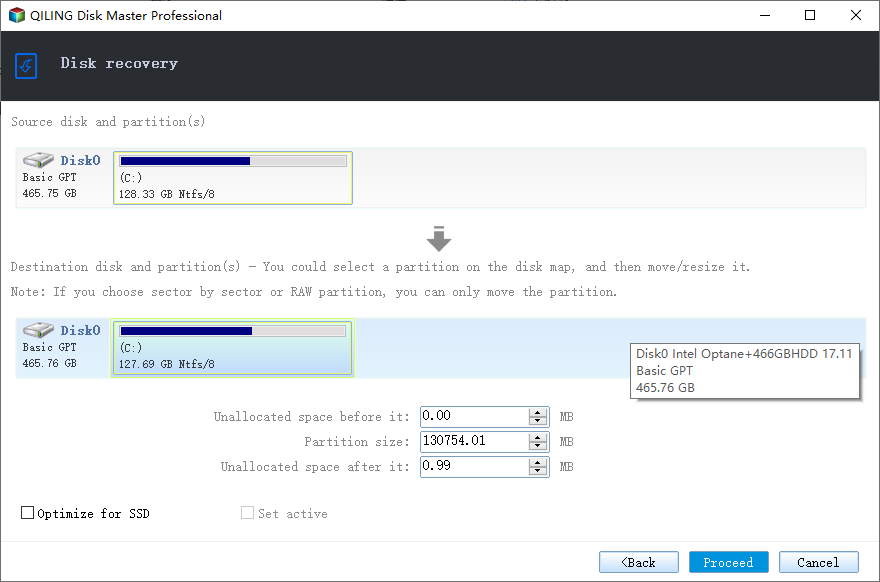
Step 1. Open Qiling Disk Master again, go to "Backup and Recovery", and select the recovery option. Your backup images are listed, so pick the one you created before the changes began.
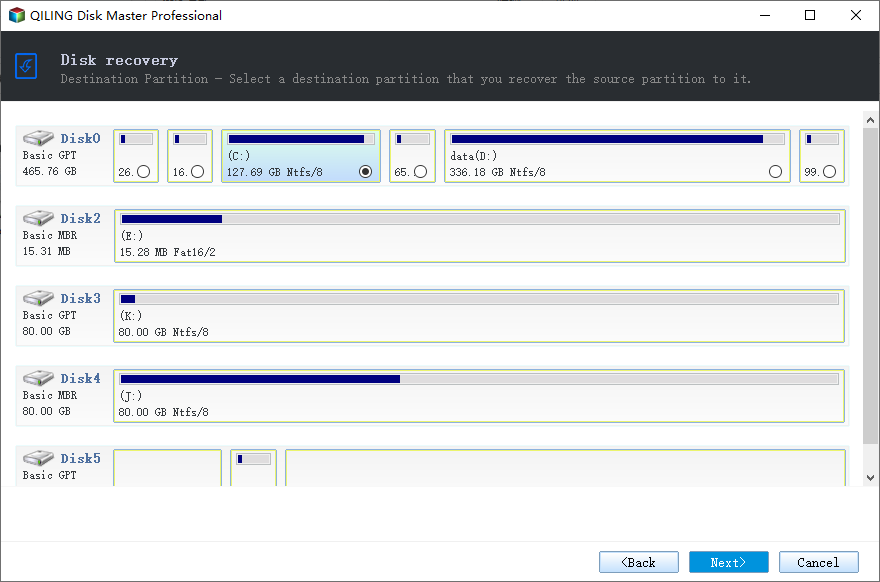
Step 2. Choose the target disk or partition. Normally you restore to the original system disk. If the drive was replaced, select the new disk instead, and the restore rebuilds Windows together with its boot partitions.
Step 3. Preview the restore plan, click "Proceed", and confirm the warning. The PC restarts to finish the job, and Windows comes back exactly as it was on the day the image was created.
- Note
- Keep the backup image on a separate drive, and refresh it before changing Store app or cache settings.
Conclusion
Windows Store apps are a good candidate for a disk cache. Each app keeps its working data in a predictable LocalCache folder, the launch pattern is highly repetitive, and the binary is held in memory after the first read. The wins come from pointing the cache at the volume that holds the user profile, sizing the SSD tier for the LocalCache folders rather than the entire WindowsApps folder, and reading the hit rate after a week of normal use. The only mistakes worth avoiding are caching the read-once WindowsApps folder, clearing LocalCache to save space, or disabling Store updates to keep the cache stable, which leaves apps without security patches for a small caching gain.
Protect your PC with Qiling Backup—create a system image before your next round of settings changes.
For more Windows performance guides, see how Storage Sense interacts with a cache, Windows Fast Startup and caching, how hibernation interacts with a cache, NTFS compression and caching, and memory compression and caching.
Related Articles
- System Restore and Disk Caching
Another Windows feature whose cache warms up on every launch. - Power Loss Protection and Disk Caching
- Thermal Throttling and Disk Caching
- File Deduplication and Disk Caching
- Disk Caching for Databases
Products
Articles & Tutorials
- Data Recovery
- Data Backup
- File Recovery
- File Backup
- System Backup and Restore
- Disk and Partition Clone
- Technical articles
- Mobile articles
- Disk Master Help
- Windows Data Recovery Tutorials
- Windows Secure Delete Tutorials
- Windows Partition Management Tutorials
- Windows File Backup and Restore Tutorials
- Windows System Backup and Restore Tutorials
- Windows Disk Backup and Restore Tutorials
- Windows Clone Tutorials