Windows Shadow Copies and Disk Caching Explained
Shadow Copies, or VSS, is the Windows service that takes point-in-time snapshots of a volume. It lets System Restore, Previous Versions, and backup software roll a disk back to an earlier state without copying every file.
This guide explains what VSS writes, how that interacts with a disk cache, and where the two help or hinder each other.
PAGE CONTENT
- What Shadow Copies Are
- How VSS Uses the Disk
- How It Interacts with a Cache
- Where the Two Conflict
- Configure VSS and a Cache Together
- FAQs About Shadow Copies and Caching
- Back Up Windows Before You Change Settings
What Shadow Copies Are
VSS is a copy-on-write layer that sits between the filesystem and the disk, and it works at the block level rather than the file level:
- A snapshot is not a full copy. It is a small record that says "remember what was here at this moment." Only the blocks that change afterwards are copied.
- Copy-on-write. When an application overwrites a block, VSS saves the old version first, then lets the new write through.
- Used by System Restore. Every restore point creates a VSS snapshot - see how System Restore interacts with a cache.
- Used by backup software. Imaging tools mount a snapshot so they can read a consistent state while you keep working, as described in caching for backup and imaging software.
- NTFS compression interacts with it. Compressed files produce extra copy-on-write work because a single logical block maps to several physical blocks - see NTFS compression and caching.
How VSS Uses the Disk
The workload is almost entirely random writes, and it concentrates in a single hidden area:
- The diff area. Each volume has a shadow copy storage area where old blocks are written. On a typical system it lives on the same volume as the data it protects.
- Random writes on every overwrite. When a file is overwritten, VSS writes the old block to the diff area before the new block lands in its original place.
- Doubles the write cost. Every overwritten block becomes two writes: one to the diff area, one to the original location.
- Reads are dominated by restores. Reading old versions pulls blocks back out of the diff area in a scattered pattern.
- It is bounded by the diff area size. When the area fills, the oldest snapshot is dropped, which is closer to a circular buffer than a file cache - see when a disk cache does not help.
How It Interacts with a Cache
The two layers overlap on reads, and the interaction is mostly helpful but limited:
- Restores hit the cache. Rolling back reads the same diff blocks repeatedly while the restore runs, which the cache can serve from its faster tier.
- The diff area is written once per snapshot. A block in the diff area is only read again during a restore, so caching it for long-term reuse is a poor bet.
- Writes pass through. VSS writes are copy-on-write, which is sequential within the diff area but cannot be cached - the distinction is in cache vs buffer.
- Snapshot creation is a small, short burst. The snapshot itself is mostly metadata; the cost comes later when files are overwritten.
- Backups read the diff area once. A backup pass reads every block in the snapshot, which is one-pass work that a cache cannot accelerate on the first run.
Where the Two Conflict
A few setups fight each other, and they are easy to avoid once recognised:
- Caching the diff area aggressively. A read cache learns blocks that are only read during a restore, which wastes cache space that other data could use.
- Putting the diff area on an SMR drive. Copy-on-write is sustained random writes, which is exactly what shingled drives cannot handle - see SMR drives explained.
- Running a defrag while snapshots exist. Defragmentation rewrites huge numbers of blocks, and VSS copies every one of them before the rewrite, which can fill the diff area in a single pass.
- Disabling VSS to help the cache. That removes System Restore and Previous Versions entirely, which is a poor trade for the small write savings.
- Compressing the diff area. NTFS compression on a VSS volume multiplies the copy-on-write cost and can fill the diff area far faster than expected.
Quick summary
VSS and a disk cache mostly stay out of each other's way. The cache helps restores, the diff area is written once, and the only real risk is putting VSS on an SMR drive.
Configure VSS and a Cache Together
A safe arrangement is to leave VSS where it is, make sure the diff area lives on a healthy SSD, and point a disk cache at the volume you actually restore from. Qiling Fast Cache uses a RAM tier for the hottest blocks and an SSD tier for the rest, and shows the hit rate in the task list.
Step 1. Install Qiling Fast Cache and open the task list. Note the size of the VSS diff area before configuring anything.
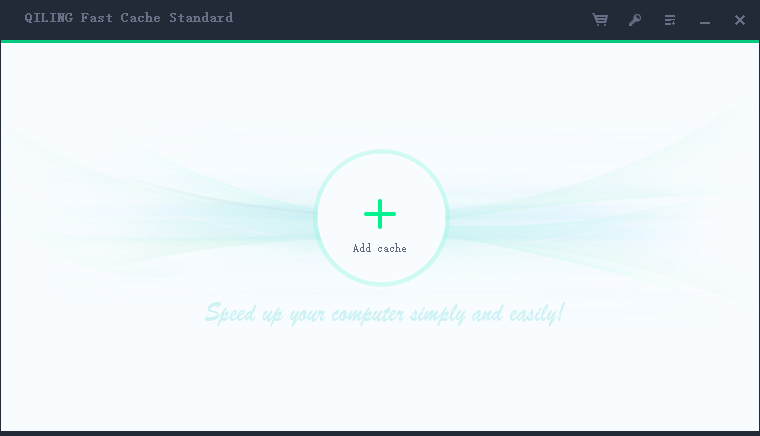
Step 2. Click the "+" button and select the volume that holds the data you actually restore from, not the volume that only holds the diff area.
Step 3. Size the SSD tier for your working set, and keep enough free space on the volume for VSS to grow the diff area when needed.
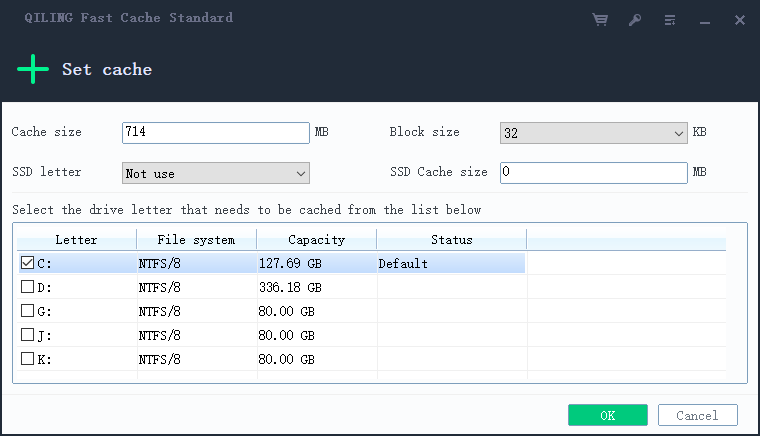
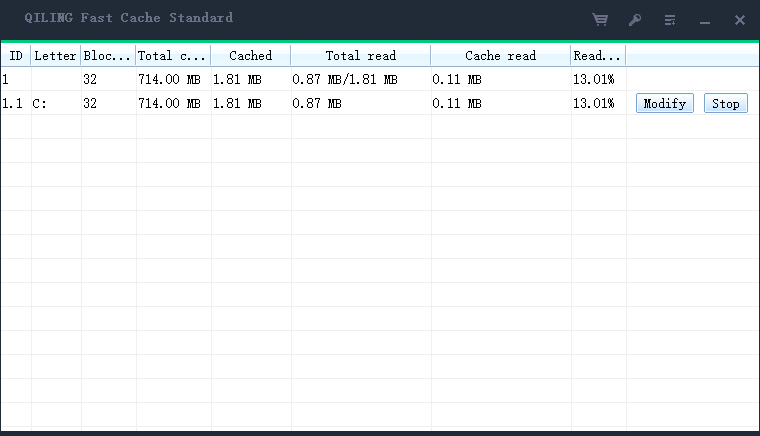
Step 4. Run a restore and a backup after the cache has warmed, then read the hit rate - see how to check cache hit rate - and confirm that restore reads are being served from the faster tier.
FAQs About Shadow Copies and Caching
Does VSS slow down my PC?
On a healthy SSD, rarely. The cost is most visible during large file overwrites or a defrag while snapshots exist.
Should I cache the diff area?
Little benefit. The diff area is written once and only read during a restore, so a read cache learns blocks that are rarely reused.
Why did my diff area fill up?
Either a large number of files changed, or a defrag ran while snapshots existed. Both produce a burst of copy-on-write writes.
Is it safe to delete shadow copies?
Only through the System Restore interface. Deleting the diff area files directly breaks VSS and can corrupt the volume.
Does VSS work with a disk cache?
Yes. The two layers mostly do different jobs: VSS handles versioning, the cache handles repeat reads, and they only overlap during restores.
Back Up Windows Before You Change Settings
Reconfiguring storage and cache settings is easier to undo when you have a recent image. Qiling Disk Master creates a full Windows backup you can restore from.
Part 1: Create a Full System Backup
Step 1. Install and open Qiling Disk Master. On the home screen, open "Backup and Recovery" and choose "System Backup". This option automatically includes Windows and the hidden boot partitions, so you do not have to select them one by one.
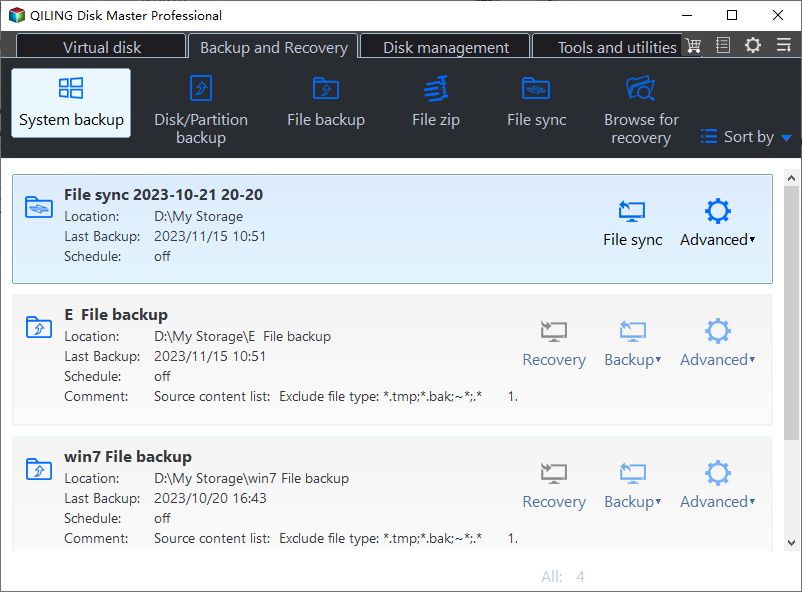
Step 2. Check the source. The disk where Windows is installed and its system partitions are already ticked for you. If you only need your personal documents, run a separate "File Backup" task instead.

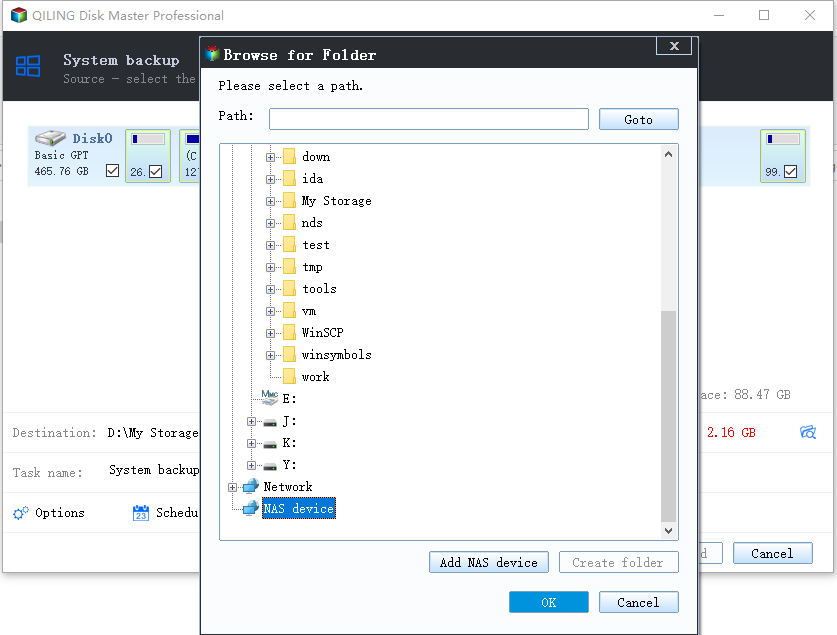
Step 3. Click the destination box and choose where the image should be saved. Use an external HDD or SSD, a NAS, or any drive other than the one Windows is installed on, and make sure it has enough free space.
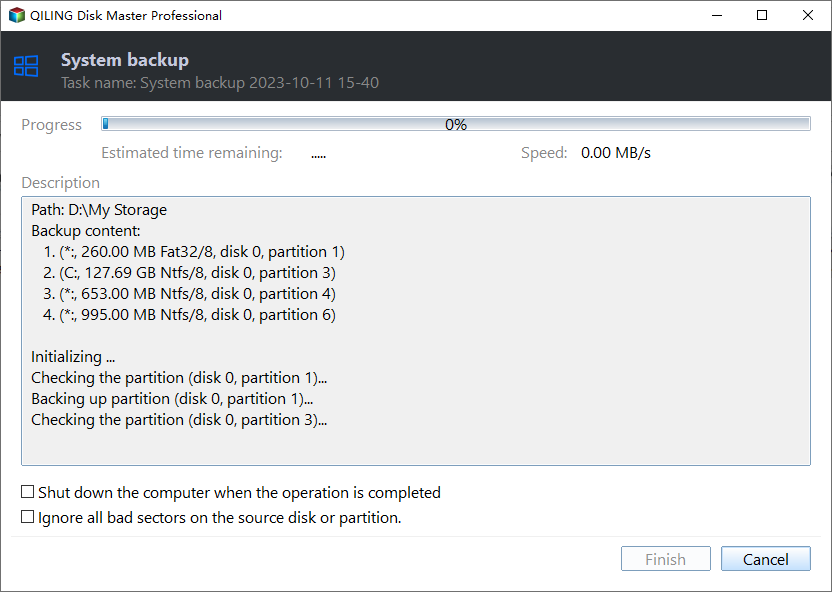
Step 4. Review the task summary and click "Proceed". Wait until the progress bar reaches 100%. Do not unplug the drive or turn off the PC while the backup is running.
Part 2: Restore Windows from the Backup
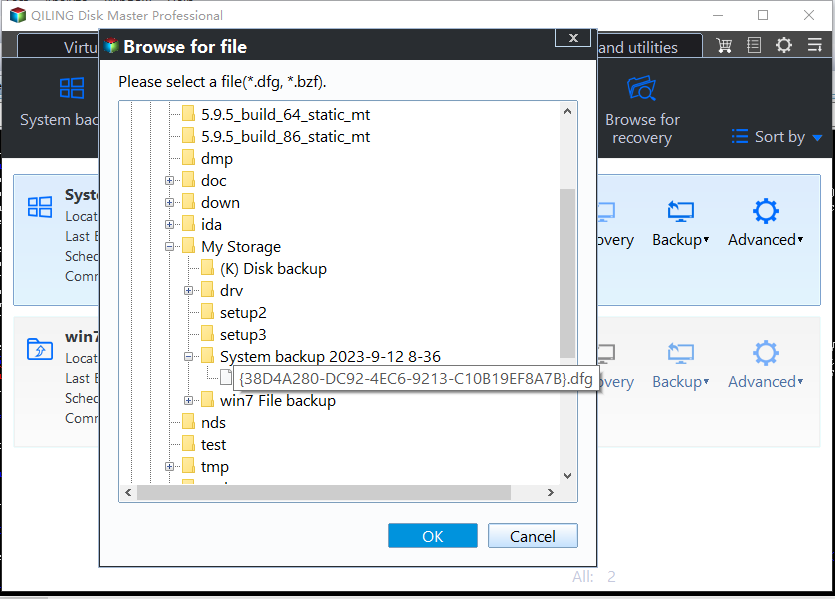
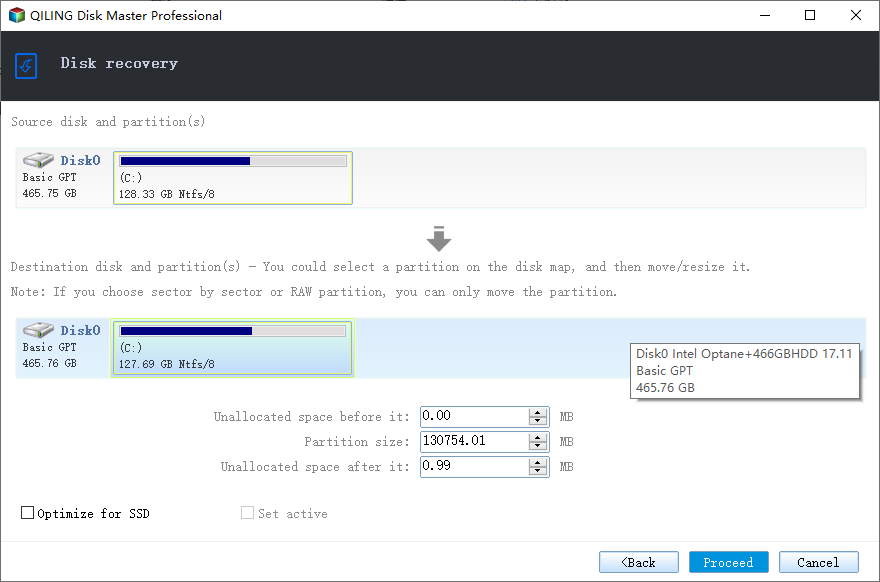
Step 1. Open Qiling Disk Master again, go to "Backup and Recovery", and select the recovery option. Your backup images are listed, so pick the one you created before the changes began.
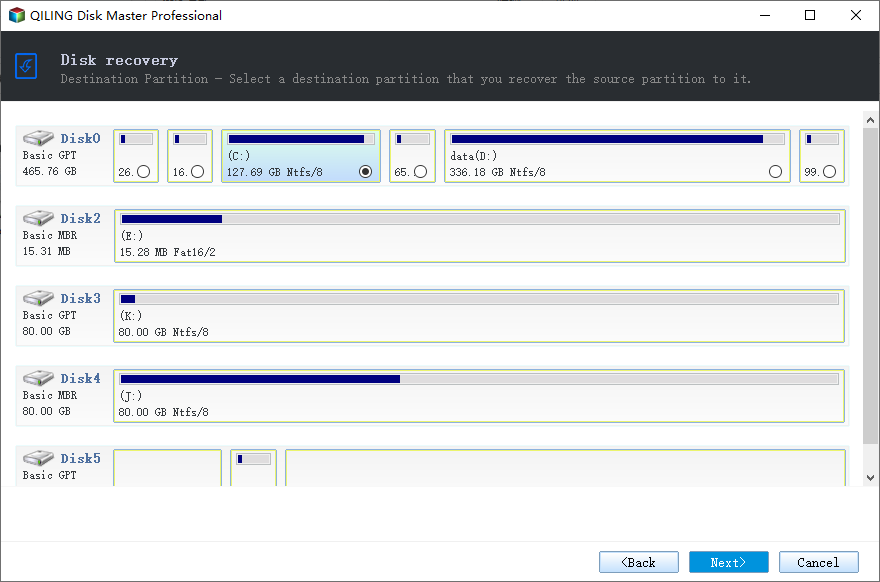
Step 2. Choose the target disk or partition. Normally you restore to the original system disk. If the drive was replaced, select the new disk instead, and the restore rebuilds Windows together with its boot partitions.
Step 3. Preview the restore plan, click "Proceed", and confirm the warning. The PC restarts to finish the job, and Windows comes back exactly as it was on the day the image was created.
- Note
- Keep the backup image on a separate drive, and refresh it before changing VSS or cache settings.
Conclusion
Shadow Copies and a disk cache mostly stay out of each other's way. VSS handles versioning at the block level, the cache handles repeat reads, and the only place they meet is during a restore, which the cache can help with. The real risks are not about caching at all: putting the diff area on an SMR drive, running a defrag while snapshots exist, or compressing a VSS volume. Leave VSS on a healthy SSD, keep enough free space for the diff area to grow, point the cache at the volume you restore from, and read the hit rate after a restore rather than assuming the diff area needs special treatment.
Protect your PC with Qiling Backup—create a system image before your next round of settings changes.
For more Windows performance guides, see how hibernation interacts with a cache, Windows Fast Startup and caching, how Storage Sense interacts with a cache, Defender real-time protection and caching, and does a disk cache speed up file copies.
Related Articles
- VM Snapshots and Disk Caching Explained
Another copy-on-write layer whose diff area behaves like the VSS diff area. - Power Loss Protection and Disk Caching
- Thermal Throttling and Disk Caching
- Memory Compression and Disk Caching
- Disk Caching for Databases
Products
Articles & Tutorials
- Data Recovery
- Data Backup
- File Recovery
- File Backup
- System Backup and Restore
- Disk and Partition Clone
- Technical articles
- Mobile articles
- Disk Master Help
- Windows Data Recovery Tutorials
- Windows Secure Delete Tutorials
- Windows Partition Management Tutorials
- Windows File Backup and Restore Tutorials
- Windows System Backup and Restore Tutorials
- Windows Disk Backup and Restore Tutorials
- Windows Clone Tutorials