Where Do You Want to Install Windows and How [2024 New]
User Case:
Many users on Quora have wondered where to install Windows, and it's not just a matter of personal preference. The editor from Qiling will explore this question and provide guidance on where to install Windows and why, helping to clarify the decision-making process.
Where Do You Want to Install Windows
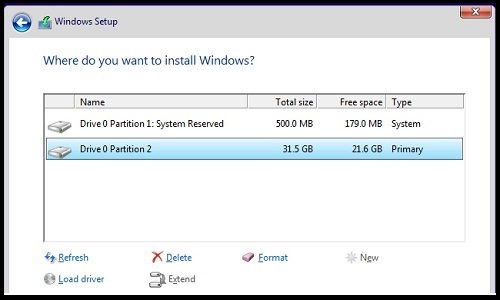
To ensure your Windows operating system is installed on the correct storage drive, consider the drive's capacity and startup speed. A drive with sufficient capacity can store the operating system and all necessary files, while a fast enough startup speed ensures a quick boot time, making it ideal for the operating system.
When it comes to installing Windows, the best solution is to split storage between an SSD and an HDD. The SSD should be used for the Windows operating system, while the HDD can store larger files like videos, photos, and games. This setup is commonly used in Windows PC builds, where high-performance storage drives are allocated for the OS and cheaper options for mass storage. Alternatively, Windows can also be installed on a Windows VPS, which has gained popularity in recent years due to its ease of use and familiarity with the user interface.
You may also like the following:
To ensure you're choosing the right drive to install Windows, consider the following means: Check the drive's compatibility with your system, verify the drive's capacity meets your needs, and check for any firmware updates. Additionally, consider the drive's interface type (e.g.
Unplug all but the target drive: This ensures that you install the OS onto the target hard drive without risk, as there is only one option, allowing for a clean and safe installation.
Use drives with different capacities: Windows may not be able to distinguish every drive, but it always shows the storage capacity of the drive you're looking at. So, find the drive with the capacity matching the SSD's capacity.
Check drive orders in BIOS: If your hard drive is full of files you want to keep, it's safer to choose the other option, as formatting and partitioning to install an operating system will erase all data on the drive.
Check the physical order of drives: Disks 0, 1, and 2 refer to physical connections on the motherboard, which may vary depending on the motherboard, with one port for high-end drives and several for general-purpose storage.
To share this article, click the buttons below and let more users know how to select the target drive to install Windows.
How to Install Windows on an SSD
Just now we've discussed where to install Windows (the answer is without a doubt a solid SSD). Next, I'll show you how to install Windows properly. If you don't have much experience, be sure to follow the steps below carefully:
Step 1. To install Windows, first determine which version you want to install, such as Windows 10 or Windows 11. Then, visit the Microsoft Online Store to download the desired system and purchase a license key, which is required for installation and use beyond the 30-day free trial period.
Step 2. To create Windows 10 installation media, you'll need to download the Windows ISO file and burn it to a USB drive using a third-party Windows ISO burner. Once you've downloaded the ISO file, you can follow the instructions provided by the burner to create a bootable USB drive. This will allow you to install Windows 10 from the USB drive. If you encounter any issues during the process, you can click on the links provided to learn more about how to burn ISO to a USB and troubleshoot common problems.
Step 3. Install Windows on an SSD:
- Insert the USB drive into the PC or laptop where Windows is to be installed. Next, turn on the computer and let it boot from the USB drive. Before doing so, enter the BIOS settings and set the USB drive as the boot drive. This will allow the computer to recognize the USB drive as the primary boot device.
- Once the computer boots successfully from the USB drive, you'll see the Windows icon and then choose your language, confirm options such as Language, Time and Currency Format, and Keyboard or Input Method to install, click Next and then "Install."
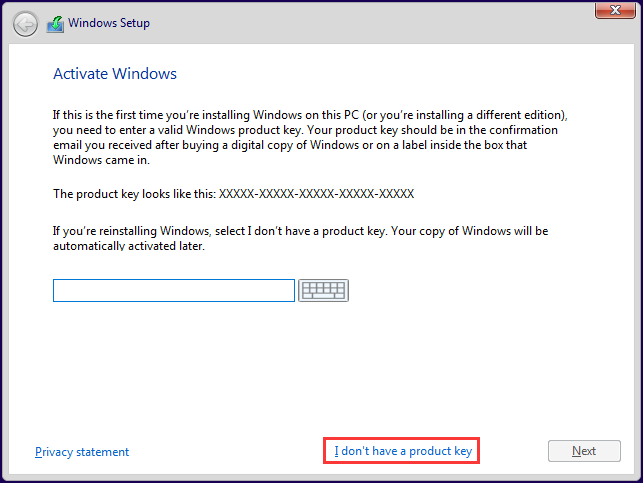
- You will be asked to enter your license key and proceed with activation as required. But if you haven't purchased a Windows key, click "I don't have a product key" to skip this step.
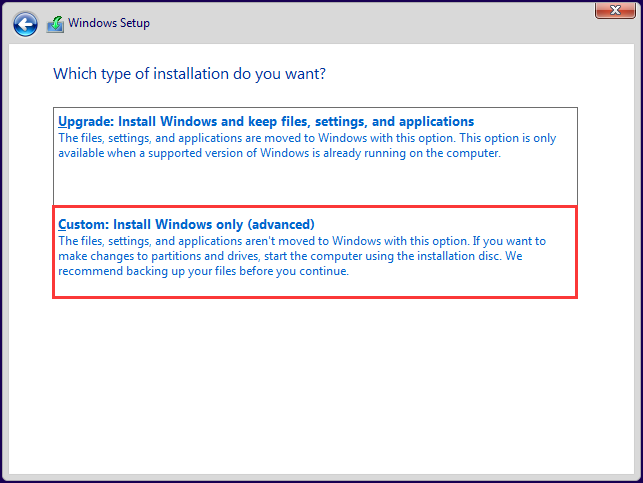
- To install Windows, you need to accept the license terms and click Next. Then, select the "Custom: Install Windows only (Advanced)" option, which will erase all files, settings, and applications, resulting in a clean Windows install. It's recommended to back up important files before proceeding.
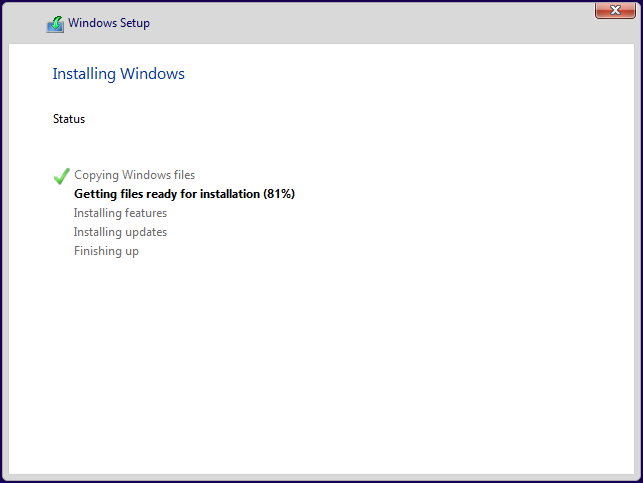
- Windows will automatically start the installation process, and most of the time, the process will be smooth, but please pay close attention and answer any questions asked.
If you've mistakenly installed Windows on the wrong hard drive, reinstalling the OS on a new SSD might be the solution. However, this can be a daunting task for many users. Fortunately, there is a way to move your operating system to another hard drive without losing data on the old disk. By following the correct procedures, you can successfully transfer your Windows installation to a different hard drive, ensuring that your data remains intact.
Further Reading: To install Windows on a Steam Deck or a new PC without an operating system, you'll need to create a bootable USB drive with the Windows installation media. This involves downloading the Windows installation media from Microsoft's website, creating a bootable USB drive using a tool like Rufus, and then booting the device from the USB drive.
What to Do If I Installed Windows on the Wrong Drive
To get a smoother Windows experience, you can transfer Windows to the proper drive using a professional third-party tool, Qiling Disk Master, which can migrate Windows to the target drive without reinstalling.
Before we start, read the notice below to make the OS migration successful and smooth.
- Notice:
-
Ensure the target drive has enough storage space for your Windows system.
If you have any important files on the target drive, back them up before proceeding, as the partition and data on the target hard drive will be erased during the process.
Let's migrate Windows to the correct drive using Qiling Disk Master.
Steps to migrate OS to HDD/SSD:
- Run Qiling Disk Master, and from the tools tab, select "Clone".
- Check "System clone" to start cloning.
- Select the SSD or HDD as the destination disk and click "Next".
- Be aware that the process will delete data and partitions on the target disk, so it's crucial to back up any important data beforehand to avoid loss. If you haven't already, take this opportunity to back up your data now.
- Preview the layout of your target disk. Then click "Start" to start migrating your OS to a new disk.
- Then click "Yes".
Note: If you're migrating your OS to an SSD or HDD, be aware that the process may delete and remove existing partitions and data on your target disk if there's not enough unallocated space. Be sure to back up any important data beforehand to an external hard drive.
If you're running low on space on your target hard drive, you can free up hard drive space on a Windows PC by following the link to learn how to do so.
Qiling Disk Master can help manage Windows by providing features such as disk partitioning, disk cloning, and disk wiping, which can be used to create, resize, or delete partitions, clone a disk to a new one, or completely erase a disk's data, respectively. It also supports the creation of a bootable USB drive and can help fix issues with the Windows boot process.
- Clone HDD to SSD
- Clone Windows 10 to a larger SSD
- Burn ISO to USB on Windows 10
- Extend the target drive to install Windows
- Extend the drive where the OS is installed
- Upgrade Windows 7/8/10 to Windows 11 for free
Download Qiling Disk Master to assist with Windows installation, reinstallations, and upgrades, making the process smoother and more efficient.
Conclusion
SSDs are significantly faster than HDDs, but their higher cost per storage unit means they're often used in combination with HDDs. A common setup is to have a smaller SSD for the operating system and a larger HDD for file and program storage. If you accidentally install Windows to the wrong drive, Qiling Disk Master can help you migrate the operating system without reinstalling, although you may encounter some startup-related issues.
Where Do You Want to Install Windows FAQs
Do you know where you should install Windows now? If you still have further questions, the next part will enlighten you. Check them now:
1. Which drive should I install Windows on?
Windows can boot faster on SSDs than on HDDs, but SSDs typically have less storage capacity, so ensure the target SSD has enough space and back up important data before installing Windows.
2. What to do when no drives are found during Windows 10 installation?
The Media Creation Tool may not be able to find the drive because it doesn't provide a storage driver. To resolve this issue, you can manually locate and install the missing storage drivers by creating installation media.
- Create the Windows 10 installation media.
- Extract the corresponding drivers to the USB flash drive
- Install Windows 10 from the target USB flash drive
3. How to solve Windows can't be installed to this disk error?
If you receive the 'Windows cannot be installed to this disk and the selected disk has a GPT partition style' error, it's likely because your PC boots in UEFI mode, but your hard drive isn't configured for UEFI mode. You have two options to resolve this: either convert your disk to GPT partition style, which is compatible with UEFI, or switch your PC to BIOS mode, which doesn't require GPT.
- To convert a Master Boot Record (MBR) to a GUID Partition Table (GPT) partition, you can use the built-in `diskpart` command in Windows or the `gdisk` command in Linux. In Windows, open Command Prompt as an administrator and type `diskpart`, then `list disk` to identify the disk you want to convert.
- To keep the existing MBR partition, but restart the PC in legacy BIOS mode, you can simply restart the PC and enter the BIOS settings during boot-up. Look for the option to switch to legacy BIOS mode or change the boot mode to legacy.
Related Articles
- [Solved] Seagate Dashboard Not Working on Windows 10/11
- FIXED: System Image Recovery Failed [Updated 2024]
- Windows 11 Keeps Crashing - All Methods to Fix
- How Long Does It Take to Format an External Hard Drive [Full Guide]
- What Does Shrink Volume Do? How to Safely Shrink Volume?
As digitization continues to advance, global users are competing in the data storage race, prompting the need to understand what shrinking volume does. - What Does Wipe Cache Partition Mean and How to Wipe the Cache Partition
Transform your PC with a quick cache partition wipe! Our step-by-step guide shows you how to clear temporary system files and troubleshoot any issues for improved performance.
Products
Articles & Tutorials
- Data Recovery
- Data Backup
- File Recovery
- File Backup
- System Backup and Restore
- Disk and Partition Clone
- Technical articles
- Mobile articles
- Disk Master Help
- Windows Data Recovery Tutorials
- Windows Secure Delete Tutorials
- Windows Partition Management Tutorials
- Windows File Backup and Restore Tutorials
- Windows System Backup and Restore Tutorials
- Windows Disk Backup and Restore Tutorials
- Windows Clone Tutorials