How Do I Run External SSD Speed Test on My Own? Your Guide Is Here
In this article, you'll learn:
- How Do I Test My External SSD Speed?
- Guide to Run External SSD Speed Test 2024
- To determine if an external hard drive is fast or slow, consider its interface type (such as USB 3.0 or SATA), data transfer rate (measured in MB/s or GB/s), and the type of files being transferred (e.
Key Takeaways of External SSD Speed Test:
Checking an external SSD's read and write speed can be beneficial as it directly affects your computer's performance. To test an external SSD's speed, you can use the methods previously presented in blog posts on running SSD read and write speed tests. Testing an external SSD's speed is also easy and can be done on your own, and we'll show you how to do it in this blog post.
To test your external SSD's speed, Windows users can follow our solutions, while Mac users can search for a Mac disk speed tool.
Further reading: M.2 SSD Performance
How Do I Test My External SSD Speed?
Wanting to know how fast your external SSD is a common curiosity, but have you ever wondered how to test its speed? Testing your external SSD's speed is essential to understand its actual performance, and doing so can provide several benefits. By knowing your external SSD's speed, you can determine if it's meeting your expectations, identify any potential issues, and make informed decisions when using it for specific tasks. Whether you're a gamer, video editor, or simply someone who uses their computer frequently, understanding your external SSD's speed can help you optimize your workflow and ensure smooth performance.
Testing the speed of your external SSD can have various reasons and benefits, such as ensuring it's performing optimally, identifying potential issues, and verifying compatibility with your system. This process can also help you understand how the drive will handle demanding tasks like video editing, gaming, or large file transfers, allowing you to make informed decisions about its use.
Benefits of testing an external SSD's speed:
- Test and learn if the external SSD is functioning normally.
- Confirm if the external SSD is slower than the average read and write speed.
- To test and determine if you need to improve the external SSD speed, you can use the built-in Disk Utility on your Mac or a third-party tool like Blackmagic Design's Disk Speed Test or CrystalDiskMark. These tools provides you a read and write speed of your external SSD, allowing you to see if it's performing at its optimal level.
- Get instant speed test results.
- Before buying a new SSD, compare the performance of different drives to ensure you get the best one for your needs. This can be done by researching online, reading reviews, and checking the specifications of various SSDs.
To test your external SSD's speed, we'll share some simple and useful tricks and methods.
Guide to Run External SSD Speed Test 2024
To learn how to efficiently run external SSD speed tests, follow these two easy methods. You can perform SSD speed testing tasks independently without special technical expertise by reading these methods and following the operational steps. This provides you accurate reports about your SSD's performance, allowing you to understand your SSD's capabilities quickly.
1. Download External SSD Speed Test Software
For a quick and accurate external SSD speed test, download a reliable testing software. While there are many options available online, it can be challenging to determine which one is the best. To simplify the process, consider using a tool like Qiling Disk Master, which is designed to provide perfect results and can help you get a clear picture of your external SSD's performance.
Qiling Disk Master is a comprehensive partition manager that includes a feature called DiskMark for testing SSD speeds, allowing users to perform various tasks such as partitioning, formatting, and cloning disks, as well as benchmarking SSD performance.
- Scan the speed, I/O
- Display factors on the target device
- Generate a speed test report
To test your external SSD speed, install the Qiling Disk Master software and run it, following the operational steps outlined in the guide below.
2. Run External SSD Speed Test
Qiling Disk Master's DiskMark feature allows for a quick and hassle-free external SSD speed test, which won't impact data or disk performance, and supports internal SSD performance testing.
To run an external SSD speed test, simply connect the external SSD to your computer, open the Disk Utility or Disk Speed Test app, select the external SSD, and click on the "Run Test" or "Start Test" button. The test will then measure the read and write speeds of the external SSD. The results shows you the speed at which data is being read and written to the external SSD, giving you an idea of its performance.
Step 1. To activate the "Surface test" feature in Qiling Disk Master, launch the application and navigate to the "Disk management" section. Then, click the download button to initiate the surface test. This feature allows you to test the condition of your disk's surface, which can help identify any potential issues or problems with the disk.
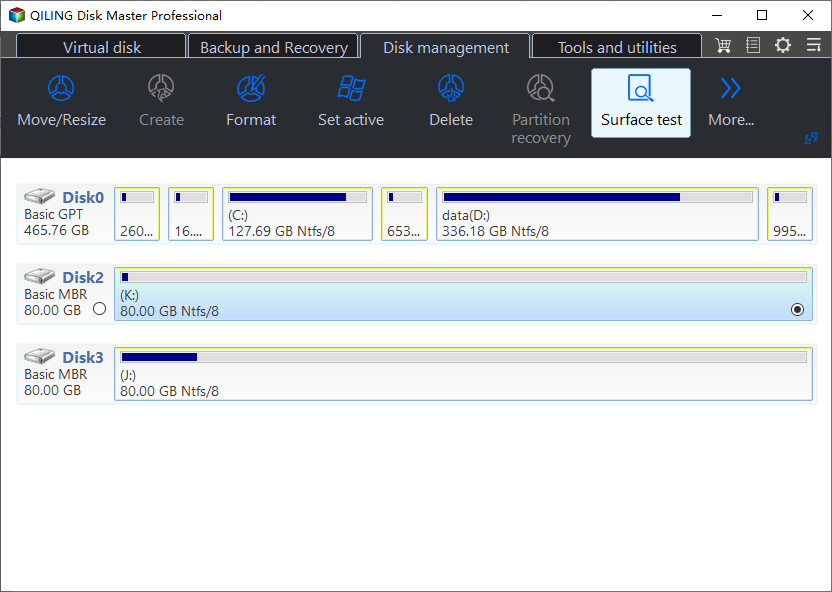
Step 2. Choose the target drive, test data, and block size.
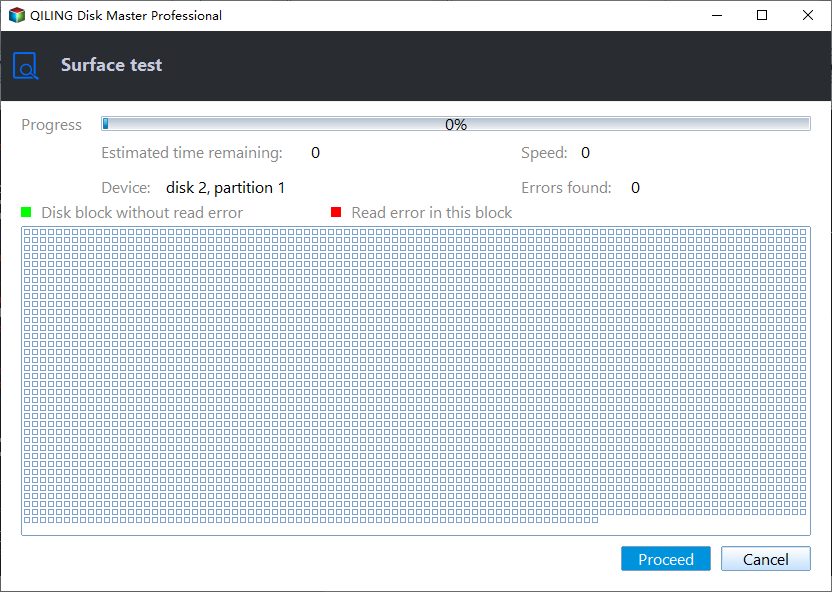
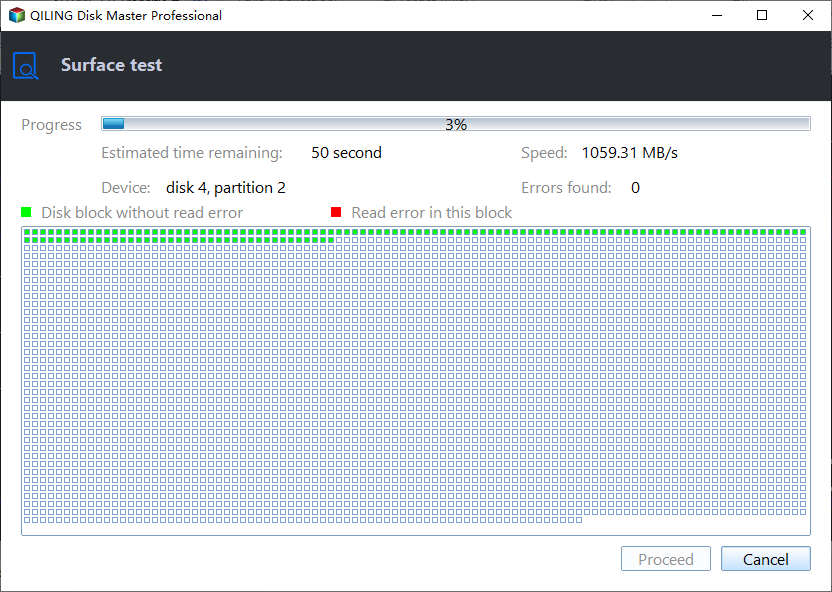
Step 3. Once everything is configured, click "Proceed" to begin the disk test, which will display Sequential read speed, I/O, and Delay data.
You can click the links below to learn more about the features in Qiling Disk Master that can help improve SSD performance.
Tips to Define If External Hard Drive Speed Is Fast or Slow
Testing your SSD speed is crucial, and it's also a good idea to test the external hard drive speed. If you've used a tool like Qiling Disk Master to test your SSD, you can compare the read and write speeds of your external hard drive to the average speeds reported by the tool. This provides you a better understanding of how your external hard drive is performing.
In this regard, for your ease, let me show you a few general or average speed ranges of different kinds of SSDs so that you can easily determine your external SSD speed.
Testing can quickly determine your SSD's speed, which falls into general speed ranges for different types of SSDs. However, specific models and manufactured SSDs can have significantly different average speeds.
SSD Type Read Speed Write Speed
| SSD Type | Read Speed | Write Speed |
|---|---|---|
| SATA | Around 550 MB/s | Around 520 MB/s |
| NVMe | Around 3,500 MB/s | Around 3,000 MB/s |
| PCIe/NVMe | Around 7,000 MB/s | Around 6,000 MB/s |
If you've tested your external SSD and found it to be slow, you're not alone. Slow speeds can significantly impact your PC or laptop's overall performance. However, don't worry, as there are solutions to improve SSD read and write speeds. By applying some useful tips and tricks, you can get the expected performance from your external SSD.
Here are a few useful tips to optimize your external SSD:
- Use 4K Alignment SSD
- Disable Startup Programs
- Disable Fast Startup
- Confirm TRIM Is Enabled
- Ensure the SSD Firmware Is Up to Date
- Enable AHCI Mode
- Turn on Write Caching
- Schedule SSD Optimization
- Set Your Power Plan to High Performance
Qiling Disk Master is a highly recommended SSD benchmark tool that offers numerous benefits when downloaded.
FAQs about External SSD Speed Test
Do you need more help regarding an external SSD speed test or want to learn more about it? Below FAQs would be useful for you and cover your queries.
1. What is a good read and write speed for an external SSD?
A good read-The speed of external SSDs varies depending on several factors and manufacturers, but here's a general overview: SATA III external SSDs typically reach speeds of 600MB/s, while some models may reach 300MB/s, and older SATA I models are limited to 150MB/s. On average, you can expect a read speed of around 500MB/s and a write speed of about 300MB/s, although specific models and brands can have significantly different speeds.
2. How to check SSD performance?
To check your SSD's performance, you can use Windows built-in features like Task Manager and Command Line, or reliable software like Qiling Disk Master to get real and accurate reports.
You can check your SSD performance through the Command Prompt. To do this, open the Command Prompt and type the command "winsat disk -ran -write -drive (name)" to see your SSD speed displayed. This provides you basic results of your SSD's performance.
3. How fast are external SSD drives?
The external SSDs are 20-SSDs are significantly faster than external drives, with speeds up to 25 times faster, although actual speeds vary depending on the type and manufacturer. They outperform traditional HDDs, offering a superior user experience.
Related Articles
- How to Fix Seagate External Hard Drive Write Protected
- How to Fix PC Won't Boot After Installing M2 SSD - Full Guide
- Fixed: Windows Could Not Format A Partition on Disk 0 (Error Code 0x80070057)
- Solved: Unlock Bitlocker Without Recovery Key and Password
- How to Install a Second SSD[Comprehensive Guide]
Do you want to install a second SSD on your computer to enhance its performance? Discover the complete guide on how to install a second SSD in this article. - PC Slow Down? How to Remove Bloatware on Windows 10/11
Want to remove bloatware on a new computer by the manufacturer? This post comes to help you trim off this unwanted software pre-installed on Windows 11 and Windows 10.
Products
Articles & Tutorials
- Data Recovery
- Data Backup
- File Recovery
- File Backup
- System Backup and Restore
- Disk and Partition Clone
- Technical articles
- Mobile articles
- Disk Master Help
- Windows Data Recovery Tutorials
- Windows Secure Delete Tutorials
- Windows Partition Management Tutorials
- Windows File Backup and Restore Tutorials
- Windows System Backup and Restore Tutorials
- Windows Disk Backup and Restore Tutorials
- Windows Clone Tutorials